GE Frame 6 / PG6581B Gas Turbines
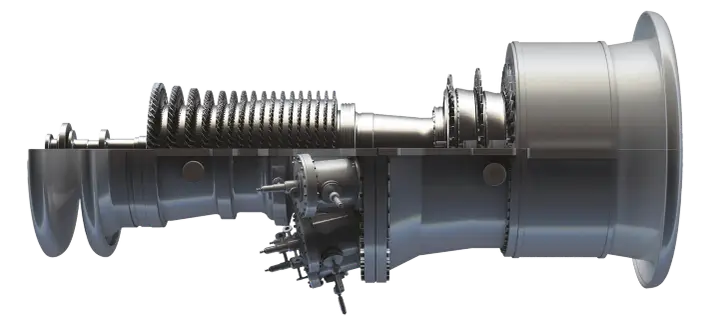
Compare GE Frame 6B and 6F equipment with variant-specific ratings, used-package price evidence and procurement guidance.
GE Frame 6 is one of 23 gas turbines tracked in the SecondWatt catalogue, each with specifications, lead times and indicative secondary-market pricing.
Compare GE Frame 6B and 6F gas turbine ratings, used-package asking prices, equipment scope and inspection priorities for industrial power procurement.
GE Frame 6 is a family label that needs a variant before it becomes a useful equipment specification. Legacy Frame 6B packages, the current 6B.03 reference and the larger 6F.03 must be distinguished when comparing capacity, efficiency, fuel requirements and pricing. Confirm the exact turbine and package codes from the offered machine. GE Vernova's 2025 catalog lists 45 MW net simple-cycle output for 6B.03 and 88 MW for 6F.03 under its ISO, natural-gas reference conditions. Those are separate product references, not interchangeable ratings. A legacy seller-advertised 42 MW 6B package should retain its own documented configuration and performance basis. Frame 6 equipment can support industrial generation, CHP and other power projects where the selected turbine matches the duty and site. Compare the whole system: gas supply, generator and grid interface, emissions equipment, heat recovery, service condition and installation scope. A combined-cycle plant rating includes equipment beyond the gas turbine and must not replace the turbine's simple-cycle rating in a listing.
Why it matters
A page that combines 6B and 6F specifications into one headline can misstate the equipment being offered. Separating the variants makes capacity, efficiency and price comparisons useful, while distinguishing turbine-generator packages from complete power plants prevents misleading capital-cost expectations.
Who buys it
Industrial energy users, CHP developers, utilities and independent power producers may evaluate Frame 6 equipment. Existing Frame 6B operators may also seek replacement machines or serviceable packages. Buyers should define the required variant, site duty and equipment boundary before using a price or capacity filter.
Role in the data center
A selected Frame 6 package may serve a large campus power project where gas supply, load profile and grid arrangements support it. Any island operation, black start, redundancy or start-time requirement must be designed and tested at system level. A product-family reference is not a data-center availability guarantee.
Key specifications
| Current 6B.03 net simple-cycle output | 45 MW |
|---|---|
| Current 6B.03 net simple-cycle efficiency, LHV | 33.4 % |
| Current 6B.03 net simple-cycle heat rate, LHV | 10779 kJ/kWh |
| Current 6B.03 generation frequency, geared | 50 / 60 Hz |
| Current 6F.03 net simple-cycle output | 88 MW |
| Current 6F.03 net simple-cycle efficiency, LHV | 36.8 % |
| Current 6F.03 net simple-cycle heat rate, LHV | 9788 kJ/kWh |
| Current 6F.03 generation frequency, geared | 50 / 60 Hz |
| Current 6B.03 1x combined-cycle plant output; includes steam cycle | 70 MW |
| Current 6B.03 1x combined-cycle plant efficiency, LHV | 51.9 % |
| GE catalog reference conditions | ISO; natural gas; net plant; project-specific actual performance |
| Legacy offered PG6581B advertised output; separate used unit | 42 MW |
| Legacy offered PG6581B generator frequency | 50 Hz |
| Legacy offered PG6581B manufacture year | 2004 |
Technical summary
GE Vernova's 2025 catalog gives 6B.03 net simple-cycle output of 45 MW, efficiency of 33.4% LHV and heat rate of 10,779 kJ/kWh LHV. For 6F.03 it gives 88 MW, 36.8% LHV and 9,788 kJ/kWh LHV. Both product references support geared 50/60 Hz applications. These are ISO, natural-gas net-plant reference ratings; actual output depends on project conditions. The same catalog gives 70 MW for a 1x combined-cycle 6B.03 plant, which includes a steam cycle and is not the gas turbine alone.
Major variations
Separate the legacy 6B / MS6001B family, the current 6B.03 reference and the 6F / 6F.03 family. Within a branch, package codes, combustion systems, generator arrangements, control upgrades and fuel conversions can change the offer materially. Do not use a seller's Frame 6 label to infer the latest product specification or assign 6F performance to a 6B machine.
Configurations and options
Equipment may be offered as a turbine-generator package, a simple-cycle plant, an industrial CHP installation or part of a combined-cycle block. Starting systems, gas compression, intake cooling, emissions controls and heat-recovery equipment are configuration-dependent. Request a battery-limit list showing the exact equipment, engineering, civil works and commissioning services included in the offer.
Compatibility and dependencies
Check site ambient conditions and elevation, fuel pressure and composition, generator and transformer ratings, grid frequency, protection requirements and exhaust backpressure. Heat-recovery integration requires its own steam-cycle and process study. Confirm foundations, lifting and transport constraints, acoustic requirements and the capability of the controls and auxiliaries to support the intended operating mode.
Public asking-price examples
These are seller asking prices observed on public listings, not completed transactions and not a SecondWatt offer. Availability and condition require confirmation.
$3,500,000 per unit
- Observed: 2026-09-15
- Variant: PG6581B (Frame 6B) turbine generator set
- Rating: 42 MW, 50 Hz, 2004 build
- Condition: Used. Operating-hour information conflicts across related listings for this offer and requires confirmation.
- What the price covers: Advertised per unit within an offer covering two units (total $7,000,000). Transport, installation and commissioning scope not stated.
- Qualification: One seller asking price covering two units in a single offer, not two independent market comparables. It does not establish pricing for a Frame 6F, or for any other Frame 6 package.
What drives the price
Two machines advertised today cannot establish a historical trend, so this page publishes no price history and no model-average purchase price per kilowatt. What actually moves the number on a Frame 6 package: - **Variant.** 6B and 6F are different machines with different ratings, combustion systems and parts economics. Price evidence does not transfer between them. - **Condition and remaining component life.** Fired hours and starts, inspection position, rotor life, and whether a hot-gas-path or major inspection falls due soon after delivery. - **Package completeness.** Generator, gearbox, controls, enclosure, auxiliaries and balance-of-plant. Confirm what is physically included before comparing figures. - **Refurbishment scope.** What was inspected, replaced and tested, with documentation and any warranty. - **Delivery and commissioning scope.** Dismantling, transport, customs, erection, auxiliaries, testing and acceptance are commonly excluded. GE Vernova describes roughly ten months from contract signature to commercial operation for its current standardised 6B offering. That is a manufacturer reference for that new offering, not a lead time for an unidentified used Frame 6 package. An asking price per rated kilowatt is only calculated where the exact package price and capacity basis are documented, and it describes that offer rather than the market. Electricity production cost in $/kWh is a separate calculation requiring fuel, efficiency, duty and operating-cost assumptions.
Confirm availability and delivery schedule
Availability is confirmed against identifiable equipment and a dated seller confirmation, not from a broker headline.
- Ready for dispatch: inspection, refurbishment, release and packing completed.
- Delivered to site: transport, customs and delivery responsibilities established.
- Commissioned: installation, auxiliaries, testing and acceptance completed.
Lifecycle and maintenance
Base the maintenance plan on the exact machine, combustion configuration, starts, fired hours, trips and prior component repairs. Review OEM guidance alongside serial-specific records and the proposed duty. Fuel changes and cycling can affect inspection planning. Obtain hot-section and rotor-life documentation and agree the responsibility for overdue inspections, controls upgrades and post-storage recommissioning.
Thermal and emissions profile
Evaluate the actual combustor, fuel and exhaust-treatment package against the destination permit. Current catalog capability does not automatically apply to a legacy 6B or a converted fuel system. Obtain a project-specific emissions guarantee and confirm the applicable stationary-turbine rules, monitoring requirements and operating restrictions before committing to an installation.
Common failure points
- Combustor and transition hardware — Cracks, local overheating or abnormal temperature spread
- Turbine hot section and rotor — Distress, life-limit exposure or undocumented repairs
- Compressor — Fouling, blade damage or corrected-output loss
- Bearings and lubrication — Vibration excursions or contaminated oil
- Generator and auxiliaries — Insulation deterioration or incomplete preservation
Inspection checklist
Verify turbine, package, gearbox and generator identities; hours and starts; trip and alarm history; fuel-conversion approvals; and the most recent combustion, hot-gas-path and major-inspection reports. Reconcile seller records with control-system counters. Inspect preservation, rotor and hot-section documentation, generator tests, auxiliaries and control access, then define acceptance tests and excluded plant equipment in writing.
Procurement channels
Use OEM channels, qualified service providers and documented secondary-market offers. On September 15, 2026, ReflowX displayed USD 3,500,000 per unit for a 2004 PG6581B 42 MW, 50 Hz package in China. The offer showed two units and USD 7,000,000 total. This is a specific used 6B asking price, not a 6F quote or an installed-plant price; condition, operating records, availability and scope require written confirmation.
Regional notes
Match the offered generator frequency, fuel system and emissions configuration to the destination rather than assuming a frequency conversion or fuel conversion is straightforward. Local grid studies, permitting, transport access, taxes and recommissioning requirements can materially change the project. Confirm destination support for the precise hardware and controls.