Solar Turbines Mars 100
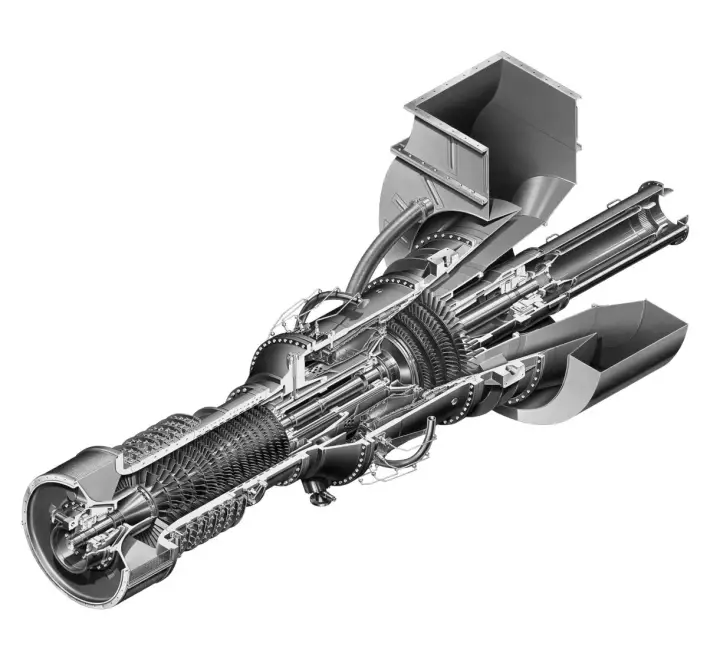
11,350 kWe generator set; a separate 11,860 kW mechanical-drive rating is a different product
This model is part of SecondWatt’s gas turbine research catalogue. Specifications and price observations are included where supported by sources. Equipment availability and commercial terms require confirmation.
Solar Turbines Mars 100 dossier: verified 11,350 kWe rating, SoLoNOx emissions, overhaul economics, and secondary-market pricing for data center buyers.
The Solar Turbines Mars 100 is a two-shaft industrial gas turbine sold as two packaged products from the same core: the Power Generation (PG) generator set (type code T-16002) and a separate Mechanical Drive / Gas Compressor package with no generator. The two carry separate order codes and separate datasheets, and a listing that says only "Mars 100" does not tell a buyer which one is on offer. Dealer listings carry inconsistent suffixes ("15002," "15000SAN," "Mars 100-16000") that do not map onto Solar's own T-16002 designation.
The PG package is rated 11,350 kWe ISO base load at generator terminals, a figure that agrees across four primary sources: Solar's PG product page, its power-generation data sheet, its full product handbook, and a New York State Title V permit for in-service units. A separate Mechanical Drive package on the same core is rated 11,860 kW (15,900 hp) at the bare coupling, and some "generator set" listings quote that higher figure, the wrong product's number for a power buyer.
Mars 90 (T-13002, 9.87 MW, 1977) and Mars 100 (T-16002, 11.35 MW, 1989) share one architecture, not two unrelated machines. SoLoNOx is optional per Solar's own page, not standard, though a live New York DEC permit for in-service Mars 100-16002S4 units documents a 9 ppmvd NOx / 25 ppmvd CO guarantee at 15% O2. Solar's current SoLoNOx literature names no water- or steam-injection alternative for this model.
Solar publishes a 100,000-hour gear life and 30,000-hour gearbox inspection interval but no turbine hot-section or overhaul interval; a 1996-built field unit shows 105,000 total hours with 33,000 since its last overhaul. Two public dollar figures attach to this nameplate: a 5,600,000 USD asking price on a zero-hour refurbished unit, about 493 USD per kW, and a 6,650,000 USD figure labeled original wholesale value on a salvage-auction listing, which is not a transaction or asking price.
Why it matters
Two Solar-sourced documents agree the Mars 100 PG package delivers only 8,800 kW (11,000 kVA) at 40 C ambient against its 11,350 kWe ISO rating at 15 C, roughly a 22.5% haircut a data center buyer in a hot climate is actually buying. A separate Mechanical Drive package sharing the same core turbine is rated 11,860 kW at the coupling; reading that figure as generator output overstates deliverable power by about 510 kW.
Who buys it
Data center developers assembling multi-unit distributed-power blocks buy Mars 100 PG units alongside oil and gas producers and industrial cogeneration hosts, its historical core market. Solar's own Pre-Owned Equipment program lists the Mars 100 directly for brokers, resellers, and secondary-market buyers, not only original purchasers. Units often reach the market when a subsidized or captive-fuel operation shuts down economically, leaving a low-hour, well-maintained asset intact.
Role in the data center
Bridge or prime power block sized at roughly 11.35 MW ISO per PG unit, and about 8.8 MW at 40 C ambient, deployed in multi-unit distributed configurations feeding campus medium-voltage switchgear. The 22.5% hot-ambient derate is the number that sets unit count on a warm site, not the ISO nameplate.
Key specifications
| ISO base-load electrical output (generator terminals) | 11,350 kWe |
|---|---|
| Heat rate | 10,935 (10,365) kJ/kWe-hr (Btu/kWe-hr) |
| Generator-terminal efficiency | 32.92 % |
| Compressor pressure ratio | 17.8:1 ratio |
| Compressor inlet airflow | 42.0 (92.5) kg/sec (lb/sec) |
| Exhaust flow | 153,245 (337,850) kg/hr (lb/hr) |
| Exhaust temperature | 485 (905) C (F) |
| Power turbine speed, 50 Hz / 60 Hz | 8,625 / 8,570 rpm |
| Mechanical-drive shaft rating (different product, for contrast) | 11,860 (15,900) kW (hp) |
| Site rating at 40 C ambient (vs. 11,350 kWe ISO at 15 C) | 8,800 / 11,000 kW / kVA |
| Package weight | 82,145 (181,000) kg (lb) |
| Package height | 3.8 (12'6") m (ft-in) |
| Generator voltage options, 60 Hz | 4,160 / 6,900 / 12,470 / 13,200 / 13,800 V |
| Generator voltage options, 50 Hz | 3,300 / 6,600 / 11,000 V |
| SoLoNOx NOx guarantee, in-service units (permit) | 9 ppmvd at 15% O2 |
| SoLoNOx CO manufacturer guarantee (pre-catalyst) | 25 ppmvd at 15% O2 |
Technical summary
ISO base-load electrical output (PG package): 11,350 kWe. Mechanical Drive package output (different product): 11,860 kW / 15,900 hp. Site rating at 40 C ambient: 8,800 kW / 11,000 kVA. Heat rate: 10,935 kJ/kWe-hr (10,365 Btu/kWe-hr). Generator-terminal efficiency: 32.92 %. Pressure ratio: 17.8:1. Exhaust flow / temperature: 153,245 kg/hr / 485 C (905 F). Power turbine speed: 8,625 rpm (50 Hz) / 8,570 rpm (60 Hz). Package weight: 82,145 kg (181,000 lb). SoLoNOx: 9 ppmvd NOx / 25 ppmvd CO at 15% O2 (field permit, manufacturer guarantee).
Major variations
Mars 90 (T-13002, 9.87 MW, introduced 1977) and Mars 100 (T-16002, 11.35 MW, introduced 1989) share one architecture: a two-shaft turbine with a 15-stage axial compressor, annular combustion chamber, and 2-stage power turbine. Solar's product handbook lists both under the same Mars family table by internal type code rather than as unrelated products, and a 1992 ASME conference paper documents an intermediate T-14,000 rating step between them, consistent with an uprate lineage on a shared core rather than two different machines. Treat the type code, not the marketing name, as the identifier that fixes the rating.
Configurations and options
Both 50 Hz and 60 Hz PG configurations exist, with different generator voltage tables and slightly different power turbine speeds (8,625 rpm at 50 Hz, 8,570 rpm at 60 Hz). Fuel options are natural gas standard, with diesel, dual-fuel, and low-Btu gas available. Combustion is SoLoNOx with 14 lean-premix injectors, listed as optional on Solar's own product page, or a conventional combustor that Solar's public Mars 100 data sheet does not detail; confirm which combustor a specific unit carries before assuming a permit path.
Compatibility and dependencies
Confirm generator presence, voltage, and frequency directly against a listing rather than trusting its model suffix, since dealer labels for this exact model ranged from "15002" to "15000SAN" to "Mars 100-16000" without a documented mapping to Solar's own T-16002 designation. The Mechanical Drive package sharing this core turbine has no generator and is not interchangeable with the PG package for a power-generation role.
Pricing and availability
Comparable secondary-market band: 212–853 $ per kW. Trend: stable Only two public dollar figures exist for this model, one an asking price and one a stated wholesale value rather than a transaction, so no directional trend can be established. The clearest published provenance signal instead: two 2011-built SoLoNOx units ran until March 2023, when a natural gas fuel subsidy ended, leaving a low-hour asset on the market for economic rather than mechanical reasons. Warranty, used: Solar Pre-Owned/exchange program offers warranty reinstatement on secondary-market units; otherwise as-is typical on broker/reseller listings.
Supply, delivery and overhaul
5 units listed without public prices.
Lifecycle and maintenance
Solar publishes a 100,000-hour design gear life for the Mars 100 package with a 30,000-hour major gearbox inspection interval, but publishes no separate turbine hot-section or major-overhaul interval on any public data sheet. Field evidence: a 1996-built unit carries 105,000 total fired hours with 33,000 hours since its last overhaul. Solar's Pre-Owned Equipment program explicitly serves brokers, resellers, and secondary-market buyers, not only original purchasers, with warranty reinstatement offered, a real resale-value fact for a used Mars 100.
Thermal and emissions profile
SoLoNOx dry low-emissions combustion is listed as optional, not standard, on Solar's own Mars 100 PG product page, with 14 lean-premix injectors per the OEM data sheet. A live New York State DEC Title V permit for three in-service Mars 100-16002S4 units documents manufacturer guarantees of 9 ppmvd NOx and 25 ppmvd CO at 15% O2, the CO figure reduced further by an oxidation catalyst. Solar's current SoLoNOx literature names no water- or steam-injection alternative for this model and attributes control entirely to combustor liner, fuel injector, and bleed-shield design.
Common failure points
- Combustor liner / SoLoNOx injectors — Rising CO or NOx trend, flashback, or injector coking reducing lean-premix combustion stability
- First-stage turbine nozzle/blade — Coating loss, cracking, or tip rub visible on borescope beyond the roughly 30,000-hour major-inspection point
- Gearbox — Vibration trend rise or gear-tooth wear approaching Solar's cited 100,000-hour design gear life
- Generator windings — Falling insulation resistance on Class F windings after 15+ years of service
- Control system / Turbotronic HMI — Obsolete Windows-based display hardware with limited OEM software support
- Fuel system / dual-fuel hardware — Liquid-fuel skid present but unused, or missing atomizing-air components
- Package enclosure and fire/gas detection — Corrosion on outdoor weatherproof enclosures from prior oil and gas field duty, intermittent sensor faults
Inspection checklist
Fired hours since new and since last major overhaul: compare against Solar's own 30,000-hour major-inspection interval and a field unit seen at 33,000 hours since overhaul. Starts count and cycling profile: request the full log; a low starts-to-hours ratio (e.g. 150 starts on 35,000 hours) signals near-baseload duty. Most recent borescope video or images, not a summary report: focus on the combustor and the 2-stage power turbine section. SoLoNOx injector count and condition: Solar's data sheet specifies 14 lean-premix injectors per unit; verify count matches and check for coking. First-stage turbine blade and nozzle coating condition: spallation, cracking, or tip rub beyond the ~30,000-hour inspection point. Stage axial compressor blade condition, 17.8:1 design pressure ratio: erosion, fouling, or foreign-object damage from field duty.
Procurement channels
Solar's own Pre-Owned Equipment program lists the Mars 100 directly for brokers, resellers, and secondary-market buyers, not only original purchasers. The clearest published provenance example: two 2011-built SoLoNOx units ran until March 2023, when operation ceased following the end of a natural gas fuel subsidy rather than any mechanical failure, leaving a low-hour, well-maintained asset on the secondary market. IMP Corporation, Phoenix Equipment, Fin Marine, Surplus Generation Equipment (Sirgen), and Industrial Marine Power all carry or have carried units without publishing a price.
Regional notes
Both 50 Hz and 60 Hz PG configurations exist with different generator voltage tables, so confirm frequency before assuming a listed unit fits a given site. The units on offer in August 2026 come out of oil and gas fleet churn and show no single dominant region of origin, which means shipping and re-commissioning scope vary widely between otherwise identical listings.
Content owner: Gary Martin, SecondWatt