GE Frame 5 / MS5001 Gas Turbines
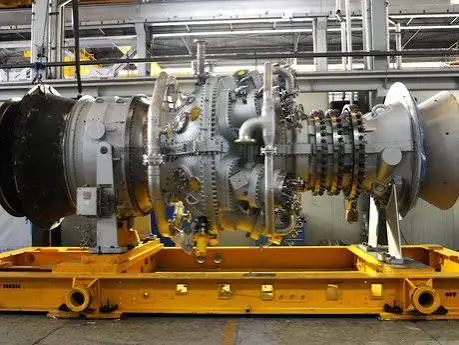
Compare GE Frame 5 variants, package scope and used-equipment asking prices before selecting an industrial power system.
GE Frame 5 is one of 23 gas turbines tracked in the SecondWatt catalogue, each with specifications, lead times and indicative secondary-market pricing.
Explore GE Frame 5 gas turbine variants, verified reference specs, used-package asking prices and inspection priorities for industrial power procurement.
GE Frame 5 is a family designation used across legacy industrial gas-turbine packages. It is not a single output rating or a guarantee that two offered machines share the same combustor, fuel system, generator or controls. Start with the complete turbine and package model, serial number and nameplates when comparing equipment. For a current manufacturer reference, Baker Hughes publishes 5/1PA electrical output of 26.6 MW with LHE combustion and 25.5 MW with DLN1 combustion. Its reference conditions include ISO ambient conditions and specified package-loss assumptions. Those figures should not be assigned to every legacy MS5001: the public market also includes substantially older, lower-output configurations. Frame 5 equipment can serve industrial generation and combined heat and power where the selected package, fuel supply and exhaust-heat use fit the project. A buyer should evaluate delivered site output, overhaul needs, emissions requirements and the equipment boundary together. An attractive turbine purchase price can still leave a substantial project to engineer, install and commission.
Why it matters
The Frame 5 name can conceal large differences in age, capacity and package completeness. Identifying the precise variant helps a buyer avoid applying a modern brochure rating to an older machine or comparing a turbine-only offer with a complete generator package.
Who buys it
Industrial operators, independent power producers, CHP developers and equipment owners considering replacement or life-extension projects may evaluate Frame 5 packages. The best fit depends on the exact machine, fuel, operating duty, available heat demand and access to qualified service support.
Role in the data center
A configured Frame 5 installation may be considered for campus generation or a CHP energy center. Its use requires an engineered electrical architecture, fuel assurance and site performance assessment. Do not infer uninterrupted IT power, black-start capability or a particular start time from the family designation.
Key specifications
| Current 5/1PA LHE electrical output | 26.6 MWe |
|---|---|
| Current 5/1PA DLN1 electrical output | 25.5 MWe |
| Current 5/1PA published electrical efficiency, both configurations | 27.7 % |
| Current 5/1PA exhaust temperature, both configurations | 560 C |
| Current 5/1PA generation frequency, geared | 50 / 60 Hz |
| Current 5/1PA compressor stages | 17 stages |
| Current 5/1PA turbine stages | 2 stages |
| Current 5/1PA combustion cans | 10 cans |
| Brochure reference ambient temperature | 15 C |
| Brochure reference relative humidity | 60 % |
| Brochure reference elevation | Sea level |
| Brochure rating loss assumptions | No intake/exhaust losses; average gearbox/generator losses assumed |
| Legacy offered MS5001K advertised output; separate used unit | 14 MW |
| Legacy offered MS5001K frequency | 50 Hz |
| Legacy offered MS5001K fuel | Distillate oil |
Technical summary
Current reference only: the Baker Hughes 5/1PA brochure lists 26.6 MWe for LHE and 25.5 MWe for DLN1, with published electrical efficiency of 27.7% for both configurations. It lists 560 C exhaust temperature, geared 50/60 Hz generation, a 17-stage compressor, a 2-stage turbine and 10 combustion cans. The ratings use 15 C, sea-level, 60% relative-humidity conditions, no intake/exhaust losses and assumed average gearbox/generator losses. Verify the contract rating and site corrections for the offered package.
Major variations
Legacy MS5001 suffixes, manufacturing dates and subsequent modifications identify materially different equipment. The current 5/1PA reference also separates LHE and DLN1 combustion configurations. Treat the turbine, combustion system, generator, reduction gear, controls and installed upgrades as a configuration set; a family name or claimed Frame 5 equivalence is insufficient for a parts or performance decision.
Configurations and options
An offer may cover the turbine alone, a turbine-generator train, a packaged simple-cycle installation or equipment supplied with heat recovery. Fuel skids, starting equipment, intake filtration, exhaust equipment, lubrication, enclosure, fire protection and controls may be included separately. Obtain an itemized scope and identify optional emissions equipment rather than inferring a complete plant from a package photograph.
Compatibility and dependencies
Confirm fuel composition and pressure, generator frequency and voltage, gear ratio, ambient derating, intake and exhaust losses, and the required electrical protection. A CHP application also needs a heat balance and an HRSG designed for the selected exhaust conditions. Foundation loads, lifting access, noise, service clearances and the interconnection study can determine whether an otherwise suitable package is practical.
Public asking-price examples
These are seller asking prices observed on public listings, not completed transactions and not a SecondWatt offer. Availability and condition require confirmation.
$3,611,176
- Observed: 2026-09-15
- Variant: MS5001K packaged turbine generator
- Rating: 14 MW, 50 Hz, distillate fuel
- Condition: Seller describes 1965 manufacture with a 2016 refurbishment. Condition statements within the listing are inconsistent and require confirmation.
- What the price covers: One packaged unit as advertised. Transport, installation and commissioning scope not stated.
- Qualification: A single seller asking price for one legacy MS5001K package. It does not establish a price for a 23 MW MS5001N machine, or for the MS5001 family.
What drives the price
No defensible five-year series of comparable Frame 5 transactions exists, so this page publishes no price history and no family-wide average per kilowatt. What actually moves the number on a legacy MS5001 package: - **Variant.** K, M, N, P and R machines differ in rating, combustion system and parts availability. The variant must be established from the nameplate before any figure means anything. - **Condition and remaining component life.** Hours and starts since the last hot-gas-path and major inspection, rotor life position, and whether an overhaul is due shortly after delivery. - **Package completeness.** Generator, gearbox, control system, enclosure, auxiliaries, fuel and starting systems. A bare engine and a complete package are not the same purchase. - **Refurbishment scope.** What was actually opened, replaced and tested, by whom, and what documentation and warranty accompany it. - **Delivery and commissioning scope.** Dismantling, transport, customs, erection, auxiliaries, testing and acceptance are frequently excluded from an advertised figure. An asking price per rated kilowatt is only meaningful where the exact package price and capacity basis are both documented, and it describes that offer rather than the market. Electricity production cost in $/kWh is a separate calculation that requires fuel price, efficiency, duty cycle and operating-cost assumptions.
Confirm availability and delivery schedule
Availability is confirmed against identifiable equipment and a dated seller confirmation, not from a broker headline.
- Ready for dispatch: inspection, refurbishment, release and packing completed.
- Delivered to site: transport, customs and delivery responsibilities established.
- Commissioned: installation, auxiliaries, testing and acceptance completed.
Lifecycle and maintenance
Set maintenance intervals from the serial-specific manuals, operating history and qualified engineering review. Fired hours, starts, trips, fuel quality and cyclic duty influence inspection needs; a single fleet-wide MTBF would not describe a used machine reliably. Review combustion, hot-gas-path and major-inspection records, life-limited parts, rotor findings and the availability of controls and service parts.
Thermal and emissions profile
Combustor type, fuel composition, operating load and any water/steam injection or exhaust treatment determine the emissions case. A modern DLN brochure value is not a guarantee for an older Frame 5. Obtain emissions guarantees for the specific package and evaluate the applicable site permit, including current U.S. stationary-turbine requirements where relevant.
Common failure points
- Combustion hardware — Cracking, distress or abnormal temperature spread
- Turbine hot section — Coating loss, oxidation, cracks or clearance changes
- Compressor — Fouling, erosion or damaged blades
- Bearings and lubrication — Vibration changes, metal debris or oil-condition deterioration
- Controls and protection — Unsupported hardware, missing software or incomplete trip testing
Inspection checklist
Request turbine, generator and gearbox nameplates; the full parts/configuration list; fired-hour and start records; trip history; borescope and overhaul reports; rotor and hot-section life records; fuel conversion documentation; and preservation logs. Verify package completeness, controls access, generator insulation tests and protection settings. Agree an inspection plan, performance basis and written list of exclusions before a binding purchase.
Procurement channels
Source equipment through the current product supplier, qualified service firms or documented secondary-market sellers. On September 15, 2026, ReflowX displayed a USD 3,611,176 ask for a 14 MW MS5001K package described as 1965-built and refurbished in 2016. This is one older, distillate-fuel, 50 Hz offer, not a Frame 5 family price or a new 5/1PA quote. Request a written scope, condition report, availability confirmation and delivery terms.
Regional notes
Frequency, fuel availability, ambient temperature, grid rules and local emissions limits can narrow the suitable configuration. For international purchases, confirm title, export/import requirements, destination service support, transport dimensions and responsibility for disassembly and recommissioning. Recalculate performance for the destination site.