Mitsubishi Power H-100
Manufacturer: Mitsubishi Power
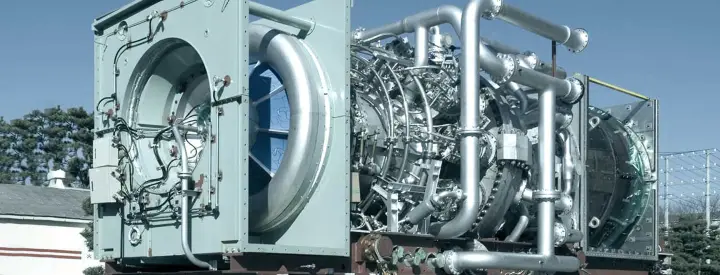
105 to 116 MW twin-shaft turbine, renamed from H-80 in 2015
This model is part of SecondWatt’s gas turbine research catalogue. Specifications and price observations are included where supported by sources. Equipment availability and commercial terms require confirmation.
Mitsubishi Power H-100 gas turbine: 105 to 116 MW ISO rating, emissions data, and why only 32 units exist worldwide with no US installation confirmed.
The H-100 is Mitsubishi Power's twin-shaft heavy-duty gas turbine, rated 105.7 MW ISO base load at 60 Hz or 116.4 MW at 50 Hz, sold in both generator-set and mechanical-drive packages. It entered commercial service in 2010 under the name "H-80" and was renamed H-100 in April 2015 with no change to the underlying specification. Any spec sheet, order record, or broker listing referencing "H-80" describes this same machine, not a discontinued predecessor - screening for "H-100" alone will miss roughly half of this model's documented history.
The H-100 is MHI's own scaled-up descendant of the smaller H-25, sharing hot-section architecture by the manufacturer's own account, though the two entered service 22 years apart on different pressure ratios and stage counts. Thermal efficiency runs 38.2 to 38.3% LHV at a heat rate of 9,400 to 9,421 kJ/kWh, with a 17:1 pressure ratio and a ten-can dry-low-NOx combustor. NOx and CO are both rated at 9 ppmvd at 15% O2. In combined cycle, a 1-on-1 block reaches 150.0 MW at 55.1% LHV (60 Hz) or 171.0 MW at 57.4% LHV (50 Hz), the number this frame's economics are built around.
Only 32 H-100 units have ever been ordered worldwide, against 201 of the smaller H-25, and every documented installation sits in Japan, with no North American project, permit, or installation on public record. Mitsubishi Power Americas' own data-center materials feature the H-25, not the H-100, citing a 5 to 50 MW sweet spot. A US buyer of a used H-100 would likely be first-of-kind on this continent.
Why it matters
Only 32 H-100 units exist worldwide and none has a confirmed North American installation, permit, or project on record. Mitsubishi Power's own data-center materials name the smaller H-25, not the H-100, for that market, citing a 5 to 50 MW sweet spot for hyperscale and colocation. A US buyer would likely be first-of-kind on this continent, a fleet-and-geography orphan risk rather than a corporate-custody one, since Mitsubishi Heavy Industries has owned this line continuously since 1988.
Who buys it
Utility and independent power producers buying combined-cycle capacity are the H-100's documented customer base, alongside LNG operators using the mechanical-drive package for train compression. At 105 to 116 MW it sits above a typical single-campus behind-the-meter buy and above where Mitsubishi Power itself markets turbines for hyperscale or colocation. The realistic data center fit is a very large multi-building campus or a multi-tenant power park, not a standard single-tenant deployment.
Role in the data center
At 105 to 116 MW, the H-100 sits above a typical single-campus behind-the-meter buy and above where Mitsubishi Power itself markets gas turbines for hyperscale and colocation; the company's own data-center materials name the smaller H-25, citing a 5 to 50 MW sweet spot, and do not feature the H-100. The H-100's realistic data-center fit is a very large multi-building campus at the top of the market or a multi-tenant power park. Its actual documented sales pattern is utility and independent-power-producer combined-cycle supply, not data-center behind-the-meter deployment.
Key specifications
| ISO base-load output, generator set, 60 Hz | 105.7 MW |
|---|---|
| ISO base-load output, generator set, 50 Hz | 116.4 MW |
| Thermal efficiency (LHV), 60 Hz / 50 Hz | 38.2 / 38.3 % |
| Heat rate, 60 Hz / 50 Hz | 9,421 (8,930) / 9,400 (8,909) kJ/kWh (Btu/kWh) |
| Exhaust flow, 60 Hz / 50 Hz | 293 / 296 kg/s |
| Exhaust temperature, 60 Hz / 50 Hz | 534 (993) / 586 (1,087) C (F) |
| Combined cycle output, 1-on-1, 60 Hz / 50 Hz | 150.0 / 171.0 MW |
| Combined cycle efficiency, 1-on-1, 60 Hz / 50 Hz | 55.1 / 57.4 % LHV |
| Pressure ratio | 17 ratio |
| Compressor | 17-stage axial stages |
| Combustor | 10-can, dry-type low-NOx cans |
| Turbine configuration | 2-shaft, 4 stages (2 HP + 2 LP) stages |
| HP (gas producer) shaft max speed | 4,580 rpm |
| LP (power turbine) shaft speed, 60 Hz / 50 Hz | 3,600 / 3,000 rpm |
| NOx / CO | 9 / 9 ppmvd @ 15% O2 |
| Renamed H-80 to H-100 (commercial debut as H-80: 2010) | 2015-04-22 date |
Technical summary
ISO base-load output: 105.7 MW (60 Hz) / 116.4 MW (50 Hz). Thermal efficiency (LHV): 38.2% (60 Hz) / 38.3% (50 Hz). Heat rate: 9,421 kJ/kWh (60 Hz) / 9,400 kJ/kWh (50 Hz). Pressure ratio: 17:1. Compressor: 17-stage axial; combustor: 10-can dry-low-NOx. Exhaust flow / temperature: 293 kg/s at 534C (60 Hz); 296 kg/s at 586C (50 Hz). Shaft speed: HP up to 4,580 rpm; LP 3,600 rpm (60 Hz) / 3,000 rpm (50 Hz). NOx / CO: 9 / 9 ppmvd at 15% O2. Combined cycle (1-on-1): 150.0 MW at 55.1% LHV (60 Hz) / 171.0 MW at 57.4% LHV (50 Hz). Renamed from H-80 to H-100: April 2015, no spec change. Global fleet: 32 units ordered per Mitsubishi Power's own order summary.
Major variations
The H-100 was called "H-80" until an April 2015 rename with no specification change. Any nameplate, spec sheet, order record, or broker listing referencing "H-80" is this same machine, not a discontinued predecessor. A buyer or researcher who filters only for "H-100" in used inventory or permit archives will miss roughly half of the model's documented history under its original name. Mitsubishi Heavy Industries' 2015 Technical Review describes the H-100 as a proportional expansion of the 30 MW-class H-25, sharing similar high-temperature-component architecture, even though the two entered service 22 years apart, in 1988 and 2010, on different pressure ratios and stage counts. The shared architecture does not make them parts-interchangeable.
Configurations and options
Two package configurations exist on the same core turbine: a generator set rated 105.7 MW at 60 Hz or 116.4 MW at 50 Hz, and a mechanical-drive package for LNG train compression rated up to 119.9 MW shaft at a customer-selected 3,000 or 3,600 rpm. The 50 Hz versus 60 Hz build is a factory decision rather than a field-convertible option, because the low-pressure power turbine runs at generator-synchronous speed directly. Combustion is a ten-can dry-type low-NOx system rated 9 ppmvd NOx and 9 ppmvd CO at 15% O2, with no conventional-combustor alternative listed on any Mitsubishi page.
Compatibility and dependencies
Generator-set and mechanical-drive H-100 packages are different products built on the same core turbine: the generator set is rated 105.7 to 116.4 MW electrical ISO, while the mechanical-drive package for LNG train compression is rated up to 119.9 MW shaft output at a customer-selected 3,000 or 3,600 rpm. The 50 Hz versus 60 Hz build is a factory decision, not a field-convertible option, since the power-turbine shaft runs at generator-synchronous speed directly. Hot-section architecture is shared with the smaller H-25 by Mitsubishi's own account, but the two frames are not parts-interchangeable given the H-100's different pressure ratio and stage count.
Pricing and availability
Comparable secondary-market band: 212–853 $ per kW. Trend: stable No H-100 price observation exists in any public channel, priced or unpriced, so there is no series from which to establish a direction. Lead time, new: Confirm current order-book position directly with Mitsubishi Power Americas; no public lead time is quoted for this model. Lead time, used or refurbished: No H-100 listing appears in any broker or auction channel, so no used lead time can be quoted. Warranty, used: No H-100 listing exists to publish warranty terms; any used purchase would negotiate terms directly with the seller and Mitsubishi Power.
Lifecycle and maintenance
Mitsubishi publishes no hot-section-inspection or major-overhaul interval in fired hours for the H-100, and no overhaul cost as a fraction of machine value, despite the model's 2010 commercial debut. Mitsubishi Power Americas' service page describes long-term service agreements offering competitive parts life and intervals rather than a published fixed schedule, condition-based framing rather than a stated number. The clearest real-world data point is the Futtsu Power Station No. 4 unit replacement in Japan: a full H-100 swap completed in 156 days, 24 days ahead of the original 180-day plan, raising the block's combined-cycle efficiency from 47.2% to 54.3%.
Thermal and emissions profile
NOx and CO are both stated at 9 ppmvd at 15% O2, a single figure for both pollutants, with no conventional non-DLN alternative offered on any Mitsubishi page. This is achieved through a ten-can dry-type low-NOx combustor, described generically as DLN rather than under a named brand. At roughly 944 MMBtu/hr heat input at 60 Hz the H-100 falls in the federal large-turbine bin, where Subpart KKKK sets 15 ppm and the newer Subpart KKKKa sets 5 ppm for high-utilization units, so a post-2024 US build needs SCR on top of the combustor. No EPA docket, state air permit, or CARB filing names a Mitsubishi H-100 unit, so a US siting review would proceed on OEM-guaranteed figures with no local precedent.
Common failure points
- Dry-type low-NOx combustor (10-can) — Cracking, coking, or NOx/CO drift above the 9/9 ppmvd baseline at 1,300C-class firing temperature
- HP turbine 1st/2nd stage blades (air-cooled) — Creep and coating spallation near the 4,580 rpm HP-shaft speed
- 17-stage axial compressor — Fouling and erosion against the pressure-ratio-17 design baseline, reducing output below the 105.7/116.4 MW ISO rating
- Generator and excitation system — Winding insulation degradation; Mitsubishi does not publish the make or model of the generator supplied with the package
- Control system generation — Obsolete hardware or software, compounded by a global fleet of only 32 H-100 units limiting spares pooling
- LP power turbine blades — Erosion and tip-clearance wear near the 3,600/3,000 rpm synchronous shaft speed
- Package and auxiliary systems — Corrosion or seal degradation from storage or international transport
Inspection checklist
Confirm the nameplate frequency: ISO base-load rating is 116.4 MW at 50 Hz versus 105.7 MW at 60 Hz, and the two builds are not interchangeable. Verify whether the unit is original H-80/H-100 vintage or a later uprated build: Mitsubishi renamed H-80 to H-100 in April 2015 with no spec change, and a separate program later pushed some units toward a 120 MW class. Pull fired hours and starts directly from the turbine control system logs: with only 32 H-100 units ordered worldwide, there is no mass-produced fleet to benchmark an individual unit against. Confirm the exact serial number against Mitsubishi Power's own records: a fleet this small makes provenance verification both easier to do and more important to do. Borescope the 17-stage axial compressor: reference the 17:1 design pressure ratio when judging erosion and fouling severity.
Procurement channels
No H-100 listing, priced or unpriced, appears in any public channel. Surplus Record's gas-turbine-generator listings carry no Mitsubishi entry of any kind, and Salvex, Phoenix Equipment, and IronPlanet carry no H-100 either. For this model the realistic acquisition path is a new order or a whole-plant transaction in Japan, not a broker purchase.
Regional notes
Every documented H-100 installation sits in Japan: the model's 2010 commercial debut and a documented 2016-era replacement both occurred at TEPCO's Futtsu Power Station, and a 2014 delivery went to the Osaki CoolGen project. No US or Canadian H-100 project, installation, air permit, or EIA-860 filing appears on public record, in contrast to the sibling H-25's documented order history in Taiwan, China, and Uzbekistan.
Content owner: Gary Martin, SecondWatt