Solar Turbines Mars 90
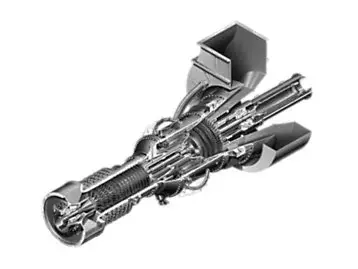
Solar Turbines Mars 90 generator set, 9,450 kWe ISO base load; units built before SoLoNOx may need emissions review
This model is part of SecondWatt’s gas turbine research catalogue. Specifications and price observations are included where supported by sources. Equipment availability and commercial terms require confirmation.
Solar Turbines Mars 90 dossier: verified 9,450 kWe generator-set rating, SoLoNOx emissions history, overhaul economics, and pricing for data center buyers.
The Solar Turbines Mars 90 generator set is rated 9,450 kWe ISO at generator terminals, not the 9,860 kW / 13,220 hp mechanical-drive figure Solar's marketing leads with, about 4% higher. What decides siting, before price enters the conversation, is combustion hardware and vintage: SoLoNOx did not exist before 1992, fifteen years after Mars 90's 1977 introduction. Both dated used units on the market in August 2026 were built in 1989, three years too early for SoLoNOx, whose original guarantee was only 42 ppmvd NOx / 50 ppmvd CO, above today's 9/15 ppmvd warranty.
A pre-SoLoNOx unit is not automatically unusable: regulators permitted three Mars 90 units at a Carson, CA digester-gas plant on water injection plus SCR, tested at 19.3-21.5 ppmvd NOx under a 25 ppmvd limit. Mars 90 and Mars 100 share one twin-shaft architecture, not two machines, under one Solar package specification. Mars 100 (11,350 kWe) is Solar's current new-build PG product; Mars 90 has no current PG page and is now secondary-market/exchange inventory only. A Mars 100 is not a drop-in for a Mars 90 footprint, and a Mars 90 against a Mars 100 requirement undersizes it.
Solar's generic Power Uprate program claims up to 20% output gain, which applied to 9,450 kWe reaches roughly 11,340 kWe, near Mars 100's rating - inference, not a named conversion product Solar advertises. Solar publishes no hot-section or major-overhaul interval in fired hours for the Mars 90. Solar's Pre-Owned Equipment Program lists Mars 90 with warranty reinstatement to a second owner; every broker listing open in August 2026 was quote-on-request, so no public asking price exists for this nameplate.
Why it matters
Before price enters the conversation, get the combustion hardware type and vintage in writing: SoLoNOx did not exist before 1992, fifteen years after Mars 90's 1977 introduction, and both dated used units on the market in August 2026 were built in 1989, three years too early to have it from the factory. Original-vintage SoLoNOx was guaranteed only under 42 ppmvd NOx, against today's 9 ppmvd warranty. That fact, not hours or price, decides whether a used Mars 90 is usable at a site at all.
Who buys it
Data center developers and EPCs assembling multi-unit distributed-power blocks buy Mars 90 generator sets alongside its historical core market of oil and gas producers and industrial cogeneration hosts. Solar's own Pre-Owned Equipment Program lists Mars 90 directly for brokers, resellers, and secondary-market buyers, not only original purchasers. Buyers evaluating a Mars 100 requirement also shop Mars 90 as a lower-output sibling built on the same core architecture.
Role in the data center
Bridge or prime power block in the 7-9.5 MW-per-unit range, sized in multi-unit rows feeding campus medium-voltage switchgear. What gates the buy is combustion-hardware vintage and the resulting permit path rather than output: a pre-1992 conventional-combustion unit needs a SoLoNOx retrofit or water injection plus SCR before it can be sited in most US jurisdictions.
Key specifications
| ISO output, Mars 90 (discontinued; secondary market only) | 9,450 kWe |
|---|---|
| Generator-set heat rate | 11,300 (10,710) kJ/kWe-hr (Btu/kWe-hr) |
| Mechanical-drive shaft output | 9,860 (13,220) kW (hp) |
| Mechanical-drive heat rate | 10,830 (7,655) kJ/kW-hr (Btu/hp-hr) |
| Engine thermal efficiency (shaft basis) | 33.2 percent |
| Exhaust flow | 144,585 (318,755) kg/hr (lb/hr) |
| Exhaust temperature | 465 (870) degC (degF) |
| Pressure ratio | 16.3:1 ratio |
| Axial compressor stages | 15 stages |
| Gas-producer turbine max speed | 11,170 rpm |
| Power-turbine max speed | 9,500 rpm |
| Generator shaft speed (as fielded, 60 Hz) | 1,800 rpm |
| Original SoLoNOx-era Mars 90S guaranteed NOx | below 42 ppmvd |
| Current-generation SoLoNOx NOx warranty (portfolio-wide) | 9 ppm |
| SoLoNOx introduction year | 1992 year |
| Caterpillar acquisition of Solar Turbines, Caterpillar corporate history page | 1981 year |
| Caterpillar subsidiary date, Solar Turbines company history page | 1984 year |
Technical summary
ISO electrical output (generator set): 9,450 kWe. Generator-set heat rate: 11,300 kJ/kWe-hr (10,710 Btu/kWe-hr). Mechanical-drive shaft rating (different product): 9,860 kW / 13,220 hp. Exhaust flow / temperature: 144,585 kg/hr / 465 C (870 F). Pressure ratio: 16.3:1, 15-stage axial compressor. Gas-producer / power-turbine max speed: 11,170 / 9,500 rpm. Generator shaft speed (as fielded, 60 Hz): 1,800 rpm. SoLoNOx: optional, introduced 1992; original guarantee below 42 ppmvd NOx. Current SoLoNOx warranty (portfolio-wide): 9 ppmvd NOx / 15 ppmvd CO.
Major variations
Mars 90 and Mars 100 share one twin-shaft, 15-stage-axial-compressor, annular-combustor architecture, not two unrelated machines; Solar issues one combined Mars 90/Mars 100 package specification covering both. Mars 100 (11,350 kWe) is Solar's current new-build power-generation product; Mars 90 carries no current power-generation catalog page and exists today as secondary-market and exchange inventory. Substitution runs one way: a Mars 100 is not a casual drop-in for a Mars 90-sized footprint or gearbox/generator train without engineering review, while specifying a Mars 90 where a Mars 100 was required simply undersizes the load, a capacity shortfall rather than a substitution question. Solar's generic overhaul-time Power Uprate program states it can increase power by as much as 20% and heat rate by 5%, depending on model.
Configurations and options
Solar sells this core engine in three package configurations: generator set, gas compressor package, and general mechanical drive. Combustion is either Conventional diffusion-flame or SoLoNOx dry low emissions rather than one fixed factory build, and which one a given used unit carries has to be confirmed unit by unit against the nameplate. Every used generator-set listing open in August 2026 was a 60 Hz, 4,160 V configuration, and Solar publishes no 50 Hz generator-set data sheet for the Mars 90, so treat 50 Hz availability as something to confirm with Solar rather than assume.
Compatibility and dependencies
Verify whether the specific unit is Conventional or SoLoNOx combustion, and if SoLoNOx, which generation and its guaranteed ppm level, before assuming permittability at a given site. A reduction gearbox steps the roughly 9,500 rpm power-turbine speed down to 1,800 rpm at a 60 Hz, 4-pole generator on fielded units; confirm frequency and generator voltage against the specific listing rather than assuming it.
Pricing and availability
Comparable secondary-market band: 74–445 $ per kW. Trend: stable No public dollar figure exists for this model in any broker channel open in August 2026, so no directional 5-year trend can be established. Both dated used units on the market were built in 1989, consistent with an aging, oil-and-gas-driven secondary-market population rather than an active new-build pipeline, since Solar no longer carries a current power-generation catalog page for the Mars 90. Warranty, used: Solar Pre-Owned/exchange program offers warranty reinstatement on secondary-market units; otherwise as-is typical on broker/reseller listings.
Lifecycle and maintenance
Solar publishes no Mars 90-specific hot-section-inspection interval, major-overhaul interval, or overhaul cost in fired hours or dollars; a sibling model's figures are not a substitute and should not be borrowed. Solar's factory Pre-Owned Equipment Program does list the Mars 90 among supported models and offers warranty reinstatement to a second owner, so the overhaul and exchange relationship transfers with the asset. EthosEnergy independently services the Mars 90 from a Houston parts inventory it values above 20 million USD, an alternate channel to Solar factory support.
Thermal and emissions profile
SoLoNOx dry low-emissions combustion is optional on the Mars 90, not standard, and did not exist before 1992, fifteen years after the model's 1977 introduction. Both dated used units on the market in August 2026 were built in 1989, three years too early to carry it from the factory. Original-vintage SoLoNOx was guaranteed only under 42 ppmvd NOx and 50 ppmvd CO on natural gas; today's SoLoNOx warranty is 9 ppmvd NOx / 15 ppmvd CO. A documented alternative exists: three Mars 90 units at a Carson, California digester-gas plant run water injection plus SCR instead, tested at 19.3 to 21.5 ppmvd NOx against a 25 ppmvd BACT limit. Get combustion hardware type and vintage in writing before price enters the conversation, because that single fact decides whether a used unit can be sited at all.
Common failure points
- Combustor liner / fuel nozzles — coking, hot streaking, or cracked liner panels on borescope
- Hot-section turbine blades (gas producer) — tip curl, coating spallation, or creep beyond OEM limits
- Reduction gearbox — rising vibration or metal in oil analysis between the 9,500 rpm input and 1,800 rpm output
- SoLoNOx / water-injection combustion hardware — pre-1992 units lack SoLoNOx entirely; retrofit water-injection skids show nozzle plugging and corrosion
- Generator windings — falling insulation resistance on megger test versus nameplate class
- Control system (Turbotronic or legacy panel) — obsolete Turbotronic 3 or older analog panels with dwindling parts support
- Package enclosure and base frame — corrosion at the skid base and inlet/exhaust ducting on units built since 1977
Inspection checklist
Fired hours since new, and hours since the last hot-section inspection: request both figures in writing, not a verbal estimate. Starts and starts since the last combustion inspection: request the last 2 inspection reports to see the trend, not just a current count. Combustion system fitted: Conventional versus SoLoNOx (DLE); SoLoNOx only exists on units built or retrofitted after 1992. If SoLoNOx, the combustor generation: original-issue hardware was guaranteed under 42 ppmvd NOx and 50 ppmvd CO, well above the 9 ppmvd/15 ppmvd modern warranty. Borescope of both gas-producer and power-turbine sections: request the last 2 borescope video sets, not a summary memo. Blade and nozzle condition on all rows inspected: flag any single blade with tip curl or coating loss beyond the OEM limit.
Procurement channels
Solar's factory Pre-Owned Equipment Program lists the Mars 90 directly, with warranty reinstatement to a second owner. Independent broker and dealer channels carrying the model in August 2026 - IMP Corporation, Phoenix Equipment, and Perry Videx - list units quote-on-request without a published price. EthosEnergy offers independent overhaul and exchange service from a Houston parts inventory it values above 20 million USD, a non-factory channel that matters most for a pre-SoLoNOx unit needing combustion work.
Regional notes
Every used generator-set listing open in August 2026 was a 60 Hz, 4,160 V configuration, and Solar publishes no 50 Hz generator-set data sheet for the Mars 90, so a 50 Hz requirement should be put to Solar directly rather than assumed from the gas-compressor literature. The documented US installations sit in California under district BACT rules, which is where the pre-1992 combustion question bites hardest.
Content owner: Gary Martin, SecondWatt