Siemens Energy SGT6-5000F
Manufacturer: Siemens Energy
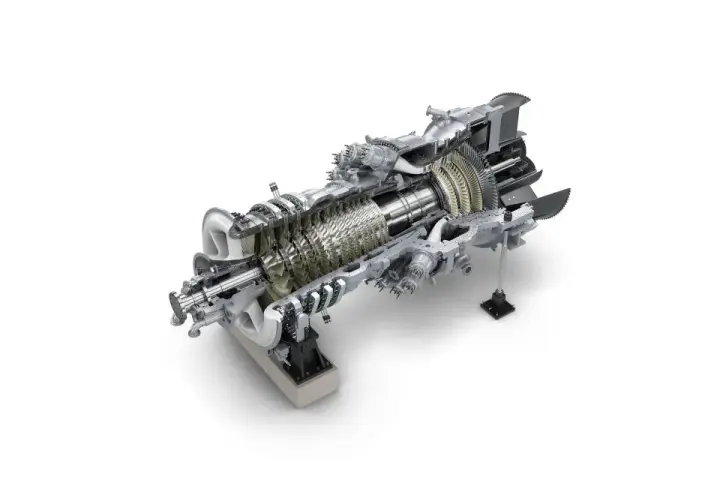
260 MW 60 Hz F-class frame; see the dossier for rating basis and sources
This model is part of SecondWatt’s gas turbine research catalogue. Specifications and price observations are included where supported by sources. Equipment availability and commercial terms require confirmation.
Siemens SGT6-5000F (W501F) dossier: 260 MW specs, 9 ppm NOx combustion, fleet failure points, plant-level market pricing, and inspection checklist.
The Siemens Energy SGT6-5000F is a 60 Hz F-class heavy-duty frame gas turbine, developed as the Westinghouse W501F and first operated commercially in 1993 at Florida Power and Light's Lauderdale station. The current rating is 260 MW simple cycle at 40.6% gross efficiency, 398 MW in 1x1 combined cycle at 60.5%, with more than 420 units sold and over 21 million fleet operating hours.
SGT6-5000F blocks carry US and international combined-cycle baseload and capacity duty, and the fleet is a major upgrade market: Siemens ATEP packages add up to 28 MW per turbine, and Hanwha PSM supplies alternative hot-gas-path hardware rated to 32,000 equivalent baseload hours. Its 9 ppm NOx dry combustion is the lowest published in the F-class.
No complete SGT6-5000F or W501F appeared on public surplus platforms in August 2026; the visible secondary market is parts, rotors, and whole-plant M&A. Recent transactions price operating F-class-era fleets at roughly 743 to 923 USD per kW (Vistra-Lotus, NRG-LS Power), with Enverus recording top PJM assets near 1,930 USD per kW.
Why it matters
With more than 420 units sold, the 5000F fleet is one of the largest 60 Hz F-class populations and the most contested aftermarket: Siemens ATEP and Hanwha PSM compete on hot-gas-path hardware, keeping parts pricing rational while whole plants reprice upward. M&A comps at 743-923 USD per kW against 2,200-3,000 USD per kW newbuild make operating 5000F fleets prime acquisition targets.
Who buys it
Utilities and IPPs buy SGT6-5000F plants for capacity markets and baseload; data center-driven acquirers now compete for the same fleets. Parts buyers, rotor shops, and operators with 501F fleets hunt surplus material through brokers such as AR Turbines. The trigger is the multi-year new-unit queue and the F-class fleet's deep, competitive aftermarket.
Role in the data center
Acquired combined-cycle capacity for campus or grid-adjacent supply: a 1x1 block delivers about 398 MW and 2x1 fleets near 800 MW, at well below newbuild cost. Siemens Energy publishes a 10-minute start from turning gear to 95% load, so an acquired F-class block can carry load-following duty rather than baseload only.
Key specifications
| SC output | 260 MW |
|---|---|
| SC gross efficiency | 40.6 % |
| SC heat rate | 8870 kJ/kWh |
| CC output, 1x1 | 398 MW |
| CC gross efficiency, 1x1 | 60.5 % |
| CC output, 2x1 | 798 MW |
| Pressure ratio | 19.5:1 |
| Exhaust flow | 587 kg/s |
| Exhaust temperature | 589 C |
| Shaft speed / frequency | 3600 / 60 rpm / Hz |
| NOx on natural gas | 9 ppmvd (or lower) |
| CO on natural gas | 4 ppmvd (under) |
| Start, turning gear to 95% load | 10 minutes |
| Hydrogen blend capability | 30 % by volume |
| Fleet units sold | 420 units (more than) |
| Fleet operating hours | 21000000 hours (more than) |
| ISO gross output, SGT6-5000F (60 Hz) | 260 MW |
Technical summary
SC output: 260 MW at 40.6 % gross. SC heat rate: 8870 kJ/kWh (8400 Btu/kWh). CC output 1x1: 398 MW at 60.5 % gross. CC output 2x1: 798 MW at 60.6 %. Pressure ratio: 19.5:1. Exhaust flow: 587 kg/s. Exhaust temperature: 589 C. Shaft speed / frequency: 3600 rpm / 60 Hz. NOx on gas: 9 ppmvd or lower without water injection. Start: 10 minutes turning gear to 95% load, ramp to 40 MW/min. Hydrogen capability: up to 30 % by volume. Fleet: more than 420 units sold, over 21 million hours.
Major variations
Generations run 501FA, 501FC, 501FD2, 501FD3, SGT6-5000F(4), F(5), and F(5ee), with rating and hot-section differences that matter for parts interchange. Pre-F(4) units carry the early compressor thru-bolt design. Aftermarket configurations include Siemens ATEP uprates (up to +28 MW) and Hanwha PSM GTOP6 hot-gas-path hardware with FlameSheet combustion retrofits.
Configurations and options
Fleet units run in 1x1 and 2x1 combined-cycle blocks and some simple-cycle peakers. Configuration variables on the aftermarket: FD2 versus FD3 hot sections, ULN combustion conversions reaching 9-12 ppm NOx, water-injection oil capability, and rotor generation. Rotors, cases, and full hot-gas-path sets trade as discrete assets.
Compatibility and dependencies
Single-shaft 60 Hz machine on heavy foundations with high-pressure fuel gas and plant-integrated controls. Parts interchange depends on generation (FD2/FD3/F5); ULN and FlameSheet combustion systems have distinct fuel and tuning requirements. Rotor overhauls run through Siemens, Sulzer, and other shops with published 12-rotor-class experience.
Pricing and availability
Comparable secondary-market band: 743–1930 $ per kW. Trend: rising Unit-level asks are absent, but plant-level comps stepped up sharply: Vistra's 2025 Lotus fleet purchase priced about 743 USD per kW, NRG-LS Power about 923 USD per kW, and Enverus recorded top PJM assets near 1,930 USD per kW in October 2025 with sector multiples roughly doubling since 2024. Newbuild replacement at 2,200-3,000 USD per kW anchors the ceiling. Lead time, new: 36-60 months. Lead time, used or refurbished: 6-18 months. Warranty, used: As-is; parts carry vendor terms (OEM or PSM).
Published cost benchmarks
Cost figures from filings and published studies. They describe budgets or project costs, not equipment prices.
- $440M · SGT6-5000F
- $360M · Siemens CT "similar to existing units"
Supply, delivery and overhaul
- Delivery time: 36 months
Lifecycle and maintenance
Siemens reports over 99% fleet reliability across 21 million hours. Hot-gas-path life extends to 32,000 equivalent baseload hours and 900 equivalent starts with Hanwha PSM GTOP6 hardware; Siemens ATEP modernization adds up to 28 MW and cuts heat rate by up to 572 Btu/kWh. 501FD2 rotors (32 ft, 54 tons) overhaul through Sulzer-class shops; published rotor design life in EOH is not available and remaining-life accounting drives valuation.
Thermal and emissions profile
The SGT6-5000F's dry can-annular combustion achieves 9 ppmvd NOx or lower on gas without water injection, with CO under 4 ppmvd, per Siemens product documentation; oil firing runs 25 ppmvd with water injection. That meets the 15 ppm line of 40 CFR 60 Subpart KKKK for turbines above 850 MMBtu/h without SCR, while the January 2026 KKKKa revision's 5 ppm high-utilization line means new installations still add SCR. ULN fleet conversions reach 9-12 ppm per users-group reporting.
Common failure points
- Compressor thru-bolts (early units) — Fractures initiating in threaded sections between rows
- R1 blade seal-pin slots — Hard-pack debris shifts blade frequency, enabling HCF fracture
- Exhaust manifolds and struts — Chronic cracking under cycling; severed struts documented
- Row 3/4 turbine hardware — Blade, vane, and ring-segment damage; distorted shroud platforms
- IGV mechanisms — Sticking and freeze-up at low ambient
- Generator main leads — Brazed-joint failures
Inspection checklist
Compressor thru-bolts: on pre-F(4) units, verify inspection history for threaded-section fractures between compressor rows. R1 compressor blades: inspect seal-pin slots for hard-pack debris that alters blade frequency; documented HCF fracture driver. Exhaust system: inspect manifolds, cylinders, and all struts for cracking; two of six struts severed within 5 months at one plant. Row 3 turbine hardware: check shroud platforms for distortion and ring segments for damage per 2022 users-group reporting. Row 4 blade tips: measure tip clearances against baseline; drift within 5 months of prior readings flags active distress. IGVs: cycle inlet guide vanes; verify bushing lubrication and freeze-protection where ambient reaches -2 F. Rotor: audit hours and starts; 501FD2 rotor overhauls have found circumferential cracks at stage pilots with corrosion pitting.
Procurement channels
Whole-plant M&A dominates; loose W501F/SGT6-5000F material trades through parts brokers (AR Turbines), aftermarket suppliers (Hanwha PSM, EthosEnergy), and rotor shops (Sulzer). No complete units were listed on public surplus platforms in August 2026; F-class-era plant offerings surface through Repowering Solutions and advisor-run processes.
Regional notes
60 Hz machine concentrated in North America with additional fleets in the Middle East, Asia, and Latin America. US fleet is the epicenter of both the upgrade aftermarket (ATEP versus PSM) and data center-driven plant acquisitions.
Content owner: Gary Martin, SecondWatt