GE LM6000 Gas Turbines for Sale
Manufacturer: GE Vernova
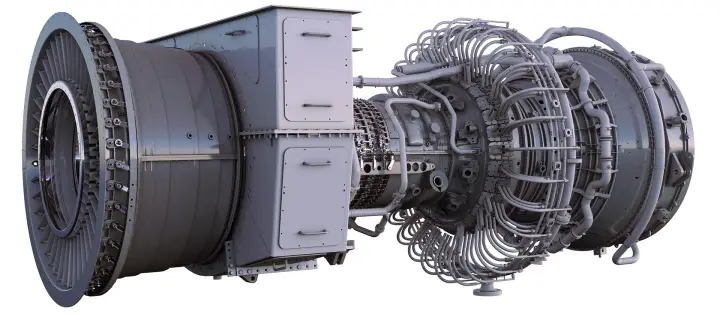
LM6000 model research, SPRINT checks and used-equipment sourcing.
This model is part of SecondWatt’s gas turbine research catalogue. Specifications and price observations are included where supported by sources. Equipment availability and commercial terms require confirmation.
Compare used and refurbished GE LM6000 gas turbines, review price evidence and SPRINT specifications, and send your project requirements to SecondWatt.
Research the GE LM6000 gas turbine, compare used-equipment offers and send SecondWatt the requirements for your project. A useful shortlist connects the exact engine configuration, generator package, condition records and site requirements to a defined commercial offer.
Evaluating an LM6000 gas turbine for sale starts with the power you need at your site. Confirm whether the advertised output depends on SPRINT, what equipment transfers with the purchase, and which costs remain outside the offer. Model research helps establish those questions; availability and terms must be confirmed for each opportunity.
LM6000 price and equipment cost
An LM6000 price depends on the equipment being acquired. An engine assembly, a complete turbine-generator package and a combined-cycle plant have different scopes. Compare the variant, documented condition, electrical configuration, included equipment, delivery point and commercial terms before using a quoted amount in a project budget.
On September 24, 2026, FreeOilfieldQuote listing 69278817 displayed US$22,626,000 each for a used 2012 LM6000 PC generator set. The advertiser describes 50 Hz equipment in Europe and lists 50.8 MW. Its buyer notice gives an as-is, no-warranty basis unless different terms are agreed in writing.
Evidence status: Public seller claim. Equipment identity, condition, completeness, output, ownership and current availability have not been independently verified here. One advertisement cannot establish an LM6000 market range or the amount a comparable unit actually sold for. Obtain the equipment schedule and a dated, unit-specific offer before relying on the amount.
What belongs in an LM6000 gas turbine price comparison?
| Comparison field | Information to request |
|---|---|
| Equipment identity | Engine variant, generator identity, package supplier and traceable unit reference. |
| Condition | Hours, starts, service history, preservation records, inspection findings and proposed work. |
| Installed options | SPRINT, combustion arrangement, fuel capability, inlet systems and emissions equipment. |
| Included scope | Turbine, generator, controls, auxiliaries, inlet/exhaust equipment, loose items and spares. |
| Commercial basis | Currency, per-unit or lot price, quotation date, validity, location and delivery responsibilities. |
| Costs outside the offer | Applicable inspection, repairs, removal, transport, missing equipment, site works and commissioning. |
Use the used gas turbine cost guide to turn those fields into comparable quotations. Keep equipment cost and the cost of producing electricity in separate calculations.
GE LM6000 specifications: output and efficiency
The following are named current-package references, not guaranteed ratings for every used LM6000 engine or installation.
| Current reference configuration | Simple-cycle net output | Net efficiency, LHV |
|---|---|---|
| LM6000VELOX PC SPRINT | 51.1 MW | 39.7% |
| LM6000VELOX PF+ SPRINT | 56.9 MW | 41.0% |
Source: GE Vernova's LM6000 product table, reviewed September 24, 2026. The table covers 50 Hz and 60 Hz, using ISO conditions and natural gas. Its stated boundary includes inlet and exhaust losses and excludes balance-of-plant equipment. Actual project conditions can change performance.
LM6000 power output at your site
Request performance for the offered configuration at the project's ambient conditions, fuel specification and operating duty. Identify the measurement point and auxiliary loads. Compare the output available with the installed enhancement systems operating and the supported case when they are unavailable. The site-output and derating guide explains the information to supply.
LM6000 heat rate and combined-cycle comparisons
GE Vernova's product table lists 8,328 Btu/kWh LHV for the LM6000VELOX PF+ SPRINT reference. Keep the configuration and heating-value basis attached to that number. A reference heat rate should not be assigned automatically to an older offered machine.
A combined-cycle plant includes additional generating equipment and a different performance boundary. The GE LM6000 fact sheet separates simple-cycle and combined-cycle references. Match the quoted plant scope to the rating being used.
LM6000 PC, PF and PF+: identify the offered configuration
Keep the engine designation, combustion arrangement, generating package and installed enhancements as separate fields. The MTU LM6000 overview distinguishes PC, PD/PF, PG, PH and PF+ configurations. It is a useful identification reference; records for the offered equipment establish what is actually installed.
When a supplier offers an LM6000 PF or PF+ package, request the complete designation and modification history. A missing suffix can change the product being compared. Similarly, a current LM6000VELOX reference does not establish the performance or included equipment of a legacy LM6000 package.
Confirm the generator's electrical frequency, voltage and drive arrangement against the receiving system. Use the 50 Hz and 60 Hz compatibility guide to prepare a specific supplier response.
LM6000 SPRINT and water requirements
GE Vernova describes SPRINT as spray intercooling that uses demineralized water to improve turbine performance. The effect depends on the configuration and operating conditions; there is no single output increase or water-consumption figure that should be applied to every offered unit.
Ask whether SPRINT is installed, complete, supported by the controls and included in the quoted scope. Obtain the applicable water-quality specification, consumption schedule, treatment and storage requirements, and performance with SPRINT out of service. Include any local constraints on water supply in the sourcing request.
DLE identifies a combustion arrangement; SPRINT identifies an enhancement system. Establish both from equipment records rather than inferring one from the other or from a shortened listing title.
Buying a used or refurbished LM6000
A refurbished LM6000 needs a documented work scope. Ask which assemblies were inspected, repaired or replaced, who performed the work, what tests followed, and which warranty terms apply. Distinguish completed work from refurbishment proposed as part of the sale.
For a used unit, review operating hours and starts alongside maintenance, trips, modifications and storage history. Remaining service depends on the actual equipment and applicable service instructions. A generic maintenance interval or a reset counter is insufficient evidence of remaining life.
Inspection and records checklist
- Traceable engine, generator and package identities.
- Operating and maintenance history, including known unresolved findings.
- Applicable service-bulletin status established against the actual configuration.
- Inspection and test evidence reviewed by a qualified specialist.
- Installed SPRINT, fuel, emissions, controls and auxiliary-system scope.
- Preservation, dismantling and storage records where relevant.
- Agreed acceptance criteria, outstanding work and responsibility for each item.
The remaining-life and overhaul guide provides a broader records framework. This checklist organizes due diligence; equipment-specific OEM instructions and specialist judgment determine inspection and acceptance requirements.
LM6000 availability and delivery planning
Ask for separate milestones for inspection access, commercial release, readiness to ship, arrival, installation and acceptance. Equipment availability is one input to the schedule. Fuel supply, electrical interfaces, site work, applicable approvals and commissioning arrangements also need named owners.
Use the gas turbine RFQ checklist to request offers on a consistent basis. For alternative equipment families, see the LM2500, LM6000 and SGT-800 comparison and the gas turbine hub.
LM6000 buyer questions
Is every LM6000 for sale equipped with SPRINT?
Confirm the installed systems and their condition for the particular unit. An LM6000 family name or a SPRINT-enhanced reference rating does not establish that the offered equipment includes the system.
Does an LM6000 price include the generator and auxiliaries?
The equipment schedule determines what transfers. Request an included/excluded list for the engine, generator, controls, fuel systems, starting equipment, inlet/exhaust systems and other package components.
Can a fleet reliability figure establish a used unit's condition?
No. Fleet statistics describe a defined population and reporting method. Evaluate the offered unit through its own history, inspections and applicable acceptance criteria. A count of reported incidents is not a unit-specific failure rate.
What should I send with an LM6000 sourcing request?
Provide site location, required net output, electrical frequency and voltage, fuel and water information, operating duty, preferred condition, package scope and target delivery and operating dates. Include an existing offer or equipment schedule if you want to compare a specific candidate.
Request LM6000 sourcing
Send your LM6000 project requirements. Identify any mandatory configuration requirements and whether alternative models or non-SPRINT candidates are acceptable.
Role in the data center
Prime or bridge block of 45-57 MW behind the meter, one to two units per campus phase, feeding medium-voltage distribution with N+1 sparing across phases. GE Vernova publishes a five-minute start to full load, which is what lets one unit cover a phase-one bridge and then take peaking or grid-firming duty once permanent supply arrives.
Key specifications
| Net output, LM6000VELOX PC Sprint | 51.1 MW |
|---|---|
| Net output, LM6000VELOX PF+ Sprint | 56.9 MW |
| SC efficiency, PF+ Sprint | 41.0 % |
| SC heat rate, PF+ Sprint (LHV) | 8328 Btu/kWh |
| Combined cycle output, PF+ Sprint 1x1 | 75.8 MW |
| Maximum pressure ratio, PF+ | 33:1 |
| Exhaust flow, PF+ | 306 lb/s |
| Exhaust temperature, PF+ packaged | 496 C |
| Shaft speed, 60 Hz direct drive | 3600 rpm |
| NOx, LM6000 DLE combustor on natural gas (GE-stated capability; load and ambient conditions not stated; site permit limits govern) | 15 ppm |
| Hydrogen blend, LM6000 PC package (Baker Hughes overview; combustor and emissions configuration must be confirmed per unit) | 30 % by volume |
| Start to full load, LM6000VELOX package (GE-stated; applies to that package, not every LM6000; start conditions not stated) | 5 minutes |
| VELOX package footprint | 20.43 x 4.1 m |
| ISO net output, LM6000 PC Sprint (LM6000VELOX) | 51.1 MW |
| ISO net output, LM6000 PF+ Sprint (LM6000VELOX) | 56.9 MW |
| ISO net output, LM6000 PF+ (non-Sprint) | 52.5 MW |
Versions and ratings
- LM6000 DLE (model letter not stated in source) · 40.2 MW · ISO gross · 60 Hz
- LM6000 DLE (model letter not stated in source) · 42.3 MW · ISO gross · 60 Hz
- LM6000 DLE SPRINT (model letter not stated in source) · 46.9 MW · ISO gross · 60 Hz
- PC · 41.8 MW · ISO gross · 60 Hz
- PC · 43.1 MW · ISO gross · 60 Hz
- PC · 43.3 MW · ISO gross · 60 Hz
- PC · 43.3 MW · ISO gross
- PC · 43.9 MW · ISO gross · 60 Hz
- PC · 43.9 MW · ISO gross · 60 Hz
- PC Sprint · 41.8 MW · ISO gross · 60 Hz
- PC Sprint · 43.8 MW · ISO gross · 60 Hz
- PC Sprint · 46.7 MW · ISO gross · 60 Hz
- PC Sprint · 50.3 MW · ISO gross · 60 Hz
- PC Sprint · 50.5 MW · ISO gross · 60 Hz
- PF · 43.3 MW · ISO gross
- PF · 45.3 MW · ISO net · 60 Hz
- PF · 45.4 MW · ISO net · 50 Hz
- PF Sprint · 49 MW · ISO net · 50 Hz
- PF Sprint · 49.2 MW · ISO net · 60 Hz
- PF+ · 52.5 MW · ISO gross · 50 Hz
- PF+ · 52.5 MW · ISO gross · 60 Hz
- PF+ Sprint · 56.9 MW · ISO net · 60 Hz
- PF+ Sprint · 57 MW · ISO net · 50 Hz
Published cost benchmarks
Cost figures from filings and published studies. They describe budgets or project costs, not equipment prices.
- $80M · used LM6000
- $204.9M · LM6000PC SPRINT, 6 x 0 simple cycle · 2024 dollars
- $39.1M · LM6000PC SPRINT, 6 x 0 simple cycle · 2024 dollars
- $36.6M · LM6000PC SPRINT, 6 x 0 simple cycle · 2024 dollars
- $460.5M · LM6000PC SPRINT, 6 x 0 simple cycle · 2024 dollars
- $501.2M · LM6000PC SPRINT, 6 x 0 simple cycle · 2024 dollars
- $562.8M · LM6000PC SPRINT, 6 x 0 simple cycle
- $209.8M · 6 x LM6000PC simple-cycle · 2025 dollars
- $40.1M · 6 x LM6000PC simple-cycle · 2025 dollars
- $37.5M · 6 x LM6000PC simple-cycle · 2025 dollars
- $471.6M · 6 x LM6000PC simple-cycle · 2025 dollars
- $513.3M · 6 x LM6000PC simple-cycle · 2025 dollars
Supply, delivery and overhaul
10 units listed without public prices.
- Delivery time: 20 months (LM6000)
- Delivery time: 29 months (LM6000VELOX)
- LPT depot repair (unplanned, after borescope)
- emergency combustor replacement; not scheduled major overhaul
- hot section: 16000 hours
- major overhaul: 48000 hours
- hot section: 16000 hours
- major overhaul: 48000 hours
- hot section: 16000 hours
- major overhaul: 48000 hours
- hot section: 25000 hours
- major overhaul: 50000 hours
- hot section: 25000 hours
- major overhaul: 50000 hours
- hot section: 25000 hours
- major overhaul: 50000 hours
- hot section: 25000 hours
- major overhaul: 50000 hours
- hot section: 25000 hours
- major overhaul: 50000 hours
- hot section: 25000 hours
- major overhaul: 50000 hours
- hot section: 25000 hours
- major overhaul: 50000 hours
- hot section: 25000 hours
- major overhaul: 50000 hours
- hot section: 25000 hours
- major overhaul: 50000 hours
- hot section: 25000 hours
- major overhaul: 50000 hours
- hot section: 25000 hours
- major overhaul: 50000 hours
- hot section: 25000 hours
- major overhaul: 50000 hours
Content owner: Gary Martin, SecondWatt