Rolls-Royce RB211
Manufacturer: Rolls-Royce
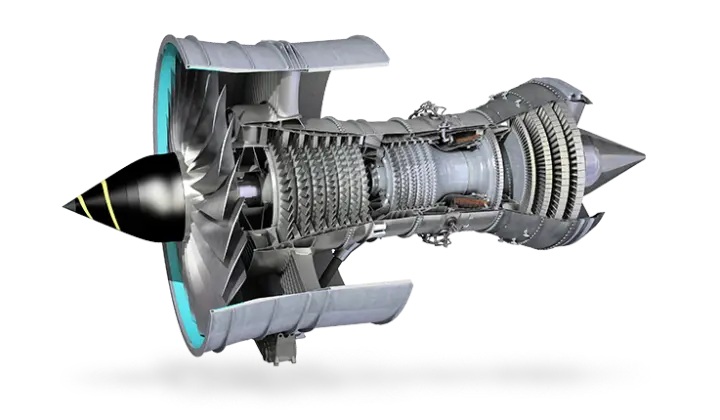
27-38 MW aeroderivative, supported today by Siemens Energy as the SGT-A35 RB
This model is part of SecondWatt’s gas turbine research catalogue. Specifications and price observations are included where supported by sources. Equipment availability and commercial terms require confirmation.
Rolls-Royce RB211 and Siemens SGT-A35 dossier: 27-38 MW specs, oil and gas fleet history, market observations, and used-unit inspection checklist.
The industrial RB211 is an aeroderivative gas turbine built from the Rolls-Royce RB211 turbofan, industrialized in 1974 and sold to Siemens in 2014 in a 1.3 billion USD-class transaction covering the Rolls-Royce Energy gas turbine business. Modern variants carry the Siemens SGT-A35 RB name, delivering 31.8 to 39.5 MW at up to 40.5% efficiency; the fleet exceeds 900 units sold with more than 50 million operating hours, over 15 million of them offshore.
The RB211's home is oil and gas: offshore platform power, pipeline compression, and LNG duty, where its modular design allows gas generator changeout in as little as 8 hours. Power-generation packages drive 50 or 60 Hz generators directly, and WLE combustion runs up to 100% hydrogen per Siemens documentation.
Secondary units surface episodically from platform decommissioning and pipeline modernization rather than continuous dealer stock. Documented observations include a 1998 RB211-24G combined cycle plant that sold at 3.5 million USD, a sold German-brokered RB211-24G gas generator, and a never-installed SGT-A35 GT30 offered on request. RWG and Siemens sustain overhaul and advance-exchange support.
Why it matters
North Sea and Gulf platform retirements are releasing RB211 packages into a market starved of 30 MW-class fast capacity, while Siemens' SGT-A35 continuation keeps parts and engineering alive. Sector pricing pressure (195% since 2019 per Wood Mackenzie) reaches even sporadic-supply models: unpriced listings now dominate where 100 USD-per-kW-class asks cleared a decade ago.
Who buys it
Oil and gas operators (platform power, compression), pipeline companies, LNG facilities, and industrial cogeneration hosts buy RB211-lineage units; data center bridge-power developers screen the class for 30 MW blocks. The trigger is fleet familiarity and support: RWG has serviced more than 1,300 of these engines, keeping used cores financeable.
Role in the data center
Candidate 30 MW-class bridge or prime blocks where oil and gas surplus units can be redeployed; direct-drive 60 Hz capability suits North American medium-voltage campus distribution. Decommissioned North Sea platform and pipeline units are the realistic supply, so a data center buyer competes for redeployed industrial hardware rather than ordering new packages.
Key specifications
| Output, SGT-A35 GT62 power generation | 31.8-32.1 MW |
|---|---|
| Output, SGT-A35 GT61 power generation | 33.7-34.5 MW |
| Output, GT61 mechanical drive | 39.5 MW (up to) |
| Simple-cycle efficiency | 37.8-40.5 % |
| Heat rate | 8881-9535 kJ/kWh |
| Pressure ratio | 22.0:1-24.5:1 |
| Exhaust flow | 97.7-105.4 kg/s |
| Exhaust temperature | 481-506 C |
| Shaft speed range | 3600-4850 rpm |
| NOx with DLE | 15-25 ppmvd at 15% O2 |
| Hydrogen capability with WLE | 100 % (up to) |
| Combined-cycle efficiency | 51.4-52.8 % |
| Fleet units sold | 900 units (more than) |
| Fleet operating hours | 50000000 hours (more than) |
| Legacy RB211-24G output (1998 upgrade) | 30.78 MW |
| Gas generator changeout time | 8 hours (as little as) |
Technical summary
Output, SGT-A35 GT62: 31.8-32.1 MW. Output, SGT-A35 GT61: 33.7-34.5 MW power generation. Output, GT61 mechanical drive: up to 39.5 MW. SC efficiency: 37.8-40.5 %. Heat rate: 8881-9535 kJ/kWh. Pressure ratio: 22.0:1-24.5:1. Exhaust flow: 97.7-105.4 kg/s. Exhaust temperature: 481-506 C. Shaft speed: 3600-4850 rpm. NOx with DLE: 15-25 ppmvd at 15% O2. Hydrogen: up to 100 % with WLE burners. Fleet: 900+ units, 50+ million hours.
Major variations
Gas generator variants RB211-22, -24A/B/C, -24G, -24GT, and -Gzero in conventional and DLE forms; mechanical-drive packages RB211-6556 through -6762 (26.0-33.2 MW); the 44 MW RB211-H63 launched 2010 with Trent components; and current Siemens SGT-A35 RB in GT61 and GT62 forms. The GZero retrofit re-blades the IP compressor on -C and -G units.
Configurations and options
Market units appear as offshore platform power modules, pipeline compression drivers with RT56 to RT62 power turbines, and land gensets including combined-cycle installations. Options: DLE or WLE combustion, dual-fuel with automatic changeover, and direct-drive 2-pole or 4-pole generators at 50 or 60 Hz without a gearbox.
Compatibility and dependencies
Modular architecture pairs the gas generator with RT-series free power turbines; matching and rebalancing at exchange is shop work for RWG or Siemens. DLE units need fuel-quality control; WLE units need water treatment. Offshore-sourced packages require marinization reversal review for land redeployment.
Pricing and availability
Trend: rising The one public price on record is a 1998 RB211-24G combined-cycle plant (32 MW gas turbine with 8.25 MW steam turbine) asking 3.5 million USD in a late-2010s listing, since sold. Post-2024 offerings, including a never-installed SGT-A35 GT30 in Germany, quote on request only, consistent with the sector's 195% price rise since 2019 reported by Wood Mackenzie. Lead time, new: 24-48 months. Lead time, used or refurbished: 8-24 weeks. Warranty, used: As-is; RWG advance-exchange engines carry shop terms.
Lifecycle and maintenance
Rolls-Royce documentation cites over 3 years of baseload duty between overhauls with gas generator changeout in as little as 8 hours; one unit logged more than 187,000 hours by 2010. RWG (OEM- approved) has serviced 1,300+ engines, runs about 80 overhauls yearly with standard turnarounds under 60 days, and offers advance-exchange engines. Siemens continues SGT-A35 production support, and the GZero retrofit restores IP compressor life on legacy units.
Thermal and emissions profile
DLE combustion holds 15-25 ppmvd NOx at 15% O2 per the Siemens SGT-A35 product page, and legacy Rolls-Royce documentation cites under 25 vppm NOx for DLE-equipped models; Siemens Energy publishes no NOx figure for the WLE water-injected variant, which is the hydrogen-capable build. In the US the class sits in the 40 CFR 60 Subpart KKKK 25 ppm bin for 50-850 MMBtu/h turbines, with DLE units compliant and state BACT adding SCR where single-digit limits apply.
Common failure points
- IP compressor blading — Wear and distress on high-hour -C and -G units
- HP turbine modules — Coating loss and life consumption between exchanges
- Offshore corrosion — Salt attack on casings, wiring, and enclosures from platform service
- WLE water systems — Injection train fouling and control drift
- Legacy controls — Rolls-Royce era control obsolescence pre-Siemens migration
Inspection checklist
Module pedigree: trace gas generator and power turbine serial numbers to build records; the 8-hour-changeout gas generator must match its logbook. Overhaul position: verify hours against the roughly 3-year baseload overhaul cadence documented for the type. IP compressor: borescope for blade distress; GZero-era re-blading history indicates prior IP wear on -C and -G units. HP turbine: borescope blades and nozzles for coating loss; module exchange history should show shop certificates. DLE/WLE combustion: verify emissions capability at load (15-25 ppmvd DLE); confirm water-injection train condition on WLE. Offshore heritage: inspect for salt corrosion on casings, enclosures, and wiring; over 15 million fleet hours ran offshore. Power turbine (RT56/RT61/RT62): check blade condition and bearing records; PT model determines rating band.
Procurement channels
Episodic supply from offshore platform decommissioning and pipeline modernization, brokered through European traders (Leomaschinen, AmasEnergy), auction platforms, and marine dismantlers. RWG and Siemens provide overhaul and advance-exchange support; Siemens Brownfield Engine Exchange also replaces legacy RB211s with new SGT units.
Regional notes
Fleet concentrates in the North Sea, Gulf of Mexico, Middle East, and pipeline corridors in North America and Asia. Both 50 and 60 Hz direct-drive configurations exist; offshore-sourced units dominate resale supply and need corrosion diligence before land service.
Content owner: Gary Martin, SecondWatt