Solar Turbines Taurus 60
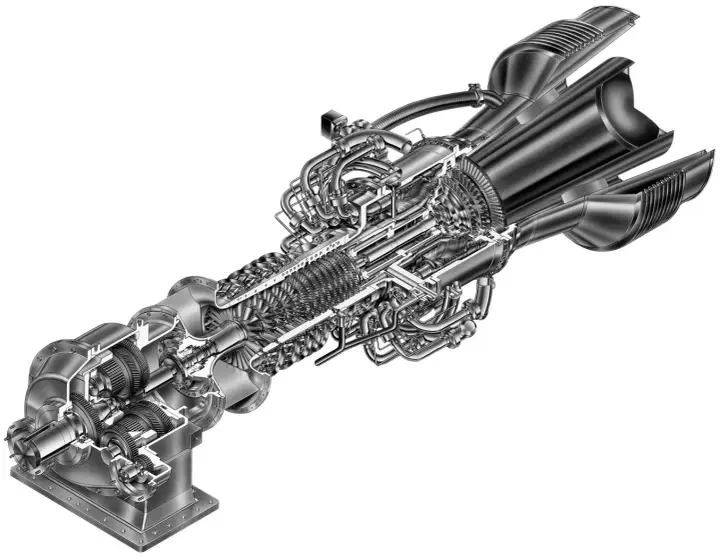
Solar Turbines Taurus 60 generator set, 5,670 kWe ISO base load
This model is part of SecondWatt’s gas turbine research catalogue. Specifications and price observations are included where supported by sources. Equipment availability and commercial terms require confirmation.
Solar Turbines Taurus 60 gas turbine: 5,670 kWe ISO rating, SoLoNOx emissions data, overhaul guidance, and used-market pricing for data center buyers.
The Taurus 60 is Solar Turbines' single-shaft power-generation package, rated 5,670 kWe ISO base load at generator terminals across three independent OEM and dealer spec sheets. Introduced in 1989, it is routinely bundled with the larger Taurus 70 under a single "Taurus 60 / Taurus 70" heading in catalogs and broker listings, and the field record does not support that pairing: resale listings and permit filings place Taurus 60 units under 7300, 7800, and 7900-series model numbers, a different family from the Taurus 70's 10300 and 10800 series.
Heat rate is 11,430 kJ/kWh (10,830 Btu/kWh), yielding roughly 31.5% thermal efficiency, with a 12-stage axial compressor running a 12.2:1 to 12.4:1 pressure ratio depending on source vintage. The generator-set variant couples a 3-stage power turbine directly to the generator at synchronous speed, distinct from the two-shaft mechanical-drive package sold for compressor duty. Solar's data sheet carries an ambient-temperature derate curve as a graphic rather than a numeric table, so a buyer at altitude or in high heat should request the derate figures from Solar in writing.
SoLoNOx dry-low-emissions combustion is offered alongside a Conventional option, not as the sole standard, so emissions capability must be confirmed per serial number. Real permitted NOx spans a wide range: 15 ppmvd at 15% O2 on SoLoNOx alone per a New York DEC permit, down to 2.0 ppmvd with an add-on SCONOx catalyst per a Mojave Desert AQMD permit. SoLoNOx alone does not equal CARB-tier siting.
Why it matters
SoLoNOx alone does not equal CARB-tier siting. Real permitted NOx for Taurus 60 ranges from 15 ppmvd at 15% O2 on SoLoNOx combustion alone, per a New York DEC permit, down to 2.0 ppmvd only after an add-on SCONOx catalyst is fitted, per a Mojave Desert AQMD permit. That catalyst hardware does not automatically travel with a used unit, and a buyer who assumes SoLoNOx alone clears a strict-NOx jurisdiction discovers the missing catalyst cost only after the purchase is committed.
Who buys it
Oil and gas operators buy the Taurus 60 for compressor-station power and gas-processing duty, its dominant historical market and the source of its unusually deep secondary-market fleet. Landfill-gas and industrial cogeneration operators form a second segment; at least one used unit on the market in August 2026 was built specifically for 500 Btu landfill gas rather than pipeline natural gas.
Role in the data center
Bridge or prime power block of roughly 5.7 MW per generator-set unit, sized in multi-unit rows feeding campus medium-voltage switchgear. Its appeal to a data center buyer is availability rather than efficiency: this is the deepest used fleet of any Solar frame, so a 20-30 MW block can be assembled from stock while larger frames sit in a multi-year order queue.
Key specifications
| ISO base-load electrical output | 5,670 kWe |
|---|---|
| Heat rate | 11,430 (10,830) kJ/kWh (Btu/kWh) |
| Thermal efficiency | 31.5 % |
| Exhaust flow | 78,385 (172,809) kg/hr (lb/hr) |
| Exhaust temperature | 510 (950) C (F) |
| Pressure ratio | 12.2:1 (also cited 12.4:1) ratio |
| Compressor | 12-stage axial, variable inlet guide vanes stages |
| Gas producer turbine max speed | 15,000 rpm |
| Power turbine max speed | 14,300 rpm |
| Package dry weight | 37,921 (83,600) kg (lb) |
| Package length | 9.83 (32'3") m (ft) |
| Generator voltage range, 60 Hz | 4,160-13,800 V |
| Year introduced | 1989 year |
| NOx guaranteed, SoLoNOx (unit 60-07802S3) | 15 ppmvd at 15% O2 |
| NOx measured, with SCONOx catalyst | 2.0 ppmvd at 15% O2 |
| Overhauls completed, fleet-wide, all Solar models | 30,000+ overhauls |
Technical summary
ISO base-load output, generator set: 5,670 kWe. Heat rate: 11,430 kJ/kWh (10,830 Btu/kWh). Thermal efficiency, generator terminals: 31.5%. Exhaust flow / temperature: 78,385 kg/hr at 510 C (950 F). Pressure ratio: 12.2:1-12.4:1 through a 12-stage axial compressor. Gas producer / power turbine max speed: 15,000 rpm / 14,300 rpm. Package dry weight: 37,921 kg (83,600 lb). Generator: 4-pole, 4,160-13,800 VAC (60 Hz options). NOx, SoLoNOx alone (NY DEC permit): 15 ppmvd at 15% O2. NOx, with SCONOx catalyst (Mojave AQMD): 2.0 ppmvd at 15% O2. Model-number series observed: 7301 / 7801 / 7901 / 07802S3. Introduction: 1989.
Major variations
Single-shaft power-generation package (5,670 kWe, 3-stage power turbine direct-coupled to the generator) and two-shaft mechanical-drive package (2-stage free power turbine) are the two configurations. SoLoNOx and Conventional combustion are both offered as options; both 50 Hz and 60 Hz generator-set variants exist in the resale market with different voltage option sets.
Configurations and options
Two package types share the core engine: a single-shaft generator set with a 3-stage power turbine direct-coupled to the generator, and a two-shaft mechanical-drive package with a separate free power turbine for compressor duty. Combustion is SoLoNOx or Conventional, so emissions capability is a per-serial-number question. Both 50 Hz and 60 Hz generator sets circulate, with a 4,160 to 13,800 V generator voltage range at 60 Hz. Fuel-system builds vary widely on this frame: at least one used unit was configured specifically for 500 Btu landfill gas rather than pipeline natural gas.
Compatibility and dependencies
The Taurus 60 generator set shares its common engine skid with the Centaur 40 and Centaur 50, which broadens availability of shared skid and gearbox components but not turbine hot-section parts. Single-digit NOx on this frame comes from add-on hardware rather than the combustor: a SCONOx catalyst and an SCR-plus-oxidation-catalyst train are the two documented paths, and neither travels with a used unit unless it is explicitly included in the sale. Confirm generator voltage within the 4,160 to 13,800 V range against site switchgear before sourcing.
Pricing and availability
Trend: stable The single disclosed price for this model, an 83,000 USD salvage-condition asking price, is a 2026 listing with no earlier public price series to compare it against. No public price series exists for this model, so no directional trend can be established as of August 2026. Lead time, new: 36-60 months as of August 2026, per broader Solar and Caterpillar order-book conditions; confirm against Solar or an authorized distributor. Lead time, used or refurbished: Weeks to months; 10 or more listings were active or recently active across US, European, and Chinese brokers in August 2026. Warranty, used: As-is is the norm on broker listings; Solar's Pre-Owned Equipment program offers warranty reinstatement on units routed through the factory exchange channel.
Supply, delivery and overhaul
8 units listed without public prices.
- Manufacturer-wide delivery estimate: 29 months
Lifecycle and maintenance
Solar Turbines cites more than 30,000 overhauls completed fleet-wide across its product line, but publishes no fired-hour interval for hot-section inspection or major overhaul on the Taurus 60 specifically, and no overhaul cost. Market evidence brackets real-world practice loosely rather than precisely: one 5,600 kW unit shows engine and gearbox replacement after 50,926 hours, while another shows only 9 hours logged since a full Solar factory overhaul completed in 2019. Treat those two points as the observed range, not as an interval.
Thermal and emissions profile
SoLoNOx is available but not the sole option for Taurus 60; a Conventional combustor is also offered, so emissions capability must be confirmed per serial number, not assumed from the model name. Permitted NOx spans a wide range by installed hardware: 15 ppmvd at 15% O2 on SoLoNOx alone, guaranteed for unit 60-07802S3 per a New York DEC permit, down to 2.0 ppmvd NOx (6.0 ppmvd CO) at a Mojave Desert AQMD site once a SCONOx catalyst is added. A separate CARB filing measured 4.0-4.6 ppmvd NOx with SCR and an oxidation catalyst at a California facility, the same pattern: single-digit NOx comes from add-on catalyst hardware, not SoLoNOx alone. That equipment does not automatically travel with a used unit, so confirm it is included before assuming compliance.
Common failure points
- Combustor liner and SoLoNOx fuel injectors — elevated NOx/CO drift between annual tests, visible liner cracking or injector coking on borescope
- First-stage turbine nozzle and blades — coating loss, tip rub, or thermal cracking visible on borescope, especially past roughly 1,500 starts
- Reduction gearbox — rising vibration trend or metal in oil analysis; one market unit needed full gearbox replacement
- Generator windings and bearings — falling insulation resistance or bearing temperature rise; several listings disclose generator ends rebuilt
- Control system and instrumentation — obsolete Solar Turbines control panel hardware with no vendor support
- VIGV and bleed-valve actuators — slow or erratic response affecting start reliability and part-load efficiency
- Trailer chassis and skid structure on mobile units — corrosion or fatigue cracking from repeated oilfield redeployment
Inspection checklist
Fired hours since new and since the last hot-section inspection: market listings show units from 1,510 to 50,926 hours, so log completeness matters more than raw age. Start count: observed units range from 186 to 1,739 starts, and cycles drive hot-section fatigue independent of fired hours. Borescope report: dated within the last 12 months, from a Solar Turbines field service representative, covering all combustor cans and both rotor sections. First-stage turbine nozzle and blade condition: check across all gas-producer and power-turbine stages, 2 and up to 3 respectively depending on shaft configuration. Combustor liner and fuel-injector wear: inspect all 12 SoLoNOx injector positions, the parts Solar revises most often between combustion generations.
Procurement channels
At least 10 Taurus 60 units were on offer across broker channels in August 2026 with no price disclosed, all marked call-for-price or price-on-request: Aaron Equipment, Wabash Power, Phoenix Equipment (3 listings), ReflowX (2 listings), IMP Corporation (6 listings), Machinery Trader and China-based resellers (4 listings), Kitmondo (Belgium), and resale.info. One further unit, a 4.7 MW package in salvage condition, was priced on Salvex at 83,000 USD. This is a deep, geographically spread used fleet consistent with the Taurus 60 being one of Solar's highest-volume machines, but pricing across this class is opaque as an industry norm: units are marketed openly and priced only on direct inquiry.
Regional notes
Documented Taurus 60 installations concentrate at US oil, gas, and landfill-gas sites, consistent with the model's dominant historical compression and cogeneration market. Resale listings open in August 2026 span the United States, Belgium, and China, plus a salvage-condition unit offered out of an India warehouse, indicating genuinely global secondary-market circulation for this frame and correspondingly variable shipping and re-commissioning scope.
Content owner: Gary Martin, SecondWatt