Siemens SGT-800 Gas Turbine: Price, Specifications and Sourcing
Manufacturer: Siemens Energy
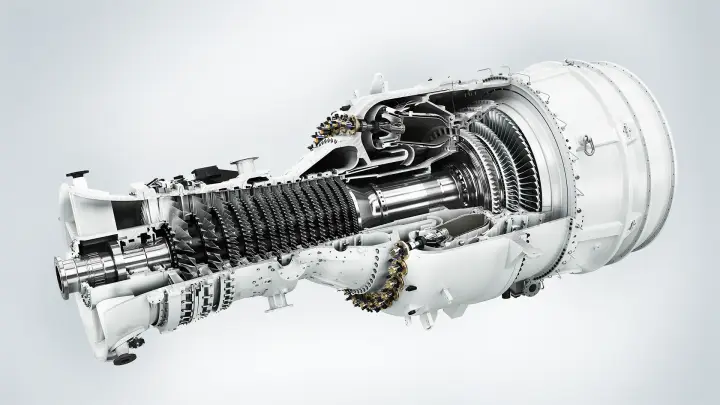
Siemens Energy SGT-800 industrial gas turbine, 45–62.5 MW OEM reference ratings
This model is part of SecondWatt’s gas turbine research catalogue. Specifications and price observations are included where supported by sources. Equipment availability and commercial terms require confirmation.
Compare Siemens SGT-800 ratings, used-equipment pricing scope, upgrade records and inspection requirements. Submit your site requirements to SecondWatt.
Compare Siemens SGT-800 gas turbine specifications, package scope and purchase requirements for industrial and data center power projects. The installed rating, modification history and generator package matter when evaluating a used machine. A current OEM rating does not establish the capability of an older unit.
SecondWatt provides model research and a route to submit equipment requirements. Specific availability and commercial terms require confirmation.
Siemens SGT-800 gas turbine specifications
| OEM version label | Simple-cycle gross output |
|---|---|
| 45 MW | 45.3 MW |
| 50 MW | 49.9 MW |
| 56 MW | 55.6 MW |
| 57 MW | 57.0 MW |
| 62 MW | 62.5 MW |
Siemens Energy's product specifications, reviewed September 25, 2026, give these reference outputs. The OEM table identifies standard designs at ISO conditions on natural gas, without intake or exhaust losses. Use a site-performance assessment to establish usable output.
Older SGT-800 records use additional ratings. Match the offered equipment to its own configuration and modification documents rather than relabelling it with a current product specification.
SGT-800 gas turbine price and package scope
The research reviewed for this page does not establish a dependable price range for a standalone SGT-800 package. An advertised combined-cycle installation may include a steam turbine and other plant equipment; its asking price must not be presented as the cost of one SGT-800.
For each offer, request the installed rating, year, operating history, included equipment, location and price basis. Separate the costs of upgrades, missing auxiliaries, removal, transport and commissioning. State whether the quoted capacity is turbine gross output or net plant output before comparing cost per kW.
Send an SGT-800 equipment request. Use the used gas turbine cost guide to compare complete offers, and the simple-cycle and combined-cycle guide to identify additional plant scope.
Upgrades and modifications
Siemens has published different performance-enhancement offerings for different installed populations. An upgrade assessment should identify the original configuration, completed modifications, proposed work and the generator, gearbox and plant limits relevant to that work. Do not assume that separate published upgrade routes can be combined on one machine.
What to request from the seller
Request a traceable equipment schedule covering the engine, gearbox, generator, controls and auxiliaries. For an installed plant, identify systems shared with other units and establish which equipment can actually transfer with the sale.
Inspection and records
Review operating hours and starts, maintenance events, component history, test records and preservation. Ask which inspections are available before purchase and which acceptance checks will occur after installation. Use the remaining-life and overhaul guide to organize the evidence.
For transport planning, obtain the actual package drawings, shipping splits, weights and lifting instructions. Standard and single-lift arrangements have different boundaries; a family-level dimension is insufficient for a route or lifting plan.
Can a used SGT-800 be upgraded to a higher rating?
Eligibility depends on the installed configuration and the proposed modification package. Obtain an assessment identifying the starting rating, completed upgrades, proposed work and generator or gearbox limits. Do not combine separate upgrade routes without confirmation that they apply to the same machine.
Site information to supply
Provide net electrical demand, ambient conditions, elevation, frequency and gas conditions. If heat recovery is part of the project, include steam or heat demand across the operating profile. Ask for performance at those conditions and identify the limits of the receiving electrical and thermal systems.
For data center applications, also state the capacity required during outages and the operating sequence after a disturbance. Equipment selection needs to fit the full power-system design and the project's installation and emissions review.
Send an enquiry
Send an SGT-800 sourcing enquiry with the site, required output, duty, frequency, gas conditions, heat-recovery requirement and delivery milestones. State whether you will consider a documented upgrade as part of the purchase.
Alternatives to assess (not equivalent machines): GE LM6000 and Mitsubishi H-25.
Key specifications
| Simple-cycle gross output, 45 MW version (ISO) | 45.3 MW |
|---|---|
| Simple-cycle gross output, 50 MW version (ISO) | 49.9 MW |
| Simple-cycle gross output, 56 MW version (ISO) | 55.6 MW |
| Simple-cycle gross output, 57 MW version (ISO) | 57.0 MW |
| Simple-cycle gross output, 62 MW version (ISO) | 62.5 MW |
Supply, delivery and overhaul
5 units listed without public prices.
- Delivery time: 27 months (SGT-800)
Content owner: Gary Martin, SecondWatt