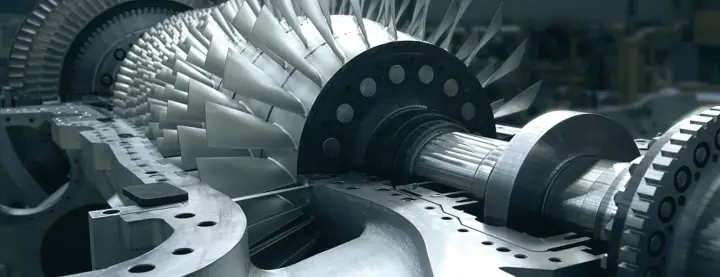
Mitsubishi Power H-25

Mitsubishi Power H-25 — gas turbine, 41.0 MW
Mitsubishi Power H-25

41.0 MW-class Mitsubishi Power turbine with no confirmed North American installation

Mitsubishi Power H-25 is one of 21 gas turbines tracked in the SecondWatt catalogue, each with specifications, lead times and indicative secondary-market pricing.

Mitsubishi Power H-25 gas turbine: 41 MW ISO rating, emissions data, and used pricing guidance, plus why no confirmed US installation exists yet.

The H-25 is Mitsubishi Power's mid-frame gas turbine, sold in mechanical-drive, simple-cycle generator-set, cogeneration, and combined-cycle configurations, with one model name covering both 50 Hz and 60 Hz operation. Mitsubishi's own product pages state 41.0 MW ISO simple-cycle output at 36.2% LHV efficiency and a 9,949 kJ/kWh (9,432 Btu/kWh) heat rate. Mitsubishi's own data-center marketing page and its 2025-11-12 order release instead cite approximately 30 MW for it. This dossier reports that gap as unresolved rather than picking a side, since sizing off the wrong figure is off by roughly a third. Today's contracting entity is Mitsubishi Power, Ltd., wholly MHI-owned since Hitachi exited the former Mitsubishi Hitachi Power Systems joint venture across a 2014-to-2019-to-2020 timeline: JV launch February 2014, Hitachi's exit settled December 2019, rename to Mitsubishi Power effective September 1, 2020. One name, H-25, covers both frequencies, unlike this catalog's mhi-m501j entry, which splits two model numbers by frequency. Combined-cycle output reaches 60.1 MW (1-on-1) and 121.4 MW (2-on-1), and cogeneration adds up to 70 t/hr of steam above 80% overall efficiency. NOx is 15 ppm and CO is 9 ppm at 15% O2, clearing the federal NSPS Subpart KKKK floor of 25 ppm with real margin.

Who buys it

Petrochemical processors, paper mills, district-heating utilities, and industrial cogeneration sites are the confirmed buyer base in this dossier's order history, concentrated in Taiwan, China, and Uzbekistan. Mitsubishi Power also markets the H-25 and H-100 directly as data-center power on its own infrastructure page, alongside its much larger M-series frames.

Role in the data center

Mitsubishi Power lists the H-25 alongside the H-100 directly on its own data-center power page, positioned as a mid-frame option beneath the company's much larger M-series combined-cycle blocks.

Key specifications

ISO base-load output, simple cycle41.0 MW
Thermal efficiency, simple cycle36.2 % LHV
Heat rate, simple cycle9,949 (9,432) kJ/kWh (Btu/kWh)
Combined-cycle output, 1-on-160.1 MW
Combined-cycle efficiency, 1-on-154.0 % LHV
Combined-cycle output, 2-on-1121.4 MW
Cogeneration steam output, max70 metric tons/hour
Cogeneration overall efficiency>80 %
Exhaust flow114 (253) kg/s (lb/s)
Exhaust temperature569 (1,056) C (F)
Shaft speed7,280 rpm
Compressor / turbine stages / combustor cans17 / 3 / 10 count
Package weight / dimensions55 / 7.9 x 3.8 x 3.9 metric tons / m
NOx / CO15 / 9 ppm @ 15% O2
Frequency support50 / 60 Hz
Cumulative fleet operating hours>6,300,000 hours (as of Sept. 2017)

Technical summary

ISO base-load output, simple cycle: 41.0 MW (40 MW class per lineup page) Heat rate: 9,949 kJ/kWh (9,432 Btu/kWh) Thermal efficiency: 36.2% LHV Combined-cycle output, 1-on-1 / 2-on-1: 60.1 MW / 121.4 MW Cogeneration steam output / overall efficiency: 70 t/h max / >80% Exhaust flow / temperature: 114 kg/s (253 lb/s) at 569C (1,056F) Shaft speed: 7,280 rpm Compressor / turbine stages / combustor cans: 17 / 3 / 10 NOx / CO: 15 / 9 ppm at 15% O2 Frequency support: 50 / 60 Hz, single model designation Cumulative fleet operating hours: >6.3 million across ~200 units

Compatibility and dependencies

Generator-set and cogeneration packages depend on a main reduction gearbox to reach 50 Hz or 60 Hz output, a dependency that does not apply to bare mechanical-drive H-25 units. The turbine supports natural gas, off-gas, light oil, kerosene, and bio-ethanol per Mitsubishi Power's own product pages, so fuel-system configuration should be confirmed against the specific application rather than assumed from the model name alone.

Pricing and availability

Trend: flat

Lifecycle and maintenance

The only proxy available is fleet-wide, not unit-specific: cumulative H-25 operating hours exceeded 6.3 million across roughly 200 units by Mitsubishi's own count, with the model in continuous production since 1988 and a live order booked as recently as November 2025. Treat that fleet-hours figure as a reliability proxy only, not a substitute for a unit-specific overhaul schedule, and request logged records for any specific used unit under consideration.

Common failure points

Inspection checklist

Total fired hours and starts since new — request the unit's logged life-tracking data against the >6,300,000 cumulative fleet hours Mitsubishi reports, not a verbal estimate Manufacturer branding on the nameplate — Mitsubishi Heavy Industries, Mitsubishi Hitachi Power Systems, or Mitsubishi Power tags the build era (pre-2014, 2014-2020, or post-2020) and confirms the current parts and service path Borescope images of all 3 turbine stages dated within the last 12 months — single-rotor design; request the full photo set, not a summary Compressor blade condition across all 17 stages — check for erosion, fouling, or FOD affecting pressure ratio and output Combustor can liner and fuel nozzle condition across all 10 air-cooled cans — request per-can coking or erosion findings from the most recent combustion inspection Combustion dynamics and load-ramp history — request tuning logs and confirm actual practice against the 3.4 MW/min design ramp rate NOx and CO stack-test results — confirm the specific unit still holds to the 15 ppm NOx / 9 ppm CO at 15% O2 OEM figures or has drifted since commissioning Fuel system configuration and permit basis — H-25 supports natural gas, off-gas, light oil, kerosene, and bio-ethanol; confirm which fuel the specific unit is actually configured and permitted for Generator windings insulation resistance — request a dated megohm reading from within the last 12 months, not a pass/fail claim Main reduction gearbox oil analysis and bearing temperature trend — applies to 50 Hz / 60 Hz generator-set and cogeneration packages, not bare mechanical-drive units Control system generation — confirm whether the unit carries Mitsubishi's TOMONI remote-diagnostics platform or a legacy console with no vendor software support Application history — mechanical-drive, simple-cycle genset, cogeneration with steam extraction, or combined-cycle duty changes the wear profile materially Total prior installation sites — a relocated package carries more requalification risk than one still on its original foundation Package and skid enclosure corrosion — 55-metric-ton package; ask specifically about outdoor or coastal storage history

Procurement channels

Only one channel yielded a priced H-25 listing: USP&E, whose aggregate Mitsubishi-manufacturer listings page shows a single used 2011-built unit.

Regional notes

Confirmed order history for this model concentrates in Taiwan (Chang Chun Petrochemical, two orders), China (a Jiangsu Province combined-cycle block), and Uzbekistan (district heating).