Solar Turbines Titan 130
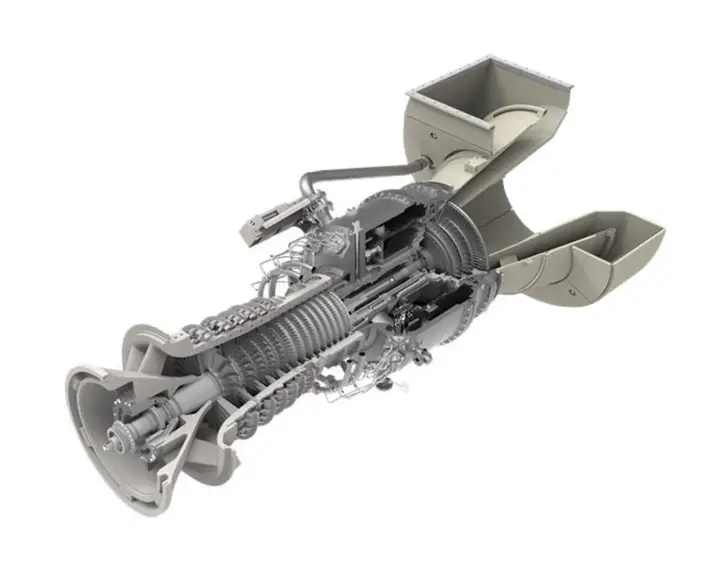
16,530 kWe ISO base-load generator set, up from about 14,500 kWe at 1997 launch; SoLoNOx is optional, not standard
This model is part of SecondWatt’s gas turbine research catalogue. Specifications and price observations are included where supported by sources. Equipment availability and commercial terms require confirmation.
Active buyer for this model
A buyer is currently searching for this model. If you have one available, list it and we'll handle the introduction.
Solar Turbines Titan 130 gas turbine: 16,530 kWe ISO rating history, SoLoNOx emissions and permit data, overhaul program gaps, and secondary-market findings.
The Solar Turbines Titan 130 is a single-shaft industrial gas turbine sold as three packages: Power Generation (generator set), Mechanical Drive, and Gas Compressor. The generator-set package is datasheeted at 16,530 kWe ISO base-load output; the mechanical-drive package is rated separately at 23,470 hp (17,500 kW shaft power). These are different products; naming only "Titan 130" leaves out the package type.
The rating itself has moved across three decades of production. Solar's 2013 datasheet lists 15,000 kWe at a 17.1:1 pressure ratio; the current 2025 datasheet lists 16,530 kWe at 19.1:1. A circa-2001 resale unit carries a "Titan 130-19500" nameplate consistent with the roughly 14,500 kW figure reported at the 1997 launch, so "Titan 130" alone does not specify performance. Confirm the specific unit's nameplate and datasheet vintage before pricing it.
SoLoNOx dry low emissions combustion is optional here, not standard; the alternative is a 21-injector Conventional combustor against SoLoNOx's 14 injectors. Field permit data for installed Titan 130E units shows 15 ppmvd NOx and 25 ppmvd CO at 15% O2, sitting exactly at the January 2026 EPA ceiling for high-utilization service in this size class.
Overhaul economics carry a real gap. Solar runs an active engine-exchange program covering the Titan 130, but publishes no Titan-130-specific hot-section interval, major-overhaul interval, or overhaul cost figure on its datasheets or service pages as of August 2026. Across nine secondary-market listings on seven broker channels open in August 2026, every seller quoted on inquiry and none published an asking price.
Why it matters
The generator-set rating has climbed from roughly 14,500 kWe at 1997 launch to 16,530 kWe today, so two units both labeled "Titan 130" can differ in output by over 10% depending on build year. That drift, plus an EPA NOx ceiling the machine's SoLoNOx option meets with no margin, plus an undocumented hot-section overhaul cost, make direct verification against the specific unit's own nameplate and Solar's own records essential before a data center buyer prices this machine.
Who buys it
Data center developers and EPCs assembling 15-17 MW bridge or prime blocks, oilfield operators replacing legacy Titan 130 mechanical-drive compressor trains, and industrial cogeneration hosts buy this class. Solar's own Pre-Owned Equipment program lists Titan 130 directly, and brokers in Asia and North America carry used and new-surplus generator-set units, typically quoted on request rather than posted.
Role in the data center
Bridge or prime power block of roughly 16.5 MW per generator-set unit, sited in the campus generation yard and feeding medium-voltage switchgear upstream of the UPS plant. Solar's August 2026 order from Stella Power for data center power deployment documents this exact use case, and multi-unit rows are the normal way buyers reach 50 MW or more on this frame.
Key specifications
| ISO base-load electrical output (generator set) | 16,530 kWe |
|---|---|
| Heat rate | 10,160 (9,630) kJ/kWe-hr (Btu/kWe-hr) |
| Engine efficiency | 35.4 % |
| Pressure ratio | 19.1:1 ratio |
| Inlet airflow | 55.4 (122) kg/sec (lb/sec) |
| Exhaust flow | 202,510 (446,460) kg/hr (lb/hr) |
| Exhaust temperature | 490 (910) C (F) |
| Output shaft speed | 1,500 / 1,800 rpm (50 Hz / 60 Hz) |
| Package weight | 87,510 (192,925) kg (lb) |
| Package dimensions, L x W x H | 14.2 x 8.6 x 3.9 m |
| Generator voltage, 60 Hz options | 4,160-13,800 V |
| SoLoNOx combustor injector count | 14 injectors |
| Conventional combustor injector count | 21 injectors |
| NOx emissions, normal conditions (installed units) | 15 ppmvd at 15% O2 |
| CO emissions, normal conditions (installed units) | 25 ppmvd at 15% O2 |
| Mechanical Drive package output (separate product) | 23,470 (17,500) hp (kW shaft) |
Technical summary
Power Generation (generator set): 16,530 kWe ISO base-load. Mechanical Drive (separate product): 23,470 hp / 17,500 kW shaft. Heat rate, generator set: 10,160 kJ/kWe-hr (9,630 Btu/kWe-hr). Engine efficiency: 35.4 %. Pressure ratio: 19.1:1. Exhaust flow / temperature: 202,510 kg/hr / 490 C (910 F). Output shaft speed: 1,500 rpm (50 Hz) / 1,800 rpm (60 Hz). Package weight / footprint: 87,510 kg / 14.2 x 8.6 x 3.9 m. Combustor: 14-injector SoLoNOx (optional) or 21-injector Conventional. Datasheet rating (for comparison): 15,000 kWe at 17.1:1.
Major variations
Three separate packaged products share the Titan 130 core: Power Generation (generator set, 16,530 kWe current), Mechanical Drive (23,470 hp / 17,500 kW shaft, no generator), and Gas Compressor. The generator-set rating itself has risen across production: roughly 14,500 kWe at the 1997 launch (a circa-2001 resale unit carries a "Titan 130-19500" nameplate consistent with that figure), 15,000 kWe on Solar's 2013 datasheet, and 16,530 kWe on the current 2025 datasheet, with pressure ratio climbing from 16:1-17.1:1 to 19.1:1 over the same span. Combustion system is also selectable: 14-injector SoLoNOx (dry low emissions, optional) or 21-injector Conventional. 50 Hz and 60 Hz versions exist via a reduction gearbox, differing only in output speed and generator voltage taps.
Configurations and options
Observed used/surplus listings show 50 Hz (11 kV-class) and 60 Hz (13.8 kV-class) generator-set configurations, SoLoNOx and Conventional combustors, and dual-fuel (natural gas/diesel) fuel systems. Package weight is about 87,510 kg new; several surplus units are described as commissioned and test-run only with zero to low fired hours before resale.
Compatibility and dependencies
The generator-set package requires a reduction gearbox to 1,500 rpm (50 Hz) or 1,800 rpm (60 Hz) output speed and matching generator voltage taps (3,300-11,000 V at 50 Hz; 4,160-13,800 V at 60 Hz). SoLoNOx emissions performance is warranted on natural gas; Solar's datasheet lists diesel, dual-fuel, and low-Btu gas as package fuel options without stating a SoLoNOx emissions figure for any of them, so confirm the combustor and fuel train together for non-gas duty.
Pricing and availability
Market price (seller asking and transaction prices from the last 24 months, one value per seller; not a quote). new surplus, genset package: $625–$675 per kW ($9.38M–$10.1M per unit, at 15 MW), 2 sellers, latest Sep 2026, includes undated listings.
Supply, delivery and overhaul
10 units listed without public prices.
Lifecycle and maintenance
Solar's exchange program covers Titan 130 directly: roughly 80% of customers choose engine exchange, over 800 exchanges run company-wide per year, turnaround is about two days, and exchanged engines carry a 12-month warranty. Solar publishes a gearbox interval of about 30,000 hours to inspection and 100,000 hours to overhaul. It publishes no Titan-130-specific hot-section interval, major-overhaul interval, or overhaul cost on its datasheets or service pages as of August 2026, so obtain those three figures from Solar or Caterpillar in writing before budgeting overhaul economics.
Thermal and emissions profile
SoLoNOx dry low emissions combustion is optional on the Titan 130, not standard; the listed alternative is a 21-injector Conventional combustor against SoLoNOx's 14 injectors on the same datasheet. Field permit data for installed Titan 130E units (West Virginia DEP) shows 15 ppmvd NOx and 25 ppmvd CO at 15% O2 under normal conditions, rising sharply at low load. That NOx figure sits exactly at the EPA's January 2026 high-utilization ceiling for this size class. Solar's Titan 130 literature names no water- or steam-injection alternative; the documented choice is SoLoNOx versus Conventional.
Common failure points
- Combustor liner and injectors — Elevated exhaust temperature spread across thermocouples, visible liner cracking or coking on borescope
- SoLoNOx fuel injectors — Combustion dynamics/pressure pulsation, localized hot streaking on downstream hardware
- Reduction gearbox — Gear tooth wear, rising bearing temperature approaching the roughly 30,000-hour inspection interval
- Generator windings and bearings — Falling insulation resistance, driven-end bearing wear
- Control system (Turbotronic) — Obsolete I/O cards or an HMI software revision no longer supported
- Package enclosure and skid — Frame corrosion, damaged acoustic panels, water intrusion after extended outdoor storage
- Inlet air filtration and compressor — Compressor fouling, measured airflow below the 55.4 kg/sec nameplate
Inspection checklist
Fired hours since new: cross-check against nameplate rating year; a 2005-vintage unit likely carries the older ~15,000 kWe rating, not the current 16,530 kWe figure. Fired hours since the last hot-section (combustion) inspection: Solar publishes no hot-section interval for this configuration, so require the figure from the seller in writing. Total engine starts: request the count alongside fired hours; Solar's exchange program processes over 800 engines a year company-wide, evidence of how often hot sections turn over in this class. Borescope findings: liner cracking, injector erosion, and first-stage blade coating condition, read against the 490C (910F) nameplate exhaust temperature for signs of abnormal hot-end wear. Combustor configuration: confirm 14-injector SoLoNOx versus 21-injector Conventional; only the SoLoNOx set carries the field-documented 15 ppmvd NOx figure.
Procurement channels
Solar's own Pre-Owned Equipment / exchange program lists Titan 130 directly. Independent broker/marketplace channels with confirmed listings: MachineryTrader, PowerSystemsToday, Fin Marine, Salvex (auction), Crusader Joint Ventures, Surplus Generation Equipment (Sirgen), ReflowX, and USP&E Global. All observed listings were quote-on-request; none published price.
Regional notes
Both 50 Hz and 60 Hz generator-set versions exist. August 2026 secondary-market listings originate mainly from Asia (Jiangsu, China; ReflowX Ex-Works China) and North America (Alberta, Canada; a Nevada-sited unit with UK involvement), so a US buyer should confirm frequency, voltage taps, and shipping logistics against site requirements before bidding.
Content owner: Gary Martin, SecondWatt