Solar Turbines Taurus 70
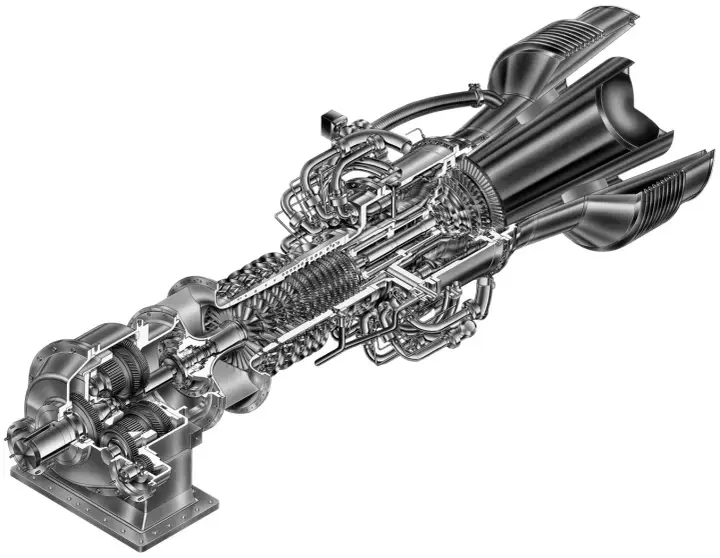
Solar Turbines' mid-size generator set at 8,180 kWe ISO base load, on its own model-number series, not a Taurus 60 rerate
This model is part of SecondWatt’s gas turbine research catalogue. Specifications and price observations are included where supported by sources. Equipment availability and commercial terms require confirmation.
Solar Turbines Taurus 70 gas turbine: 8,180 kWe ISO rating, permit-verified emissions, overhaul guidance, and used-market pricing data for data center buyers.
The Taurus 70 is a two-shaft industrial gas turbine, rated 8,180 kWe ISO base-load as a generator set, launched by Solar Turbines in the mid-1990s. It is routinely bundled with the Taurus 60 under a single "Taurus 60 / Taurus 70" heading in catalogs and broker listings, and the permit record does not support that pairing.
Four independent permit filings in Connecticut, New York, and West Virginia identify Taurus 60 units under model numbers in the 7800 series, and Taurus 70 units under model numbers in the 10300 and 10800 series, entirely different numbering families. That split is permit-record evidence the two machines are different gas generators on different frames, not two ratings of one core engine, despite sharing the Taurus family name. Solar publishes no model-number series or frame lineage for the Taurus 65, introduced in 2006 at 6,500 kWe, so where it sits relative to the other two is not established in any public document.
SoLoNOx dry-low-emissions combustion is optional, not standard, alongside a Conventional combustor, so a used unit's emissions capability must be confirmed per serial number. Two independent state permit dockets filed a decade apart both confirm 9 ppmvd NOx at 15% O2 for installed Taurus 70 units, giving this model a real permitting track record. Roughly a dozen resale listings were active or recently active in August 2026, a genuinely active broker channel even though most withhold price.
Why it matters
The permit record settles a question the shared family name leaves open: Taurus 60 and Taurus 70 are not the same core engine. Four independent state filings place Taurus 60 units in a distinct 7800 model-number series and Taurus 70 units in a distinct 10300/10800 series, which means parts, overhaul practice, and pricing should not be assumed to carry across the two ratings. Any catalog or listing that bundles them into one row is inviting the wrong parts budget.
Who buys it
Gas pipeline operators buy the Taurus 70 for compressor-station power and drive duty, its historical core market across three decades of Connecticut, New York, and West Virginia permit filings. Utility and industrial cogeneration buyers form a second segment; one used unit on the market in August 2026 was previously owned and operated by a US electrical utility.
Role in the data center
Bridge or prime power block of roughly 8.2 MW per generator-set unit, sized in multi-unit rows feeding campus medium-voltage switchgear. Both 50 Hz and 60 Hz builds circulate on the resale market and are not interchangeable without regearing, so frequency is the first thing to fix against site requirements before output is even discussed.
Key specifications
| ISO base-load electrical output (generator set) | 8,180 kWe |
|---|---|
| Alternate OEM data-sheet rating | 8,140 (10,915) kW (hp) |
| ISO mechanical-drive shaft output | 8,290 (11,110) kW (hp) |
| Heat rate (current product page) | 10,505 (9,955) kJ/kWh (Btu/kWh) |
| Thermal efficiency | 35.2 % |
| Exhaust flow | 96,775-97,770 (213,350-215,545) kg/hr (lb/hr) |
| Exhaust temperature | 505-510 (945) C (F) |
| Pressure ratio | 16.5:1 ratio |
| Compressor stages | 14 stages, axial |
| Gas producer turbine max speed | 15,200 rpm |
| Power turbine max speed | 12,000 rpm |
| Package weight | 24,950 (54,000) kg (lb) |
| NOx (SoLoNOx, permit-verified) | 9 ppmvd at 15% O2 |
| CO (guaranteed, with catalyst) | 1.0 ppmvd at 15% O2 |
| Taurus 60 model-number series (contrast) | 7800 series |
| Taurus 70 model-number series | 10300 / 10800 series |
Technical summary
ISO base-load output, generator set: 8,180 kWe (alternate OEM sheet: 8,140 kW). ISO shaft output, mechanical drive: 8,290 kW (11,110 hp). Heat rate: 10,195-10,505 kJ/kWh across OEM data-sheet vintages. Thermal efficiency, ISO nominal: 35.2%. Exhaust flow / temperature: 96,775-97,770 kg/hr at 505-510 C (945 F). Pressure ratio: 16.5:1 through a 14-stage axial compressor. Gas producer / power turbine max speed: 15,200 rpm / 12,000 rpm. Package weight: 24,950 kg (54,000 lb). NOx, permit-verified: 9 ppmvd at 15% O2 with Advanced SoLoNOx. CO, guaranteed with catalyst: 1.0 ppmvd at 15% O2. Model-number series (permit-confirmed): 10300 / 10800. Introduction: mid-1990s.
Major variations
Mechanical-drive/compressor package (8,290 kW / 11,110 hp shaft output) and power-generation generator-set package (8,180 kWe) are the two configurations; Solar's turbine-ratings table lists them separately and they are not interchangeable. SoLoNOx and Conventional combustion are both offered as options; a newer "Advanced SoLoNOx" combustor generation appears in recent permit filings alongside older plain-SoLoNOx units. Both 50 Hz and 60 Hz generator-set variants exist in the resale market.
Configurations and options
Combustion is ordered as plain SoLoNOx, the newer Advanced SoLoNOx generation named in 2025-era permit filings, or a Conventional combustor, and only the SoLoNOx builds carry the permit-verified 9 ppmvd NOx figure. Both 50 Hz and 60 Hz generator sets circulate on the resale market. The model-number suffix carries the configuration: 10302S and 10801S series units are Taurus 70 generator sets, while 7800-series numbers belong to the Taurus 60, so the suffix is the field that distinguishes them, not the family name on the listing.
Compatibility and dependencies
Taurus 70 units sit in the 10300 and 10800 model-number series and Taurus 60 units in the 7800 series across four independent state permit filings, so hot-section parts, overhaul practice, and vendor pricing should not be assumed to carry across the two despite the shared family name. The 50 Hz and 60 Hz builds are not interchangeable without regearing, so confirm frequency against the site before comparing units. The mechanical-drive package at 8,290 kW shaft is a separate product from the 8,180 kWe generator set and cannot fill a power-generation role without a generator train.
Pricing and availability
Trend: rising Both disclosed asking prices for this model date from active or recent 2025-2026 listings, with no earlier public price series to compare against. Sector-wide gas turbine pricing has trended up since 2019 on demand from data center and grid-firming buyers; the 615 USD/kW new-surplus asking price sits toward the lower end of published gray-market and new-surplus pricing for industrial gas turbines of this size, consistent with that broader upward pressure rather than contradicting it. Lead time, new: 36-60 months as of August 2026, per broader Solar and Caterpillar order-book conditions. Lead time, used or refurbished: Weeks to months; roughly a dozen listings were active or recently active in August 2026. Warranty, used: As-is typical on resale listings; one new-surplus lot quoted 1 year or 2,000 hours.
Supply, delivery and overhaul
2 units listed without public prices.
- Manufacturer-wide delivery estimate: 29 months
Lifecycle and maintenance
Solar publishes no fixed hot-section-inspection or major-overhaul interval in fired hours for the Taurus 70, despite three decades of fleet history; it frames maintenance as condition-based via InSight monitoring rather than a published schedule, the same pattern as its other models. What the market does show is real hours-in-service at resale: units offered in August 2026 range from 0 hours on 2017-vintage new-surplus stock up to 14,652 hours, with one unit at 2,490 hours following a 2019 Solar-performed inspection.
Thermal and emissions profile
SoLoNOx is optional, not standard, alongside a Conventional combustor, so a used unit's emissions capability must be confirmed per serial number. Two independent state permit dockets filed a decade apart both confirm 9 ppmvd NOx at 15% O2 with (Advanced) SoLoNOx on installed Taurus 70 units, giving this frame an unusually well-corroborated emissions record for its class. CO is reported on two different bases that should not be conflated: a 2025 Connecticut filing states 1.0 ppmvd at 15% O2 guaranteed with an oxidation catalyst active, while an older New York filing states a 25 ppmvd regulatory ceiling assuming 95% catalyst efficiency. The Advanced SoLoNOx naming in the newer filing indicates the combustor has iterated since release, so confirm which generation a given used unit carries.
Common failure points
- Combustor liner (SoLoNOx) — Cracking, coking, NOx/CO drift above the 9/1.0 ppmvd guaranteed baseline
- Gas producer turbine blades — Creep, coating spallation near the 15,200 rpm max-speed limit
- Generator (Kato or Leroy Somer) — Winding insulation degradation, brushless-exciter/PMG faults
- Power turbine blades — Erosion, shroud wear near the 12,000 rpm max-speed limit
- Oxidation catalyst (CO control) — Reduction efficiency falling below the 95% rate permits assume
- Control system (Turbotronic) — Obsolete hardware generation on older units
Inspection checklist
Confirm the exact model-number suffix, 10302S, 10801S, or similar: the only reliable way to rule out a Taurus 60 unit mislabeled under the shared family name. Pull fired hours directly from Turbotronic control logs: resale listings for this model span 0 hours on new-surplus stock up to 14,652 hours. Cross-check starts against fired hours: one listing showed 12,205 hours against only 125 starts, a low-cycling profile that wears the hot section differently. Borescope the 14-stage axial compressor: reference the 16.5:1 pressure-ratio baseline when judging erosion and fouling severity. Inspect combustor liners: confirm whether the unit carries plain SoLoNOx or the newer Advanced SoLoNOx generation named in 2025-era permit filings. Check gas producer turbine blades against the 15,200 rpm max-speed rating: creep and coating condition are the signatures to track.
Procurement channels
Roughly a dozen listings were active or recently active across Machinio, Machinery Trader, Phoenix Equipment, CTG Power Systems, IMP Corporation, Salvex, Industrial Exchange, and Made-in-China, confirming a genuinely active broker channel for this model, sharply distinct from the Titan 250's near-total absence. Most listings withhold price, but two disclosed actual figures: a used 8,180 kWe unit at 154-177 USD per kW on a Chinese marketplace, and a three-unit new-surplus lot at 615 USD per kW asking through Salvex.
Regional notes
Both 50 Hz and 60 Hz generator-set units appear in the resale pool and are not interchangeable without regearing. Documented U.S. installations concentrate at Northeast gas-pipeline compressor stations (Connecticut, New York, West Virginia), while several current resale listings are held by traders in China.
Content owner: Gary Martin, SecondWatt