ASCO Power Technologies 4000 Series generator paralleling switchgear
Manufacturer: ASCO Power Technologies
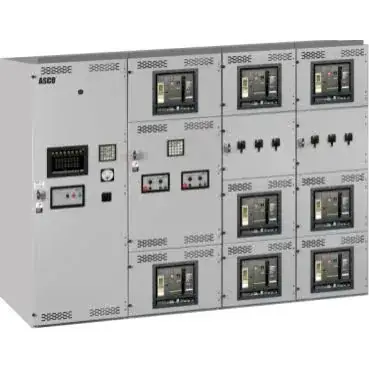
ASCO 4000 Series paralleling switchgear, the mid-tier generator control lineup under Schneider ownership
This model is part of SecondWatt’s switchgear research catalogue. Specifications and price observations are included where supported by sources. Equipment availability and commercial terms require confirmation.
ASCO 4000 Series dossier: Schneider-owned generator paralleling switchgear, range position, naming traps, controls lifecycle, inspection checklist.
The ASCO 4000 Series is generator paralleling switchgear from ASCO Power Technologies, a Schneider Electric business since 2017 (and not, as older references sometimes have it, a Vertiv line; Vertiv inherited a different part of the Emerson portfolio). The se.com range positions 4000 Series as the configurable mid-tier between the packaged Series 300 paralleling gear and the fully custom 7000 Series Power Control System, integrating generator breakers, synchronizing controls, load add and shed logic, and distribution in UL-listed lineups for standby and emergency plants.
A structural clarification protects buyers: the ASCO '7000 Series' name also covers the transfer-switch family, and used-market listings mix the two constantly; paralleling lineups and automatic transfer switches are different products sharing a series number.
Component-level ASCO stock (controllers, transfer switches) is the liquid layer.
Why it matters
Paralleling switchgear is where generator fleets become power plants, and the 4000 Series is the volume configurable tier of the biggest brand in transfer power. Its used-market absence, against 45-90 week new leads for switchgear-class gear, tells buyers the truth early: plan controls modernization, not used-lineup shopping, for this class.
Who buys it
Hospitals, data centers, and campuses running multi-generator standby plants buy 4000 Series new through Schneider/ASCO channels; service buyers keep existing lineups alive with controls upgrades. Used-market demand lands on component ATS units and breaker cells rather than whole lineups.
Role in the data center
Generator plant control and paralleling for standby fleets at hospitals and mid-size data centers, sitting between the generator terminals and the emergency distribution bus and deciding which loads pick up in what order. It is the configurable tier below fully custom power control systems, chosen where a packaged product is too rigid and a custom lineup is not warranted.
Key specifications
| Product class | generator paralleling switchgear |
|---|---|
| Range position | between Series 300 and 7000 Series PCS |
| Owner | Schneider Electric (ASCO business) |
| Companion packaged tier | ASCO Series 300 paralleling switchgear |
| Custom tier | 7000 Series Power Control System |
| Naming trap | 7000 Series ATS family is a different product |
| Used-lineup market | no public priced lineups as of August 2026 |
| Class lead time | 45-90 weeks (SourceBlue switchgear band) |
| Paralleling functions | synchronizing, load add and shed, generator and tie breakers, distribution |
| Listing | UL-listed lineups for emergency and standby systems |
Technical summary
Type: generator paralleling switchgear (LV). Position: mid-tier between Series 300 (packaged) and 7000 Series PCS (custom). Functions: synchronizing, load add/shed, generator and tie breakers, distribution. Listings: UL-listed lineups for emergency/standby systems. Owner: Schneider Electric (since 2017); not Vertiv. Naming trap: distinct from the 7000 Series ATS family. Controls: redundant PLC architectures per configuration. Used market: whole lineups effectively never trade publicly.
Major variations
Configurations scale by generator count, bus rating and distribution scope, with redundant PLC architectures specified per project rather than sold as catalog tiers. Above and below it sit the other two ASCO tiers: Series 300 for packaged lower-complexity plants and the 7000 Series Power Control System for custom low-voltage and medium-voltage plants. Controls generation sets service posture far more than the iron does, so two physically similar lineups a decade apart in vintage carry very different retrofit liabilities.
Configurations and options
Configuration scales by generator count, bus continuous rating and how much distribution the lineup carries, with control architecture, including redundant PLCs, specified per project rather than picked from catalog tiers. The commercially decisive items are the number of generator and tie breakers, the breaker frames and interrupting ratings inside them, the utility-interface scheme, and the depth of the load add and shed logic. ASCO's range positions the 4000 Series between the packaged Series 300 and the fully custom 7000 Series Power Control System, so the tier choice itself is the first price decision. On used gear the controls generation, not the bus rating, sets refurbishment cost.
Compatibility and dependencies
A paralleling lineup only works as part of a system: it needs generator-mounted engine controls it can start and synchronise, breakers whose closing and tripping schemes it can drive, and a utility interface matched to the transfer philosophy the site was designed around. Downstream it feeds the emergency distribution bus, so bus continuous rating and short-circuit withstand have to cover both the paralleled generator contribution and the utility source. Sequence timing has to be re-verified against NFPA 110 start-to-load requirements after any controls change. Rehlko's switchgear service brochure documents the recurring dependency in this class: PLC and HMI hardware goes obsolete on a 15-20 year cycle while bus and breakers last 30 years or more.
Pricing and availability
Trend: rising Lead time, new: 45-90 weeks (engineered switchgear class). Lead time, used or refurbished: No whole-lineup channel; components 1-8 weeks. Warranty, used: 1-year typical from reconditioning dealers.
Lifecycle and maintenance
Paralleling switchgear iron lasts 30+ years but its control systems turn over every 15-20: PLCs, HMIs, and network hardware go obsolete long before bus and breakers wear out. OEM modernization programs (Kohler switchgear service, ASCO, Eaton, Russelectric) replace controls in place with sequence re-verification and load testing, typically warranted 1-2 years. A used lineup's value concentrates in its breakers and bus; controls should be assumed a retrofit cost unless current.
Thermal and emissions profile
Switchgear produces no combustion emissions; the regulatory profile is electrical safety and materials. NFPA 70B became a standard in its 2023 edition, making maintenance programs mandatory rather than recommended, and arc-flash rules (NFPA 70E) govern work practices. LV air-insulated gear carries no F-gas exposure, and construction standards (UL 891, UL 1558, IEEE C37.20.1) plus arc-resistant options under IEEE C37.20.7 define the safety envelope buyers should verify.
Common failure points
- PLC and HMI obsolescence — Discontinued controllers and dead touchscreens risk weeks of downtime
- Program and settings loss — No PLC backup means no recovery after controller failure
- Control power systems — Failed batteries and chargers disable the entire paralleling function
- Breaker mechanisms — Sticky electrically-operated breakers miss the paralleling window
- Synchronizer drift — Out-of-window closures stress generators and trip protection
- Sensing and CT wiring — Bad CT/PT inputs corrupt load share and metering
Inspection checklist
Controls vintage: identify PLC generation and firmware; controllers older than 15 years risk obsolescence downtime. PLC redundancy: verify dual-master architecture; fail one controller and confirm bumpless transfer. HMI: verify touchscreen, alarm history, and event logs; displays are common 10-15 year failures. Synchronizer: test sync-check phase, voltage, and frequency windows against settings. Breakers: exercise every generator and tie breaker; 5-cycle class closing required for paralleling duty. Load add/shed: test priority sequencing through all programmed stages (typically 8). Protection: injection-test generator and feeder relays; verify device 32 reverse-power and 25 sync elements. Transfer modes: test open transition and any closed-transition mode; verify the 100 ms utility-parallel limit.
Procurement channels
Schneider and ASCO channels supply new lineups and controls modernization. On the used side only component-level ASCO stock trades: transfer switches from around 399 USD and controllers on eBay and Surplus Record, while whole paralleling lineups do not surface publicly at any price. Buyers should treat a controls-modernization quote, not a surplus search, as the realistic path for an aging 4000 Series plant.
Regional notes
A North American product: UL-listed lineups built for emergency and standby systems at 60 Hz, engineered to NFPA 110 and NEC Article 700 practice, and sold through ASCO and Schneider Electric channels. ASCO has been a Schneider Electric business since 2017, which is what determines where controls support and parts come from today. There is no IEC equivalent to import, and a lineup built for a 50 Hz plant would need its synchronising, protection settings and breaker ratings re-engineered rather than re-labelled.