Niagara Power Transformer Liquid-filled substation transformers (to 50 MVA / 138 kV)
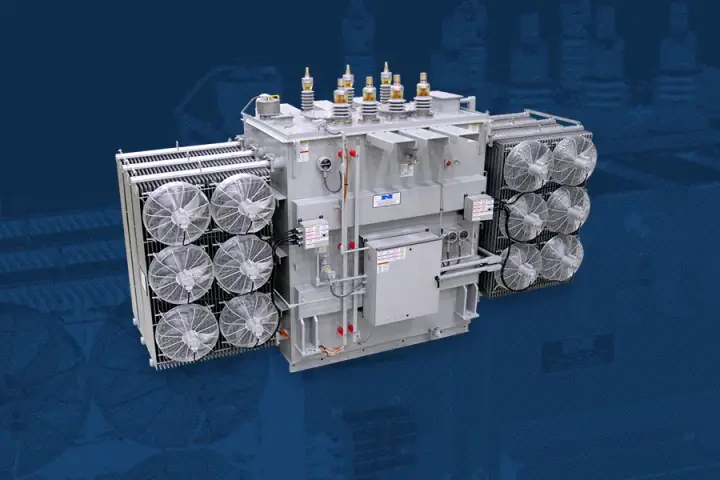
Niagara Power Transformer substation units to 50 MVA and 138 kV with 650 kV BIL, built in Buffalo
This model is part of SecondWatt’s transformer research catalogue. Specifications and price observations are included where supported by sources. Equipment availability and commercial terms require confirmation.
Niagara Power Transformer dossier: liquid-filled substation units to 50 MVA, 138 kV, 650 kV BIL, fluid options, class lead times, inspection checklist.
Niagara Power Transformer LLC of Buffalo, New York builds liquid-filled power and substation transformers to 50 MVA base rating, 138 kV, and 650 kV BIL. Fluid options span mineral oil, FR3 natural ester, and Luminol; winding constructions include circular layer, disc, and helical; and options cover on-load tap changers, primary and secondary arresters and breakers, and SCADA outputs.
One identity caution governs this page: Niagara Power Transformer LLC is a distinct company from Niagara Transformer Corp, a separate Buffalo-area manufacturer with its own history and site. Listings, service records, and warranties must not be conflated between the two.
No Niagara Power Transformer-branded listing appeared in Surplus Record's substation category in August 2026, and the company publishes no lead times. The class context does the pricing work: 588 substation listings trade price-on-request, 5-25 MVA new-build leads run 65-95 weeks (85-110 weeks at 25-50 MVA), and boundary comps sit near 100,000-104,000 USD for 2,500-2,600 kVA units. For a mid-size US-built substation unit, Niagara competes on engineering flexibility rather than volume.
Why it matters
The 5-50 MVA substation class carries 65-110 week leads and a 30% projected supply deficit, and mid-size US independents like Niagara are the alternative to joining OEM queues. FR3 and Luminol fluid options address the fire and environmental requirements data center yards now specify, and 650 kV BIL covers 138 kV service entrances.
Who buys it
Utilities, industrial plants, and renewable developers needing 5-50 MVA substation units with custom winding or fluid requirements buy from Niagara; data center EPCs encounter it on 34.5 kV and 69 kV campus substations. Buyers comparing against imports weigh the Buffalo build against Section 232 tariff exposure on foreign content.
Role in the data center
Campus substation transformer at 10-50 MVA, stepping 69-138 kV utility service down to medium-voltage distribution, with FR3 specified where fire separation from occupied space is tight. At 50 MVA and 138 kV it covers the intake duty on a large campus without moving to a transmission-class supplier.
Key specifications
| Maximum base rating | 50 MVA |
|---|---|
| Maximum voltage | 138 kV |
| Maximum BIL | 650 kV |
| Fluid options | mineral oil, FR3, Luminol |
| Winding constructions | circular layer / disc / helical |
| Options | OLTC, arresters, breakers, SCADA |
| Class lead time (5-25 MVA) | 65-95 weeks |
| Class lead time (25-50 MVA) | 85-110 weeks |
| Location | Buffalo, New York |
| Product families | substation and unit substation liquid-filled power transformers |
| Distinct legal entity | Niagara Power Transformer LLC, separate from Niagara Transformer Corp |
| Class lead time, high-capacity units | up to 4 years (2026) |
| Power class supply deficit, 2025 | 30 % |
Technical summary
Rating: up to 50 MVA base. Voltage: up to 138 kV. BIL: up to 650 kV. Fluids: mineral oil, FR3, Luminol, others. Windings: circular layer, disc, or helical. Options: OLTC, arresters, breakers, SCADA outputs. Location: Buffalo, NY. Class lead times: 65-95 weeks (5-25 MVA), 85-110 weeks (25-50 MVA). Applications: utility, industrial, renewable substations. Distinct from: Niagara Transformer Corp (separate company).
Major variations
Substation, unit substation and small power builds share the same platform, and the differences between them are per-order engineering decisions rather than catalog variants. Fluid is the first: mineral oil, FR3, Luminol or another less-flammable fluid, which decides indoor suitability. Winding construction is the second, circular layer, disc or helical, chosen against short-circuit duty and impedance. Options layer on top: on-load tap changers, primary and secondary arresters and breakers, and SCADA outputs. The identity split with Niagara Transformer Corp is the variation that trips buyers; verify the legal entity on the nameplate of any used unit.
Configurations and options
Ratings reach 50 MVA base at 138 kV with BIL to 650 kV. Fluid is mineral oil, FR3 natural ester, Luminol or another less-flammable fluid, and that choice decides indoor suitability more than anything else on the order. Winding construction is selectable as circular layer, disc or helical, chosen against short-circuit duty and the impedance the project needs. Options are on-load tap changers, primary and secondary arresters and breakers, and SCADA outputs. Each of those is a per-order engineering decision rather than a catalog line, which is why the class is quoted rather than priced. Cooling class designations and IEEE citations do not appear on the public product page as of August 2026. One identity check governs any used purchase: Niagara Power Transformer LLC is a different company from Niagara Transformer Corp, and warranties and service records must not be conflated.
Compatibility and dependencies
In campus duty this unit takes 69-138 kV service down to medium-voltage distribution, with high-voltage bushings to the utility source and the low-voltage side on bus duct or cable into switchgear. Impedance is unusually consequential here because winding construction is a design choice, so it has to be fixed against the downstream switchgear interrupting rating before the unit is built or bought. BIL to 650 kV has to coordinate with the arrester scheme. Arresters and breakers integrated into the transformer order become part of the yard layout and the protection scheme. An on-load tap changer needs control power and a control cabinet, and SCADA outputs need a comms path and an agreed point list. FR3 or Luminol fill changes fire separation and moves the dissolved gas baseline off the mineral-oil limits in IEEE C57.104. Transport at 10 MVA and above follows IEEE C57.150-2023.
Pricing and availability
Comparable secondary-market band: 100000–104000 $ per unit. Trend: rising Electrical Trader's price history, published 2026-04-01, puts power transformer prices up 77% between 2019 and 2026, driven by copper up roughly 70% and grain-oriented electrical steel up 80-100% from 2020 to 2025, together 50-55% of production cost. Wood Mackenzie figures reported by pv magazine USA on 2026-05-11 put substation transformer demand up 116% between 2019 and 2025. Terrapin Construction Group had substation lead times at 65-95 weeks for 5-25 MVA and 85-110 weeks for 25-50 MVA on 2026-06-10. Lead time, new: 65-110 weeks (class, by MVA band); Niagara-specific figures unpublished. Lead time, used or refurbished: 2-12 weeks. Warranty, used: 3-year typical from major US rebuilders.
Lifecycle and maintenance
Liquid-filled transformers routinely serve 30-40 years with annual oil screening, DGA on a 1-2 year cadence (or continuous online monitoring on critical units), and gasket or bushing service as tests dictate. Major US rebuilders remanufacture units to like-new condition with warranties up to 3 years (T&R Electric, Sunbelt Solomon), and reconditioned stock ships in days against 65-210 week new-build queues. Remaining paper life, estimated by furan testing, governs end-of-life valuation.
Thermal and emissions profile
Transformers produce no combustion emissions; the regulatory profile is efficiency and fluid. US distribution-class units fall under DOE 10 CFR 431 Subpart K efficiency standards, amended in 2024 with compliance from 2029 requiring 10-30% lower losses than 2016 levels. Fluid choice drives fire and environmental posture: mineral oil versus FR3 natural ester with a 360 C fire point and ready biodegradability. Legacy units require PCB screening, with clean units documented below 2 ppm.
Common failure points
- Windings — Dielectric failure; windings dominate major-failure statistics in CIGRE TB 642
- Bushings — Failure share rises with voltage class; OIP bushing faults can rupture tanks
- OLTC — Contact and mechanism wear; prominent failure source on substation units
- Winding deformation — Through-fault or transport damage shifting SFRA signature
- Cooling system — Pump, fan, and radiator degradation derating the unit
- Moisture and paper aging — Furans in oil and reduced degree of polymerization
Inspection checklist
DGA: dissolved gas analysis per IEEE C57.104; combustible-gas trend rise between 2 samples triggers investigation. Oil quality: dielectric breakdown, moisture, acidity, and furan tests; degree of polymerization below 200 marks end of paper life. Insulation resistance: megger HV/LV/ground; polarization index of 2.0 or higher passes. Power factor: insulation power factor testing; values above 1.0% on oil-filled windings warrant investigation. Turns ratio: TTR on all taps; deviation beyond 0.5% from nameplate fails. Winding resistance: three-phase balance within 2% between phases. Bushings: capacitance and power factor test; bushing failure share rises with voltage class per CIGRE TB 642. OLTC: inspect on-load tap changer diverter and selector; OLTCs are a leading failure component in CIGRE TB 642 fleet surveys.
Procurement channels
Direct quotes from Niagara Power Transformer for new units; the company publishes no list pricing or lead times. The used substation class trades price-on-request through Surplus Record, Belyea and CTG Power Systems, and no Niagara-branded unit was listed in August 2026. Rebuilders including Sunbelt Solomon and T&R Electric supply reconditioned equivalents with warranties up to three years, which is the realistic alternative to a 65-110 week new-build queue.
Regional notes
This is a North American 60 Hz product built at Buffalo, New York for ANSI and IEEE practice, although the public product page does not cite the specific IEEE documents as of August 2026, so the standard set has to be fixed on the order data sheet. At 50 MVA and 138 kV the line sits above the distribution scope of the DOE rules at 10 CFR 431 Subpart K, so these units carry no DOE efficiency stamp. Domestic manufacture keeps a buyer clear of both the Korean large power transformer antidumping order and the import side of the Section 232 50% derivative tariffs effective 2025-08-18.