Siemens Energy GEAFOL and GEAFOL Neo cast-resin transformers
Manufacturer: Siemens Energy
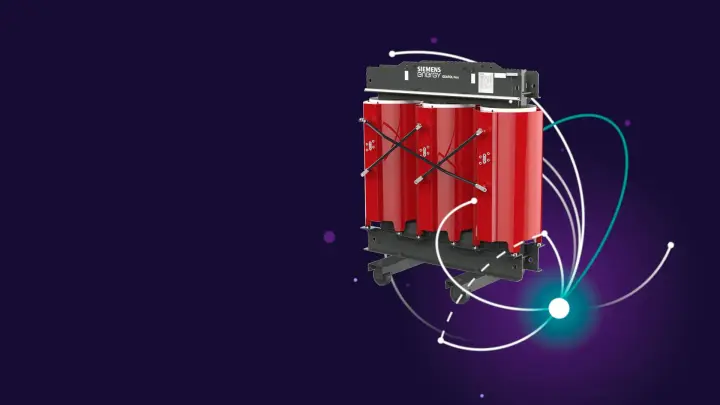
Siemens Energy GEAFOL Neo to 6.3 MVA and standard GEAFOL to 50 MVA, on Grid Technologies literature current to January 2026
This model is part of SecondWatt’s transformer research catalogue. Specifications and price observations are included where supported by sources. Equipment availability and commercial terms require confirmation.
Siemens Energy GEAFOL and GEAFOL Neo cast-resin transformers: Neo to 6.3 MVA at Um 40.5 kV, standard to 50 MVA at Um 52 kV, IEC classes, channels.
GEAFOL is Siemens Energy's cast-resin dry-type transformer family, sold from the Grid Technologies transformer portfolio since the September 2020 spin-off from Siemens AG. The line covers GEAFOL Neo to 6.3 MVA at Um 40.5 kV, standard GEAFOL to 50 MVA at Um 52 kV, GEAFOL Converter to 50 MVA for drive and renewable duty, and the copper-wound CARECO variant. The current literature set is the January 2026 GEAFOL Neo brochure, the GEAFOL and CARECO operational manual, and the EU Regulation 548/2014 declaration, all published on siemens-energy.com.
Construction is vacuum-cast epoxy filled with quartz powder, non-flammable, with aluminum foil high-voltage windings and aluminum strip low-voltage windings. Published classes are fire F1, environmental E3 and climatic C3, with higher classes available, to IEC 60076-11, VDE 0532-76-11 and DIN EN 60076-11. BIL and temperature-rise tables are not printed on the product page; they sit in the Neo brochure PDF.
Two practical consequences for a buyer. Service, spares and warranty route to Siemens Energy, not to Siemens AG, and a listing crediting the wrong entity will send a support request to the wrong company. Second, the fleet is only now turning over: the earliest observed GEAFOL resale is a 2023-build Neo 3,150 kVA offered at a Swedish industrial auction, with no open asking price published.
Why it matters
GEAFOL's Um 52 kV ceiling is the highest published among mainstream cast-resin lines, above Trihal's 36 kV and level with the top of the RESIBLOC range, which is what puts it in contention where the intake voltage is above 36 kV and an oil-filled unit is not acceptable indoors. The January 2026 Neo brochure is the current literature, so specifications quoted from older Siemens AG documents should be re-checked.
Who buys it
Consulting engineers and EPCs specifying indoor MV/LV transformation for IEC-market data halls, wind and offshore projects, and industrial plants, plus owners of installed GEAFOL fleets sourcing spares and service. The purchase driver is the F1 fire class, which removes the oil-room engineering a liquid unit would force, and the 52 kV Um ceiling, which is above what competing cast-resin lines offer.
Role in the data center
Indoor MV/LV and converter transformation in IEC-spec facilities, feeding low-voltage switchboards from campus medium voltage. Where the intake sits above 36 kV, the Um 52 kV standard build covers the step in one unit rather than two, which is the specification case that distinguishes it from Trihal and from the smaller Neo line.
Key specifications
| Corporate owner | Siemens Energy AG |
|---|---|
| Neo ceiling | 6.3 MVA / Um 40.5 kV |
| Standard ceiling | 50 MVA / Um 52 kV |
| Insulation | vacuum-cast epoxy + quartz powder |
| Classes | F1 / E3 / C3 |
| Brochure vintage | January 2026 (Neo) |
| Fleet-turnover signal | 2023-build Neo 3,150 kVA at auction |
| Converter variant | GEAFOL Converter to 50 MVA |
| CARECO variant | copper-wound variant of GEAFOL |
| Standards | IEC 60076-11, VDE 0532-76-11, DIN EN 60076-11 |
| Ecodesign documentation | EU Regulation 548/2014 declaration |
| Operational manual | GEAFOL and CARECO operational manual |
Technical summary
Owner: Siemens Energy AG, Grid Technologies, following the September 2020 spin-off. GEAFOL Neo: up to 6.3 MVA, Um up to 40.5 kV. Standard GEAFOL: up to 50 MVA, Um up to 52 kV. GEAFOL Converter: up to 50 MVA. CARECO: copper-wound variant. Insulation: vacuum-cast epoxy filled with quartz powder, non-flammable. Windings: aluminum foil HV, aluminum strip LV. Cooling: AN standard, AF optional with fans. Classes: F1 fire, E3 environmental, C3 climatic, with higher classes available. Standards: IEC 60076-11, VDE 0532-76-11, DIN EN 60076-11, plus EU Ecodesign. Current literature: GEAFOL Neo brochure, January 2026.
Major variations
Four sub-lines share the insulation system: Neo, the compact build to 6.3 MVA at Um 40.5 kV; standard GEAFOL to 50 MVA at Um 52 kV; GEAFOL Converter to 50 MVA for drive and renewable duty; and CARECO, wound in copper rather than aluminum. AN base ratings extend with AF fan packages. Special-standard builds under GOST, SABS, CSA and ANSI/IEEE serve export markets, and the operational manual covers GEAFOL and CARECO together, which is the practical sign that the two share a service regime.
Configurations and options
Four sub-lines share the insulation system and the choice between them is the first ordering decision: GEAFOL Neo to 6.3 MVA at Um 40.5 kV, standard GEAFOL to 50 MVA at Um 52 kV, GEAFOL Converter to 50 MVA for drive and renewable duty, and CARECO wound in copper rather than aluminum. Insulation is vacuum-cast epoxy filled with quartz powder, non-flammable, with aluminum foil high-voltage windings and aluminum strip low-voltage windings. AN cooling is standard and radial-flow fans raise output by up to 50%. Temperature monitoring is ordered as PTC thermistors, PT100 detectors or a capillary thermometer. Published classes are F1 fire, E3 environmental and C3 climatic, with higher classes available, and GOST, SABS or CSA/ANSI/IEEE builds on request. Tap arrangement and temperature-rise classes are not on the product page as of September 2026.
Compatibility and dependencies
GEAFOL sits between campus medium voltage and a low-voltage switchboard inside a building, and what separates it from Trihal and Neo is Um 52 kV on the standard build, which covers an intake above 36 kV in one unit rather than two. Temperature monitoring is a real interface: a PTC thermistor needs a thermistor relay, a PT100 an RTD input, a capillary thermometer contacts, so the sensor has to match what the switchboard's protection expects. AF fan sets need control power and raise the heat the room has to remove. The E3 and C3 classes define the pollution and condensation service the unit accepts, and higher classes have to be ordered. Non-flammable vacuum-cast insulation with an F1 fire class removes oil containment. Service, spares and warranty route to Siemens Energy AG, not Siemens AG, and a listing crediting the wrong entity sends the support request to the wrong company.
Pricing and availability
Trend: rising Electrical Trader's price history, published 2026-04-01, puts power transformer prices up 77% between 2019 and 2026 with a 45-95% spread by model, and attributes about half the move to materials: copper up roughly 70% and grain-oriented electrical steel up 80-100% between 2020 and 2025, together 50-55% of production cost. The same series shows the annual rate easing, from 34.58% in 2022 to 8-10% in 2025 with 3-5% forecast for 2026. Terrapin Construction Group put dry-type lead times at 0-2 MVA at 20-32 weeks on 2026-06-10. Lead time, new: 20-32 weeks (dry-type class); large units longer. Lead time, used or refurbished: Auction-cycle dependent. Warranty, used: 3-year typical from major US rebuilders.
Lifecycle and maintenance
Cast-resin and VPI dry-type transformers typically serve 25-30+ years with minimal maintenance: periodic cleaning, PD testing on critical units, fan service on AF designs, and torque checks. There is no oil system to sample, so temperature and PD are the condition indicators. Rebuild options are limited compared with liquid units; failed coils are usually replaced rather than repaired, which makes pre-purchase PD and visual inspection decisive for used units.
Thermal and emissions profile
Transformers produce no combustion emissions; the regulatory profile is efficiency and fire class. US low-voltage dry-type units fall under DOE 10 CFR 431 efficiency rules (DOE 2016 levels, amended 2024 with 2029 compliance), and EU-market cast-resin units fall under Ecodesign Regulation 548/2014 Tier 2. Dry-type construction removes oil fire and spill risk entirely, which is why cast-resin units carry IEC 60076-11 fire class F1 and serve indoor and environmentally sensitive sites.
Common failure points
- Partial discharge — PD in resin voids degrading insulation toward failure
- Resin cracking — Cracks from thermal cycling or mechanical shock
- Contamination — Dust and conductive debris enabling surface tracking
- Cooling fans — Failed AF fans derating capacity
- Connections — Loose terminations overheating under load
- Overheating under harmonics — Excess temperature on non-linear loads beyond K-rating
Inspection checklist
Partial discharge: PD test per IEC 60270 practice; readings above 10 pC warrant investigation on cast-resin coils. Resin condition: inspect all coils per IEC 60076-11 practice for cracks and crazing from thermal cycling; any through-crack fails. Insulation resistance: megger HV/LV/ground; polarization index of 2.0 or higher passes. Turns ratio: TTR on all tap positions; deviation beyond 0.5% from nameplate fails. Winding resistance: three-phase balance within 2% between phases. Contamination: inspect for dust and conductive debris between coils; contamination is a leading dry-type failure driver. Cooling fans (AF units): run-test all fans and verify temperature controller setpoints. Temperature sensors: verify RTD or thermocouple channels read within 5 C of a reference at ambient.
Procurement channels
New units through Siemens Energy Grid Technologies sales, quoted per project. Used European supply appears at PS Auction, on Machinio's GEAFOL model page and in Machineseeker's cast-resin category; the first two publish no open asking price and the third carries open asks for other brands. Spares and service route to Siemens Energy, which is the practical reason to confirm the entity on any listing before buying.
Regional notes
GEAFOL is an IEC product built to IEC 60076-11, VDE 0532-76-11 and DIN EN 60076-11, with an EU Regulation 548/2014 Ecodesign declaration published; Tier 2 levels have applied since July 2021 under amendment 2019/1783. GOST, SABS and CSA/ANSI/IEEE builds are available on request rather than as standard, so a unit bought on the European secondary market will normally carry the IEC and VDE declaration and no CSA or DOE stamp. Um and frequency are set at build. Imported dry-type content carries the Section 232 50% tariff on non-US steel and aluminum from 2025-08-18.