Solar Turbines Titan 250
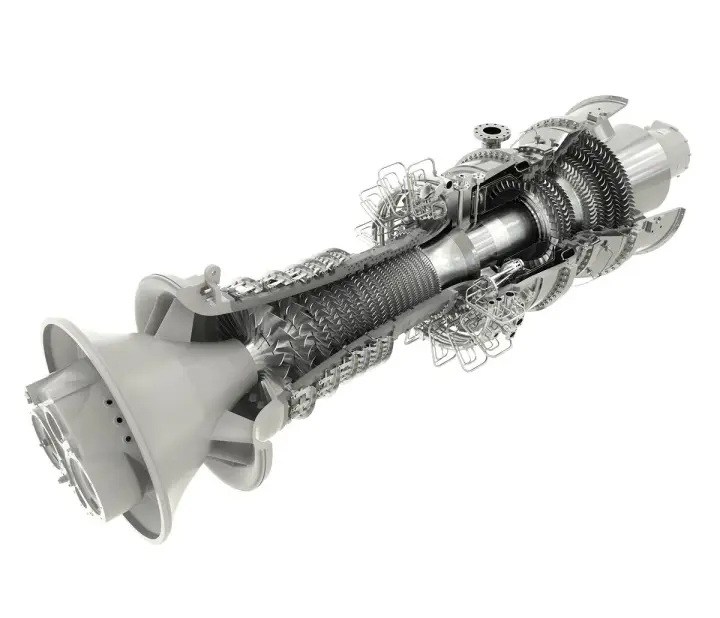
Solar Turbines Titan 250 generator set, 23,100 kWe ISO base load
This model is part of SecondWatt’s gas turbine research catalogue. Specifications and price observations are included where supported by sources. Equipment availability and commercial terms require confirmation.
Solar Turbines Titan 250 gas turbine: 23,100 kWe ISO rating, verified specs, emissions position, overhaul guidance, and used-market findings for buyers.
The Titan 250 is Solar Turbines' largest gas turbine package, sold in both a mechanical-drive compressor configuration and a power-generation generator-set configuration. Solar's own turbine-ratings table lists them separately: 23,790 kW shaft output for the mechanical drive versus 23,100 kWe electrical output for the generator set. Buyers researching this model online will find both spec sheets in circulation and should confirm which one a listing actually describes.
It is a hybrid design drawing on the Taurus 65, Titan 130, and Mercury 50, with over 95% material commonality with the Titan 130, per Solar's own 2009 conference paper. The first production unit entered service at a U.S. gas transmission station in late 2009, after development work that began in 2005. That makes it a genuinely young design relative to Solar's high-volume Taurus and Centaur lines, and the used-equipment record reflects that youth directly.
SoLoNOx dry-low-emissions combustion is offered as an option alongside a Conventional combustor, not as a standard feature, so a used unit's emissions capability must be confirmed per serial number. No installed Titan 250 appears in the state and federal air-permit dockets that document Solar's Titan 130, Taurus 60, Taurus 70, Mars 90 and Mars 100 units, so a data center siting review for this model has no public permitting precedent to draw on. One Titan 250 listing was open worldwide in August 2026, a mechanical-drive unit with no price attached rather than a generator set.
Why it matters
Solar and Caterpillar collateral quotes two different efficiency figures for this machine, and the gap matters for anyone sizing fuel cost. The commonly repeated "40% shaft efficiency" is a mechanical-drive-basis number, measured before generator losses; the correct figure for an electrical buyer is 38.6% measured at the generator terminals, per Solar's own generator-set data sheet. Using 40% to project fuel burn against delivered kWe will understate operating cost on every load hour.
Who buys it
Oil and gas operators buy the Titan 250 mechanical-drive package for large compression duty, its dominant historical market. Power generation buyers are a newer, thinner segment for this specific model, since the generator-set configuration entered service only in 2009 and has not yet produced a visible resale channel the way Solar's older Taurus and Mars lines have.
Role in the data center
A single generator-set unit supplies about 23.1 MW ISO, which puts a two- or three-unit row at the scale of one campus phase feeding medium-voltage switchgear.
Key specifications
| ISO base-load electrical output (generator set) | 23,100 kWe |
|---|---|
| ISO mechanical-drive shaft output | 23,790 (31,900) kW (hp) |
| Heat rate (generator terminals) | 9,150 (8,670) kJ/kWh (Btu/kWh) |
| Electrical efficiency (generator terminals) | 38.6 % |
| Shaft efficiency (mechanical-drive basis) | 40 % |
| Exhaust flow | 245,660 (541,590) kg/hr (lb/hr) |
| Exhaust temperature | 465 (865) C (F) |
| Pressure ratio | 24:1 ratio |
| Compressor stages | 16 stages, axial |
| Gas generator turbine max speed | 10,500 rpm |
| Power turbine max speed | 7,000 rpm |
| Reduction-gear output speed | 1,500 / 1,800 rpm (50/60 Hz) |
| Generator voltage range | 1,100-13,800 VAC |
| Package weight (generator set) | 125,000-141,150 kg |
| SoLoNOx NOx options (catalog) | 9 / 15 / 25 ppm |
| Entry into service (first production unit) | late 2009 year |
Technical summary
ISO base-load output, generator set: 23,100 kWe. ISO shaft output, mechanical drive: 23,790 kW (31,900 hp). Heat rate, generator terminals: 9,150 kJ/kWh (8,670 Btu/kWh). Electrical efficiency, generator terminals: 38.6%. Exhaust flow / temperature: 245,660 kg/hr at 465 C (865 F). Pressure ratio: 24:1 through a 16-stage axial compressor. Shaft speeds: gas generator 10,500 rpm, power turbine 7,000 rpm. Reduction-gear output: 1,500 rpm (50 Hz) or 1,800 rpm (60 Hz). Generator voltage range: 1,100-13,800 VAC. Package weight, generator set: 125,000-141,150 kg. SoLoNOx NOx catalog tiers: 9 / 15 / 25 ppm on natural gas. Entry into service, first production unit: late 2009.
Major variations
Mechanical-drive/compressor package (23,790 kW shaft output) and power-generation generator-set package (23,100 kWe) are the two configurations; they differ in weight, gearbox, and controls, and circulating spec sheets do not always label which one they describe. SoLoNOx and Conventional combustion are both offered as options on the generator set.
Configurations and options
Combustion is the option that decides permittability: SoLoNOx dry low emissions in Solar's 9, 15, and 25 ppm NOx catalog tiers, or a Conventional combustor. The generator-set package is ordered for 50 Hz or 60 Hz through a reduction gear at 1,500 or 1,800 rpm output, with generator voltage specified anywhere from 1,100 to 13,800 VAC. Solar's InSight remote monitoring is the standard condition-based maintenance option and is worth confirming on any used unit, since the overhaul planning method depends on it.
Compatibility and dependencies
The generator-set package weighs 125,000 to 141,150 kg against 45,000 to 49,900 kg for the bare mechanical-drive driver train, so foundation, crane, and rigging plans built for one do not transfer to the other. It needs a reduction gear to 1,500 rpm (50 Hz) or 1,800 rpm (60 Hz) and a generator matched within the 1,100 to 13,800 VAC range, so switchgear voltage should be fixed before a unit is sourced rather than after.
Pricing and availability
Trend: rising No historical price series exists for this model: one used listing was open worldwide in August 2026 and it carries no price. Sector-wide gas turbine pricing has trended up since 2019 on demand from data center and grid-firming buyers, but that trend has not yet produced an observable Titan 250 resale price to track, so the operative reference for a buyer remains the new-unit order book. Lead time, new: 36-60 months as of August 2026, per broader Solar and Caterpillar order-book conditions. Lead time, used or refurbished: No generator-set unit was on offer worldwide in August 2026; the one listing open was a mechanical-drive package.
Supply, delivery and overhaul
2 units listed without public prices.
Lifecycle and maintenance
Solar and Caterpillar frame Titan 250 maintenance as condition-based, using InSight monitoring and borescope data to plan and extend time between overhauls, rather than publishing a fixed schedule. Solar publishes no hot-section-inspection interval, major-overhaul interval in fired hours, or overhaul-cost-to-machine-value ratio for this model. That silence is consistent with a thin installed base: the third-party overhaul-cost benchmarks that exist for Solar's high-volume Taurus, Centaur, and Mars lines have not yet developed for the Titan 250.
Thermal and emissions profile
SoLoNOx dry-low-emissions combustion is optional, not standard, alongside a Conventional combustor, so emissions capability must be confirmed per serial number. Solar's catalog cites SoLoNOx tiers of 9, 15, and 25 ppm NOx on natural gas, and a 2009 Solar conference paper cites under 15 ppmv NOx; neither states the O2 correction basis. No permit-verified NOx figure at 15% O2 exists for an installed unit. No installed Titan 250 appears in the state and federal permit dockets that document Solar's Titan 130, Taurus 60, Taurus 70, Mars 90 and Mars 100 units, so a developer cannot cite a precedent installation. Solar publishes no CO figure at 15% O2 for this model; the only published CO claim is Solar's statement that SoLoNOx cuts CO by up to 30% versus Conventional combustion, a relative figure rather than a limit.
Common failure points
- Combustor liner (SoLoNOx) — Cracking, coking, elevated NOx/CO drift from baseline
- Gas generator turbine blades — Creep elongation, coating loss, tip rub
- Reduction gearbox — Gear tooth wear, bearing vibration at 1,500/1,800 rpm output
- Generator windings — Insulation degradation across the 1,100-13,800 VAC voltage range
- Control system (Turbotronic) — Obsolete hardware revision, unsupported software
- Package enclosure and ducting — Corrosion, acoustic panel degradation, seal failure at 465 C exhaust duct
Inspection checklist
Confirm SoLoNOx versus Conventional combustor installed: this decides permittability outright, not a cosmetic spec difference. Pull fired hours and starts count from the OEM Turbotronic control-system log: do not accept a seller's summary sheet figure alone. The worldwide fleet on offer is thin, with one used listing open in August 2026, so verify the serial number against Solar's own service records rather than a broker summary. Borescope the 16-stage axial compressor: check for erosion, foreign-object damage, and fouling on the leading stages. Inspect all combustor liners for SoLoNOx-specific cracking, coking, and injector fouling: a low-volume model can carry long parts lead times. Check gas generator turbine blades against the 10,500 rpm max-speed baseline: creep, coating spallation, and tip clearance are the failure signatures.
Procurement channels
One Titan 250 listing was open worldwide in August 2026, at Crusader Joint Ventures: a new, never-used mechanical-drive compressor unit in Central Asian preservation storage, with no price disclosed. No generator-set-configuration unit, used or new-surplus, appears on any broker, auction, or trading site. Unlike Solar's older models, the Titan 250 has no visible secondary market for the generator-set configuration a data center buyer needs, consistent with its 2009 entry into service; expect new-unit lead times and pricing rather than a surplus-market option.
Regional notes
The one worldwide listing open in August 2026 is a mechanical-drive unit in Central Asian storage, a single data point that supports no regional read. Solar's generator-set installations to date concentrate at gas transmission stations in the United States, per the model's launch-site history, so a US buyer is looking at pipeline fleet churn rather than a broad industrial pool.
Content owner: Gary Martin, SecondWatt