Russelectric RMTD Series automatic transfer switch, 100-4000 A
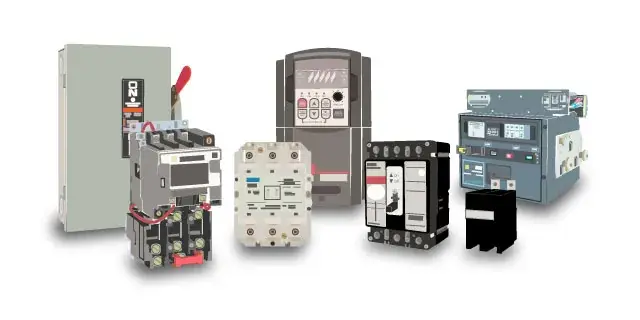
Russelectric's base automatic line, with a published catalogue key and a 400 ms delayed transfer by design
This model is part of SecondWatt’s transfer switche research catalogue. Specifications and price observations are included where supported by sources. Equipment availability and commercial terms require confirmation.
Russelectric RMTD dossier: 100-4000 A ratings, the published catalogue key, a 400 ms delayed transfer, observed used pricing and inspection guidance.
RMTD is Russelectric's base automatic transfer switch line, and the catalogue number decodes from a published key: RMTD, then amperage, then poles, then a phase-sensing letter, then an enclosure letter. The manufacturer's own worked example reads RMTD1004CE for a dual operator 100 A four-pole wall-mounted unit, with B denoting automatic two-pole sensing, C denoting three or four pole, and the enclosure suffix running blank for open, VS for vertical switchboard, E for wall-mounted and EF for free-standing.
The design choice that separates this line from its peers is the transfer itself. RMTD holds roughly 400 milliseconds between disconnecting one source and connecting the other, letting motor loads demagnetise before reconnection. That is a delayed break-before-make design rather than closed transition, and it is why the line suits motor-heavy industrial loads while genuinely interruption-free duty falls to other Russelectric products.
RMTD is not Russelectric's bypass-isolation flagship; that is RTS-03, RTS-30 at a 30-cycle rating, and RTBD with its closed transition RTBD-CT variant. The 30-cycle distinction is visible directly in the market data: a 300 A RTS-30 traded at 116.67 USD per ampere against RMTD units at 1.63 to 8.00, which is the widest specification premium anywhere in this category.
Why it matters
RMTD pricing is the cleanest evidence in this category that specification, not age, sets residual value. Base RMTD units cleared between 1.63 and 8.00 USD per ampere across five observations, while the 30-cycle bypass-isolation sibling cleared at 116.67 on one.
Who buys it
Data center, healthcare and industrial operators who standardised on Russelectric, and motor-heavy facilities that want the delayed transfer without paying for closed transition. Russelectric builds from two United States sites and had roughly 400 employees at the time of the Siemens acquisition, so this is a specialist manufacturer rather than a volume brand, and its used units concentrate with a handful of dealers.
Role in the data center
Utility-to-generator transfer on Russelectric-standardised sites where motor loads dominate. Critical bus duty belongs to the RTS-03, RTS-30 and RTBD bypass-isolation families rather than to this line.
Key specifications
| Ampere ratings | 100 to 4000 across 13 frame points A |
|---|---|
| Poles | 2, 3 and 4 |
| Transfer delay | about 400, delayed break-before-make ms |
| Withstand and closing at 100-400 A | 42,000 3-cycle at 480 V A |
| Withstand and closing at 1000-1200 A | 85,000 3-cycle at 480 V A |
| Withstand and closing at 1600-4000 A | 100,000 3-cycle at 480 V A |
| With current-limiting fuses | 200,000 across all frames A |
| Listing | UL 1008 |
| Enclosures | open NEMA style, VS vertical switchboard, E wall mounted, EF free standing |
| Controller | Model 2000 with 20 x 4 character LCD and 5 x 5 keypad |
| Communications | proprietary serial, RS-422 and RS-485 compatible, multidrop to 4,000 ft |
| Operating temperature | minus 20 to plus 70 degrees C |
| Dimensions and weight | 24-64 in H, 19-60 in W, 12.75-26.25 in D, about 390-3,600 lb |
| Catalogue key | RMTD plus amperage, poles, phase-sensing letter and enclosure letter |
Technical summary
Ampere ratings: 13 frame points from 100 to 4000 A. Poles: 2, 3 and 4 pole. Voltage: 480 VAC referenced in the published closing and withstand charts. Transition: about 400 ms between disconnection and reconnection, a delayed break-before-make design. Withstand and closing, 3-cycle at 480 V: 42 kA at 100-400 A, 65 kA at 600-800 A, 100 kA at 1600-4000 A. With current-limiting fuses: all frames rated to 200 kA. Listing: UL 1008, marketed on the highest published 3-cycle closing and withstand ratings. Enclosures: NEMA 1 open style, vertical switchboard VS, wall-mounted E and free-standing EF. Controller: Russelectric Model 2000 microprocessor with a 20 by 4 character LCD and a 5 by 5 keypad. Communications: proprietary serial protocol, RS-422 and RS-485 compatible, multidrop to 4,000 ft. Operating temperature: minus 20 to plus 70 degrees C; storage minus 25 to plus 85 degrees C. Dimensions: 24-64 in high, 19-60 in wide, 12.75-26.25 in deep, about 390-3,600 lb shipping.
Major variations
The base line runs RMTD, with a closed transition variant designated RMTDCT confirmed through a secondary market listing of a 4000 A unit. The bypass-isolation and closed-transition products sit outside the line as RTS-03, the 30-cycle rated RTS-30 at 100 to 3,000 A, and RTBD with the RTBD-CT closed transition variant covering 100 to 3,000 A.
Configurations and options
The typical build is a three or four pole automatic switch with the Model 2000 controller in a wall-mounted or free-standing enclosure. The bypass-isolation siblings add solenoid-interlocked bypass contacts that parallel the switch while mechanical interlocks open the load-break contacts, with the base mounted on casters for removal and an isolation handle disconnecting primary and control power.
Compatibility and dependencies
The 400 millisecond transfer delay is a design characteristic rather than a setting, so this line is unsuitable where an uninterrupted transfer is required. The communications protocol is proprietary and serial, which means integration into a modern building system needs a gateway rather than a native connection.
Pricing and availability
Published price range: $1,799 - $32,000 depending on frame and condition. Trend: stable No published price series exists. Five used RMTD observations run from 1.63 USD per ampere on a 3000 A delayed transition unit to 8.00 on a 4000 A closed transition RMTDCT, with a median of 5.63, and one new 800 A unit carrying a one-year dealer warranty was listed at 2,999.99 USD, or 3.75 USD per ampere. Per-ampere pricing falls sharply as the frame grows on this line, which is the opposite of the flat curve seen on ASCO equipment. Lead time, new: 24-40 weeks (category benchmark). Lead time, used or refurbished: Days to 4 weeks from dealer stock.
Lifecycle and maintenance
Manufacturers publish maintenance intervals for this equipment rather than a service life. The pattern across ASCO, Cummins and Kohler literature is consistent: a monthly electrical transfer test, an annual preventive visit covering enclosure cleaning, contact inspection and lug retorquing, and a lithium control battery replaced every two years on the lines that carry one. No manufacturer in this set publishes a mechanical or electrical endurance figure in operations, and ASCO's own manuals state only that the non-replaceable main contacts are designed to last the life of the switch. That absence is why a used unit is priced on evidence of exercise and on controller availability rather than on a cycle count. Arc flash incident energy is calculated under IEEE 1584-2018 and is installation-specific, so NFPA 70E requires an electrically safe work condition before the enclosure is opened.
Thermal and emissions profile
A transfer switch produces no emissions. It is the device that decides when an emitting machine runs, so the environmental accounting belongs to the generator it starts and to the hours that generator accumulates meeting the monthly exercise obligations in NFPA 110. Two facts do belong to the switch itself. Low-voltage transfer equipment is air-insulated, so sulphur hexafluoride is not part of this product class and should never be claimed as a differentiator. The end-of-life recovery case is copper, silver-alloy contacts and a steel enclosure, and the working exposure is arc flash, calculated under IEEE 1584-2018 and managed through the NFPA 70E process.
Common failure points
- Main contacts — Arc erosion pits and can weld the contacts, so the switch fails to transfer or fails to break
- Controller board — Power supply instability or logic fault stops the switch communicating with the generator control
- Voltage sensing drift — Pickup and dropout thresholds drift, so the switch does not register a real source loss
- Actuator and springs — Solenoid or linear actuator failure, capacitor failure or spring fatigue leaves the switch mid-travel
- Terminations — Vibration and moisture loosen lugs and corrode terminals, producing heat at the connection
- Exercise neglect — A switch that has not transferred in months fails on the first real outage
Inspection checklist
Withstand and closing rating: match the nameplate WCR to the actual upstream device, because UL 1008 Edition 9-2022 does not let a specific-breaker rating carry over to a different breaker. Rating convention: establish whether the WCR is specific-breaker or any-breaker time-based, commonly 3-cycle, since the 2 conventions are not interchangeable. Ampere frame and poles: confirm the frame rating and whether the unit is 2, 3 or 4 pole. Neutral configuration: a 3-pole solid-neutral switch dropped into a separately derived system will nuisance-trip ground-fault relays. Transfer test under load: operate normal to alternate and back, the monthly test NFPA 110 requires, and time it against the 10-second Type 10 threshold. Contact condition: inspect for pitting and erosion; discoloration is normal and the manufacturer instruction is to use light emery paper rather than a file.
Procurement channels
Surplus Record carries almost all of the priced inventory, concentrated with a handful of dealers including Quantum Technology, Powerhouse Systems and Critical Infrastructure Group, and a meaningful share of listings are request-price rather than numbered. Siemens' current product pages list category names only, and the RMTD specification sheet is hosted on a third-party document library rather than on a manufacturer domain.
Regional notes
United States manufacture at Hingham, Massachusetts and Broken Arrow, Oklahoma, with roughly 400 employees at the time of the Siemens acquisition announced in October 2018 and closed in March 2019. Russelectric publishes no service entrance rating and no seismic certification for this line.