Schneider Electric PIX air-insulated metal-clad switchgear (to 24 kV)
Manufacturer: Schneider Electric
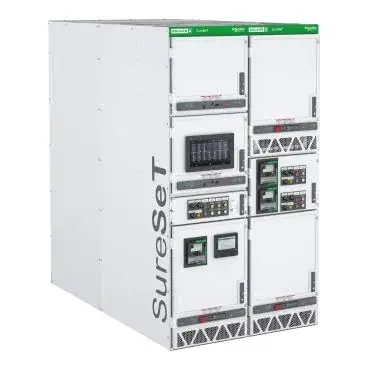
Schneider PIX metal-clad switchgear to 24 kV, 4,000 A, and 40 kA on the HVX vacuum breaker platform
This model is part of SecondWatt’s switchgear research catalogue. Specifications and price observations are included where supported by sources. Equipment availability and commercial terms require confirmation.
Schneider PIX dossier: metal-clad AIS to 24 kV, 4,000 A, and 40 kA with HVX vacuum breakers, IEC market structure, spares channels, inspection points.
PIX is Schneider Electric's current-production air-insulated, metal-clad primary MV switchgear with withdrawable HVX vacuum circuit breakers, part of the SeT Series and sibling to MCset through the ex-AREVA/Merlin Gerin lineage. Voltage classes are 12, 17.5, and 24 kV; PIX Standard covers up to 3,150 A and 31.5 kA, with high-rating builds to 4,000 A and 40 kA at 17.5 kV in 1,000 mm panels.
Schneider publishes BIL and internal arc class in the catalog PDFs of the NRJCAT20023 series rather than on the public product pages.
PIX is a current IEC platform whose used supply has not formed; breaker-level HVX spares are the most likely first items to trade.
Why it matters
PIX and MCset together carry a large share of the IEC metal-clad installed base, and distinguishing the two (HVX versus EXE breakers, current versus legacy generation) is the first check on any quote. IEC AIS lineups do not trade used, so resale value sits at the breaker level.
Who buys it
IEC-market utilities and industrials specify PIX new; installed-base owners buy HVX breakers, spares, and repair services. US buyers meet PIX inside imported package substations and process skids, then need an HVX spares channel, since domestic dealers rarely stock IEC breaker frames.
Role in the data center
Primary medium-voltage distribution in IEC-market campuses and inside imported package substations and process skids, sitting between the utility intake and the step-down transformers. For US-landed lineups the serviceability item is the HVX breaker: domestic dealers rarely stock IEC breaker frames, so spares have to be planned at purchase.
Key specifications
| Voltage classes | 12 / 17.5 / 24 kV |
|---|---|
| PIX Standard ceiling | 3,150 A / 31.5 kA |
| High-rating build | 17.5 kV / 4,000 A / 40 kA |
| Breaker platform | HVX vacuum, withdrawable |
| Panel width (4,000 A) | 1,000 mm |
| US channel observation | PIX w/ HVX 24 kV / 2,500 A / 31.5 kA (repair, quote-only) |
| Status | current production, IEC markets |
| Catalogs | NRJCAT20023SWEEN / NRJCAT20023EN |
| Cable tunnel options | 300 mm (Standard) and 600 mm |
| Product platform | SeT Series |
Technical summary
Voltage classes: 12 / 17.5 / 24 kV. PIX Standard: up to 3,150 A / 31.5 kA (300 mm tunnel). High-rating builds: 4,000 A / 40 kA at 17.5 kV (1,000 mm panels). Breaker: withdrawable HVX vacuum. Cable tunnels: 300 mm (Standard) and 600 mm options. Construction: air-insulated metal-clad, SeT Series. Status: current production (IEC markets). Catalogs: NRJCAT20023SWEEN / NRJCAT20023EN. US channel: repair/quote only (GES observed).
Major variations
PIX Standard covers up to 3,150 A and 31.5 kA on a 300 mm cable tunnel; high-rating builds reach 4,000 A and 40 kA at 17.5 kV in 1,000 mm panels, with a 600 mm tunnel option. Functional units cover incomer, feeder, bus-section and metering duties, and regional offer variants exist (the Nordics user guide is the documented example). MCset is the sibling line and the two are routinely confused: PIX carries HVX vacuum breakers, MCset carries EasyPact EXE, and the cassettes are not interchangeable.
Configurations and options
PIX Standard covers up to 3,150 A and 31.5 kA on a 300 mm cable tunnel; high-rating builds reach 4,000 A and 40 kA at 17.5 kV in 1,000 mm panels, and a 600 mm tunnel is the alternative option. Voltage classes are 12, 17.5 and 24 kV, and functional units are ordered by duty, incomer, feeder, bus-section or metering. Regional offer variants exist, with a Nordics user guide as the documented example, so two panels sold under the same name can differ in their published option set. Withdrawable HVX vacuum breakers are the breaker platform. BIL and internal arc class are published in the NRJCAT20023 catalogues rather than on the product pages.
Compatibility and dependencies
The cable tunnel depth, 300 mm on PIX Standard against a 600 mm option, is a physical commitment made at order time and it constrains cable size, bending radius and termination work for the life of the lineup. Withdrawable HVX breakers are matched to their cassettes, and this is where PIX and its sibling MCset are routinely confused: PIX carries HVX, MCset carries EasyPact EXE, and the cassettes do not interchange. Bus rating and short-circuit withstand must be matched to the upstream transformer at the panel's own voltage class. For a US-landed lineup the serviceability item is the HVX breaker, since domestic dealers rarely stock IEC breaker frames and spares have to be planned at purchase.
Pricing and availability
Trend: rising Lead time, new: 60-80 weeks (metal-clad class). Lead time, used or refurbished: Repair/quote channel only. Warranty, used: 1-year typical from reconditioning dealers.
Lifecycle and maintenance
Metal-clad MV switchgear routinely serves 40+ years: vacuum interrupters rated for 10,000-30,000 operations far outlast the mechanical duty standby service imposes, so lineup life is governed by insulation condition and relay/controls vintage. Breakers recondition readily and trade as units, while lineups modernize in place with digital relays and retrofit breakers. ANSI/NETA MTS acceptance testing at purchase plus PD surveys in service are the condition gates.
Thermal and emissions profile
Switchgear produces no combustion emissions; the regulatory profile is electrical safety and materials. NFPA 70B became a standard in its 2023 edition, making maintenance programs mandatory rather than recommended, and arc-flash rules (NFPA 70E) govern work practices. LV air-insulated gear carries no F-gas exposure, and construction standards (UL 891, UL 1558, IEEE C37.20.1) plus arc-resistant options under IEEE C37.20.7 define the safety envelope buyers should verify.
Common failure points
- Vacuum interrupters — Loss of vacuum ends interrupting capability with no external sign
- Insulation tracking and PD — Partial discharge across dusty or damp insulation progressing to flashover
- Racking and interlocks — Damaged racking screws and defeated interlocks from forced operation
- Protection relays — Obsolete or drifted relays mis-operate under fault
- Instrument transformers — CT/VT failures disable metering and protection inputs
- Space heater failure — Condensation-driven tracking in unheated outdoor or humid gear
Inspection checklist
Vacuum integrity: hipot test each interrupter per OEM procedure (e.g., 36 kV test on 15 kV class). Insulation resistance: megger bus and breakers at 2,500-5,000 V; compare to ANSI/NETA MTS tables. Contact resistance: micro-ohm each pole; investigate imbalance beyond 50% between phases. Partial discharge: ultrasonic and TEV survey; investigate any reading 6 dB above baseline. Contact erosion: measure vacuum interrupter erosion marks against the OEM wear allowance. Racking mechanism: cycle connect/test/disconnect positions 3 times each; verify interlocks and shutters. Mechanism timing: verify open/close times; closing beyond 5 cycles flags mechanism trouble. Bus insulation: inspect epoxy and boots for tracking or corona; clean and torque joints. Instrument transformers: verify CT/VT ratios, insulation, and fusing.
Procurement channels
Schneider channels supply new panels and HVX breakers; GES Repair is the observed US repair and parts route, quoting rather than publishing prices; Surplus Record's metal-clad category is the generic channel to watch.
Regional notes
A current-production IEC line for European and other IEC markets, with no ANSI listing and effectively no North American secondary presence; the observed US route is a third-party repair shop quoting on functional units. A 50 Hz PIX lineup is not usable on a North American 60 Hz project without significant engineering, and where PIX does land in the United States it arrives inside imported package substations and process skids. HVX breaker spares come through Schneider's international channel rather than a domestic dealer shelf.