Caterpillar 3516B
Manufacturer: Caterpillar
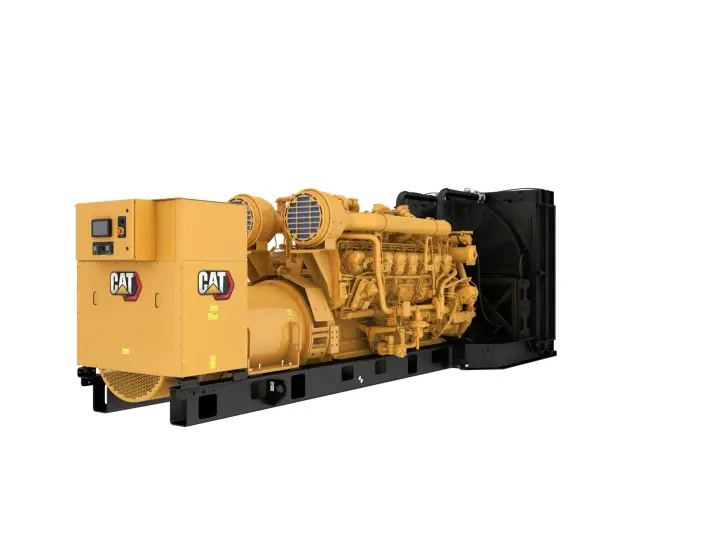
1,640-2,250 kW standby diesel genset, the most-traded 2 MW class machine in data center backup
This model is part of SecondWatt’s generator research catalogue. Specifications and price observations are included where supported by sources. Equipment availability and commercial terms require confirmation.
Caterpillar 3516B diesel genset dossier: 1,640-2,250 kW ratings, verified specs, used pricing from 249,000 to 849,900 USD, and buyer inspection checklist.
The Caterpillar 3516B is the electronic-injection generation of the 69 L V-16 3516 genset, on a 3500-series platform in production since 1982. Current 60 Hz ratings run 1,640 to 2,250 ekW standby at 1,800 rpm with voltages to 13,800 V, burning 523.9 L/hr at a 2,000 ekW full load; 50 Hz packages run 1,750 to 2,250 kVA at 1,500 rpm. Sheets carry UL 2200 listing and NFPA 110 compliance.
The 3516B is the reference 2 MW standby machine for data centers, hospitals, and utilities, and the emissions vintage ladder (Tier 0 units from 2001 through current Tier 2 emergency builds) defines its price curve. Containerized XQ2000-style power modules built on the 3516B serve rental and bridge duty.
It is the most liquid large genset on the secondary market: a 25-listing index of live August 2026 asks spanned 340,000 to 849,900 USD averaging 404,358 USD. Including sold observations the range widens, from 249,000 USD for a 2001 Tier 0 unit to 825,000-849,900 USD for zero-hour rebuilt and containerized modules, with low-hour Tier 2 sets in the 499,000-565,000 USD band.
Why it matters
The 2 MW node is where data center standby fleets concentrate, and the 3516B owns its used market: 25+ public listings, published prices, and a documented emissions-vintage ladder from 249,000 USD (Tier 0) to 849,900 USD (zero-hour rebuild). Enclosure, tank, and mobility add documented premiums, and Caterpillar's backlog keeps replacement years away.
Who buys it
Data center operators, colocation providers, and EPCs buy 3516Bs in multi-unit N+1 blocks; hospitals, utilities, and industrial plants take singles, and rental fleets absorb containerized modules with tanks. The trigger is the 50-110 week new-unit queue: dealer guides note fresh low-hour sets sell within days, with data center demand holding prices firm.
Role in the data center
Core standby block at 2,000-2,250 kW per unit behind the paralleling bus, deployed 4-30+ units per campus in N+1 or catcher configurations. Standby ratings run 1,640 to 2,250 ekW, with 50 Hz packages at 1,750 to 2,250 kVA.
Key specifications
| Rating range (continuous floor to standby ceiling), 60 Hz | 1640-2250 ekW |
|---|---|
| Prime rating, 60 Hz | 1825 ekW |
| 50 Hz range | 1750-2250 kVA |
| Engine displacement | 69 L (V-16) |
| Bore x stroke | 170 x 190 mm |
| Speed / frequency | 1800 / 60 (1500 / 50) rpm / Hz |
| Fuel at 100% load, 2000 ekW | 523.9 L/hr |
| Fuel at 75% / 50% load | 387.4 / 265.7 L/hr |
| Voltage options, 60 Hz | 380-13800 V |
| Dimensions, 2000 ekW open | 5953 x 2286 x 2410 mm |
| Dry weight, 2000 ekW open | 14180 kg |
| Certifications | UL 2200, CSA, NFPA 110, IBC seismic |
| Controller | EMCP 4.2B std; 4.3/4.4 optional |
| Compression ratio | 14.0:1 (15.5:1 HD) |
| Standby rating, 60 Hz | 2250 ekW |
Technical summary
Standby range, 60 Hz: 1640-2250 ekW. Prime, 60 Hz: up to 2000 ekW / 2500 kVA. Hz range: 1750-2250 kVA at 1500 rpm. Engine: 3516B TA V-16, 69 L. Bore x stroke: 170 x 190 mm. Fuel at 100% / 75% / 50% (2000 ekW): 523.9 / 387.4 / 265.7 L/hr. Voltage options: 380-13800 V (60 Hz). Dimensions (2000 ekW open): 5953 x 2286 x 2410 mm. Dry weight (2000 ekW open): 14180 kg. Certifications: UL 2200 listed, CSA, NFPA 110, IBC seismic. Controller: EMCP 4.2B standard, 4.3/4.4 optional. Compression ratio: 14.0:1 (15.5:1 HD).
Major variations
3516 generation ladder: mechanical 3516 (mid-1980s), 3516B (ADEM electronic unit injection), 3516B HD (215 mm stroke, 78.1 L), 3516C (ADEM A4, EMCP 4), and 3516E (latest, 2,750-3,000 ekW). Within the B, emissions vintage runs Tier 0 (circa 2001) through Tier 2 emergency builds, and packaging spans open skids to XQ2000-class containerized power modules.
Configurations and options
Used-market forms: open skid, sound-attenuated enclosure with sub-base tank, and 40 ft containerized modules on trailer chassis with 1,250 gal UL tanks. Options seen: paralleling switchgear, 7FH2-style medium-voltage alternators at 4,160-13,800 V, dual starters, jacket water heaters, and EMCP II through EMCP 4.4 controls by vintage.
Compatibility and dependencies
Requires ATS or paralleling gear rated 2,500 kVA class, bulk fuel with day tanks, and permit- matched emissions posture; Tier 0/1 units face siting restrictions in strict districts. EMCP vintage sets BMS integration effort, and 50 Hz units need 1,500 rpm configuration verified before cross-market deployment.
Pricing and availability
Market price (seller asking and transaction prices from the last 24 months, one value per seller; not a quote). refurbished, genset package: $300–$425 per kW ($601K–$850K per unit, at 2 MW), 3 sellers, latest Sep 2026, includes undated listings. Lead time, new: 50-110 weeks. Lead time, used or refurbished: 2-8 weeks.
Supply, delivery and overhaul
22 units listed without public prices.
Lifecycle and maintenance
Standby-duty majors run near 20,000 hours with oil and filters at 500 hours or 12 months, coolant at 6,000 hours, and annual load-bank testing; the 3500 platform's top-end interval is 12,000-15,000 hours. Oil capacity runs 80-100+ gallons and coolant 120+ gallons, which sets service cost floors. SR4B alternator rewinds run 8,000-15,000 USD. Zero-hour rebuilds trade at documented premiums (849,900 USD observed against a 340,000 USD 1999 unit).
Thermal and emissions profile
Emissions vintage defines the 3516B fleet: 2001 builds trade as EPA Tier 0, while later and current builds certify Tier 2 for stationary emergency use under 40 CFR 60 Subpart IIII, which caps non-emergency running near 100 hours per year. The documented market effect is severe: a Tier 0 2,000 kW unit sold at 249,000 USD against 499,000-565,000 USD for low-hour Tier 2 sets. South Coast AQMD now requires Tier 4 Final for new stationary emergency engines of 1,000 BHP and above, excluding used Tier 2 units from new permits there.
Common failure points
- Fuel injectors (EUI x16) — Rough idle and hard starts past 4,380 hours
- Turbochargers (x4) — Power loss and oil in intake past 18,000 hours
- Main and rod bearings — Copper climbing in oil analysis before failure
- Wet stacking — Unburned fuel, carbon, glazed liners from low-load duty
- Generator-end insulation — Sub-5-megohm readings after unpowered storage
- Legacy controls (EMCP II) — Parts obsolescence on pre-2005 panels
Inspection checklist
Hours and vintage: establish build year and emissions tier from the nameplate; Tier 0 units from 2001 trade at roughly half of Tier 2 money. Overhaul position: check hours against the roughly 20,000-hour major interval under standby duty. Oil analysis: elevated copper flags bearings, silicon flags filtration or coolant intrusion; trend at least 2 samples. Injectors (EUI): fouling and nozzle wear typically emerge past 4,380 hours; verify service or budget a set of 16. Turbochargers (x4): inspect for shaft play, oil in intake, and noise; wear emerges past 18,000 hours. Aftercooler cores: inspect for clogging and corrosion critical to V-16 thermal management. Wet stacking: require a load-bank run; carbon and glazed liners follow chronic low-load running. Generator end: megger stator; below 5 megohms indicates insulation risk, common on stored units.
Procurement channels
The deepest channel in the category: CAT dealer used desks (Empire, Pantropic, HOLT), independents (Depco, Woodstock, CSDG, American Energy Solutions), marketplaces (Machinio, MachineryTrader with 20 listings, Power Systems Today with 25), and European new-unit exporters (DPX Power). Containerized modules trade through rental-fleet disposals.
Regional notes
60 Hz North American units dominate; 50 Hz stock (1,750-2,250 kVA at 1,500 rpm) surfaces from export markets and European traders. Configuration weights differ materially (14,180 kg 60 Hz open vs 16,955 kg 50 Hz radiator package), so freight quotes need the exact build.