BYD Battery-Box Commercial C130 and C230 lithium iron phosphate cabinets
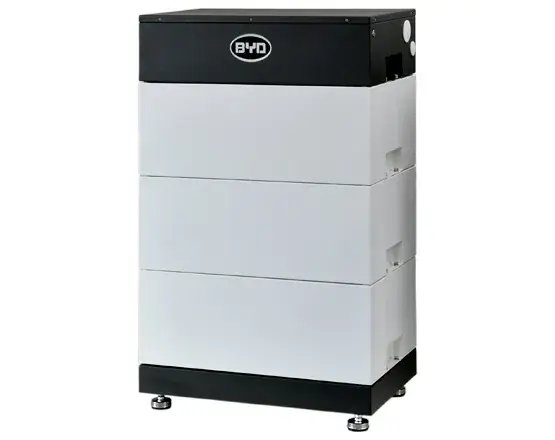
A 2019-era commercial cabinet with no UL listing, superseded by BYD's current Premium HVL and Mega lines
This model is part of SecondWatt’s batterie research catalogue. Specifications and price observations are included where supported by sources. Equipment availability and commercial terms require confirmation.
BYD Battery-Box Commercial dossier: 131 and 233 kWh cabinets, no UL listing, warranty that needs partner permission to transfer, and the current successors.
Battery-Box Commercial is a cobalt-free lithium iron phosphate cabinet in two sizes, the C130 at 131 kWh usable and the C230 at 233 kWh, running 638 to 875 volts depending on model at 150 or 250 amps maximum output. The C230 measures 2,200 by 3,200 by 600 mm and weighs 2,593 kg, with IP20 ingress protection, an operating band of minus 10 to 50 degrees C and RS485 or CAN communications.
The product does not map cleanly to anything BYD sells today. The datasheets date to 2019 and 2020, Commercial is absent from BYD's current site navigation, and the certification field lists UN38.3, CE and IEC 62619 with no UL 1973, UL 9540 or UL 9540A. Its only named compatible inverter is a single legacy model. By contrast the current Battery-Box Premium HVL for the United States is UL 9540A and UL 1973 listed, runs 12 to 96 kWh at above 96% round-trip efficiency with a 10-year warranty, and Battery-Box Mega, announced June 2026, spans 62.4 kWh to 5.24 MWh.
One warranty clause governs whether any of this can trade at all. BYD's commercial warranty letter states plainly that claims are transferable only with permission from a BYD partner, and defines cover as applying to the original buyer. Performance cover runs to a maximum of 10 years against 3,000 to 6,000 full cycles depending on operating temperature, with product cover at 5 years and module fans at 2.
Why it matters
The warranty transfer clause is as clear a resale restriction as any published on a commercial battery product. A performance warranty that needs partner permission to follow the asset takes most of the residual value with it, which is a large part of why no secondary market for commercial lithium storage exists on any public channel.
Who buys it
Commercial and industrial energy managers in Europe, where this product was sold and where its CE and IEC certification applies. A North American buyer cannot permit it without UL listing, so the practical choice there is the Premium HVL or the Mega line instead.
Role in the data center
None at this generation. The current BYD products a data center buyer would specify are Battery-Box Premium HVL for small behind-the-meter duty or the utility-scale MC Cube-T line, both of which carry the UL listings this cabinet lacks.
Key specifications
| Chemistry | lithium iron phosphate, cobalt free |
|---|---|
| Usable energy, C130 | 131 kWh |
| Usable energy, C230 | 233 kWh |
| Nominal voltage | 729.6 on the C130 and 777.6 on the C230 V |
| Maximum output current | 150 on the C130 and 250 on the C230 A |
| Dimensions, C230 | 2,200 x 3,200 x 600 mm |
| System weight | 1,751 kg on the C130 and 2,593 kg on the C230 |
| Ingress protection | IP20 |
| Operating temperature | minus 10 to 50 degrees C |
| Certifications | UN38.3, CE and IEC 62619; UL 1973, UL 9540 and UL 9540A not listed |
| Warranty terms | up to 10-year performance, 5-year product, 2-year module fans |
| Cycle warranty | 3,000 to 6,000 full charge cycles depending on operating temperature |
| Warranty transfer | claims transferable only with BYD partner permission |
| Current successor | Battery-Box Premium HVL at 12-96 kWh, UL 9540A and UL 1973 listed, above 96% round-trip efficiency |
Technical summary
Chemistry: lithium iron phosphate, cobalt free. Usable energy: 131 kWh on the C130 and 233 kWh on the C230. Nominal voltage: 729.6 V on the C130 and 777.6 V on the C230. Voltage range: 638.4 to 820.8 V and 680.4 to 874.8 V respectively. Maximum output current: 150 A on the C130 and 250 A on the C230. Dimensions: 2,200 by 2,600 by 600 mm and 2,200 by 3,200 by 600 mm. System weight: 1,751 kg and 2,593 kg; battery modules at 64 and 72 kg. Ingress protection: IP20, with an operating range of minus 10 to 50 degrees C. Communications: RS485 and CAN. Certifications: UN38.3 at module level, CE and IEC 62619; no UL 1973, UL 9540 or UL 9540A listed. Warranty: up to 10-year performance and 5-year product, against 3,000 to 6,000 full cycles by temperature.
Major variations
The Battery-Box family spans residential Premium HVS, HVM and HVL, low-voltage LVS and LVL scaling to hundreds of kilowatt hours, and the newly announced Mega at 62.4 kWh to 5.24 MWh. BYD's separate energy storage division sells Chess Plus for commercial and industrial duty, launched March 2025, and the utility-scale MC Cube-T. The legacy Battery-Box Pro, HV and LV lines were discontinued with an order deadline of 31 December 2023.
Configurations and options
Cabinet-scale installation with a single named compatible inverter on the Commercial product, which is the practical constraint on redeploying one. Current Premium HVL units run 12 to 32 kWh individually with up to three in parallel to 96 kWh, at above 96% round-trip efficiency and a 10-year warranty.
Compatibility and dependencies
Inverter compatibility is the binding constraint: the Commercial datasheet names one legacy inverter model, so a redeployment needs that specific hardware or a full re-engineering. Absence of UL listing rules the product out of North American permitting under NFPA 855, whatever its condition. Communications are RS485 and CAN only.
Pricing and availability
Comparable secondary-market band: 431–474 EUR per kWh. Trend: stable Lead time, used or refurbished: No used unit listed as of August 2026.
Lifecycle and maintenance
Lithium storage is warranted on throughput and capacity retention rather than on calendar life, so operating history rather than age is the valuation input. A unit that has cycled hard for two years can be further through its warranted energy than one that has floated for six, and neither fact is visible on a nameplate. The consequence for a buyer is that a dated state-of-health measurement and the cumulative throughput figure are the two numbers that matter, and both live in the manufacturer's monitoring system rather than with the seller. Warranty transferability is the second decisive term, because a retention guarantee that does not follow the asset takes most of its value with it. NFPA 855 (2026) makes hazard mitigation analysis the default and adds large-scale fire testing alongside UL 9540A. Lithium moves as Class 9 under UN3480 at a 30% state-of-charge air-freight ceiling.
Thermal and emissions profile
A lithium storage system emits nothing in operation, and its environmental and safety profile is concentrated in two places: thermal propagation and end of life. NFPA 855 in its 2026 edition makes hazard mitigation analysis the default expectation and adds large-scale fire testing alongside UL 9540A, with UL 1973 covering cells and modules and UL 9540 the complete system. End-of-life economics run the opposite way from lead-acid. Lithium iron phosphate contains no cobalt and no nickel, so the recovered material value that underwrites recycling elsewhere is largely absent and no published scrap value per kilowatt hour exists for the chemistry. Lithium also moves as Class 9 under UN3480 with a 30% state-of-charge ceiling for air freight, so container-scale units are ground or ocean only.
Common failure points
- Thermal runaway and propagation — A single failing cell can cascade through a module, which is why large-scale fire testing exists
- Capacity fade — Usable energy falls with throughput and calendar age against a retention warranty
- Cell imbalance — Modules drift apart in voltage and the system derates to protect the weakest
- Battery management system — An unsupported controller or stale firmware leaves the unit uncommissionable
- Warranty stranding — Transfer restrictions can void the retention guarantee on resale, which is most of the asset's value
- Permit and siting — Hazard mitigation analysis, setbacks and fire approvals belong to the site, not the equipment
Inspection checklist
Cycle count and throughput: request the operating history in megawatt hours, because 1 heavy cycling year can exceed 3 light ones against a throughput warranty. State of health: get the measured capacity against nameplate and the date of that test, since a figure more than 6 months old is not evidence. Warranty transferability: BYD requires partner permission before a claim transfers, which can strand 100% of the warranty value on resale. Listings: confirm UL 1973 at cell and module level and UL 9540 at system level, because a unit without both cannot be permitted. Fire testing: confirm UL 9540A large-scale thermal propagation test data exists for the exact configuration being sold. Code compliance: NFPA 855 in its 2026 edition makes hazard mitigation analysis the default expectation and adds large-scale fire testing.
Procurement channels
No channel sells the Commercial C130 or C230 new as of August 2026, consistent with the product being superseded. The current Premium HVM family is priced openly by European solar distributors between 431 and 474 euros per kilowatt hour across six capacity steps, and one Premium LVL module was listed at a United Kingdom marketplace. No used or second-life BYD storage appears on any public channel.
Regional notes
The Commercial product carries CE and IEC certification for European deployment and no UL listing for North America, while the Premium HVL datasheet is a United States document carrying UL 9540A and UL 1973. That split is the practical difference between a permittable and an unpermittable asset in this market.