Plug Power GenSure stationary power systems, W-Scale and MW-Scale lines
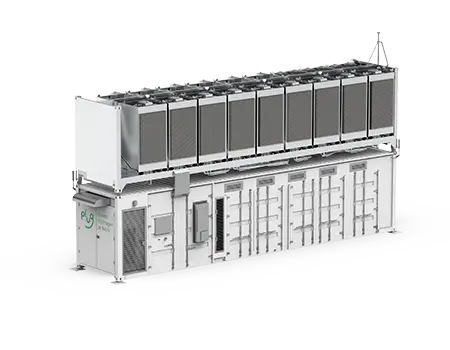
Telecom standby hydrogen power published at 200, 1,100 and 2,500 W, with the megawatt line undocumented
This model is part of SecondWatt’s fuel cell research catalogue. Specifications and price observations are included where supported by sources. Equipment availability and commercial terms require confirmation.
Plug Power GenSure dossier: published ratings of 200, 1,100 and 2,500 W, the undocumented megawatt line, service continuity risk and inspection notes.
GenSure is Plug Power's stationary fuel cell family, and the only ratings published anywhere on the company's live site are watts rather than megawatts. The low power line, branded W-Scale, is sold as scalable blocks of 200 W, 1,100 W and 2,500 W running on industrial-grade hydrogen, and the telecom application page names one stock number, GenSure LP-2500. The high power line, branded MW-Scale and previously GenSure HP, is referenced in navigation and in the fiscal 2025 annual report on Form 10-K but carries no published kilowatt rating and no published datasheet.
Plug Power publishes no GenSure specification sheets as of August 2026, and the 2020 platform launch release is no longer available on its site. GenSure is sometimes presented as a data center power product on the strength of one sentence in a securities filing, but the published ratings are three orders of magnitude smaller.
Corporate continuity matters for anyone buying hardware that will need stack service. Plug disclosed going-concern language in its fiscal 2023 annual report, took 971.3 million dollars of non-cash impairment in the fourth quarter of 2024, and announced a cost programme in March 2025 cutting 150 to 200 million dollars of annual expense. The 2026 quarters are better, but the federal loan guarantee renegotiation remains unresolved.
Why it matters
GenSure appears in industry lists beside megawatt-class products because one family name spans both lines, and reading the family that way overstates the published hardware by a factor of a thousand or more. The published product is the watt-class line with its named stock number, GenSure LP-2500; the megawatt rating is unpublished as of August 2026.
Who buys it
Telecom carriers, utilities, first-responder network operators and railroads buying hydrogen standby in place of a small engine generator or a battery string. Plug states runtime in hundreds of hours between refuelling visits and noise about 20 decibels below a generator, which is the pitch for cabinet sites and rooftops. Data center operators are not the published buyer for the rated line, whatever the high power line eventually proves to be.
Role in the data center
None at the published ratings. The annual report names data centers as a target for the MW-Scale line, and a July 2026 asset sale to a data center developer included an exploration of deploying products into that industry, but no rated product supports the claim today.
Key specifications
| Technology | proton exchange membrane, complete system |
|---|---|
| Rated output, W-Scale line | 200, 1,100 and 2,500 scalable blocks W |
| Named stock number | GenSure LP-2500 |
| Rated output, MW-Scale line | |
| Fuel | industrial-grade hydrogen |
| Hydrogen purity grade | |
| Runtime between refuelling | hundreds of hours |
| Noise against an engine generator | about 20 lower dB |
| Output voltage and current basis | |
| Electrical efficiency | |
| Dimensions and weight | |
| Stack life and warranty | |
| Platform launch | GenSure HP commercial launch 2020-07-16 |
Technical summary
Technology: proton exchange membrane, complete packaged system. Rated output, W-Scale line: scalable blocks of 200 W, 1,100 W and 2,500 W. Named stock number: GenSure LP-2500, on the telecom application page. Fuel: industrial-grade hydrogen, with no ISO 14687 grade published. Runtime: hundreds of hours between refuelling visits. Noise: about 20 decibels below a comparable engine generator.
Major variations
Two sub-lines under one family name. W-Scale, formerly LP, is the watt-class telecom and utility standby product in scalable 200 W, 1,100 W and 2,500 W blocks. MW-Scale, formerly HP, is described in the annual report as supporting large-scale stationary power, charging infrastructure and data centers, with no rating, no datasheet and no dimensions published as of August 2026.
Configurations and options
Cabinet and outside-plant builds for wireless sites, with hydrogen supplied in cylinders or bulk and refuelling as the operating cycle rather than fuel piping. Runtime scales with cylinder count rather than with tank size on a fuel-piped machine.
Compatibility and dependencies
Hydrogen arrives in cylinders or bulk rather than through fuel piping, so refuelling logistics rather than a gas connection govern siting, and runtime scales with the number of cylinders a cabinet or outside-plant enclosure holds. That makes the fuel contract and the delivery route part of the specification rather than a downstream detail, and it is the dependency that separates a telecom standby fuel cell from a gas machine.
Pricing and availability
Trend: rising No price series exists. Plug discloses unit counts for its materials handling line only, at 1,666 GenDrive deployments in the second quarter of 2026, and publishes no GenSure volumes, average selling price or dollar per kW figure in its SEC filings. Lead time, used or refurbished: No used or refurbished unit listed as of August 2026.
Lifecycle and maintenance
Plug publishes no stack life, no degradation rate and no maintenance interval for GenSure, and no GenSure specification sheet is published on the company's site as of August 2026. What is published is duty framing: hundreds of hours of runtime between refuelling visits, which places the watt-class line in standby rather than continuous service. The category default therefore applies, at a durability target of 5,000 hours with cycling and 5,000 start-up and shutdown cycles from the Department of Energy component targets. Service continuity is the live question rather than wear, because the manufacturer is mid-restructuring and no third-party rebuild channel exists.
Thermal and emissions profile
A hydrogen fuel cell emits no carbon dioxide, NOx, SOx, carbon monoxide or volatile organic compounds at the point of generation, which is the cleanest emissions profile available in on-site power. The regulatory burden moves to the fuel instead. Natural gas builds are governed by NFPA 853, the standard for the installation of stationary fuel cell power systems, whose 2025 edition is current, while storing or piping gaseous hydrogen on site adds NFPA 2, the hydrogen technologies code, with its own separation distances and storage scope. That hydrogen scope is a site cost the equipment price does not include, and it is why a hydrogen build and a natural gas build of the same machine are not interchangeable assets.
Common failure points
- Catalyst poisoning — Carbon monoxide, sulfur and ammonia poison the membrane assembly invisibly and irreversibly
- Runtime consumption — Module lifetimes run 15,000 to 25,000 hours, so continuous duty consumes a unit in under three years
- Water management and freeze — Freeze and thaw damage is the failure mode most sensitive to storage conditions
- Coolant contamination — Fuel cell grade glycol and deionised water are specified, and automotive coolant destroys a stack
- Balance of plant — Compressor, humidifier, recirculation and power electronics carry the cost rather than the stack
- Parts continuity — Consecutive cost reduction programmes have narrowed the catalogued part list at Plug Power and its PEM competitors
Inspection checklist
Stack or system: a bare stack has no inverter, enclosure, air handling or hydrogen train; FCgen-LCS is 10.2 to 26.7 kg of DC hardware. Rating basis: confirm stack gross DC against system net AC; the FCgen-LCS rated point is 93 kW at 500 A and 187 V DC. Runtime hours: published module lifetimes run above 15,000 hours on FCwave and above 25,000 on FCmove-HD+. Start and stop cycles: the DOE durability target for start-up and shutdown is 5,000 cycles. Hydrogen grade: datasheets cite ISO 14687:2019 Grade D, a standard withdrawn on 2025-02-12 and replaced by the 2025 edition. Fuel supply history: poisoning by carbon monoxide, sulfur and ammonia is cumulative and irreversible across 100% of the catalyst area. Freeze exposure: confirm the unit was purged and stored above its minimum start temperature; FCwave cannot start below 0 degrees C.
Procurement channels
New from the manufacturer only.
Regional notes
Designed and built in the United States, headquartered in Latham, New York, with 2,582 employees at the end of 2025. No regional certification marks, grid codes or emissions certifications are published for the product line.