Siemens SIVACON 8PS
Manufacturer: Siemens
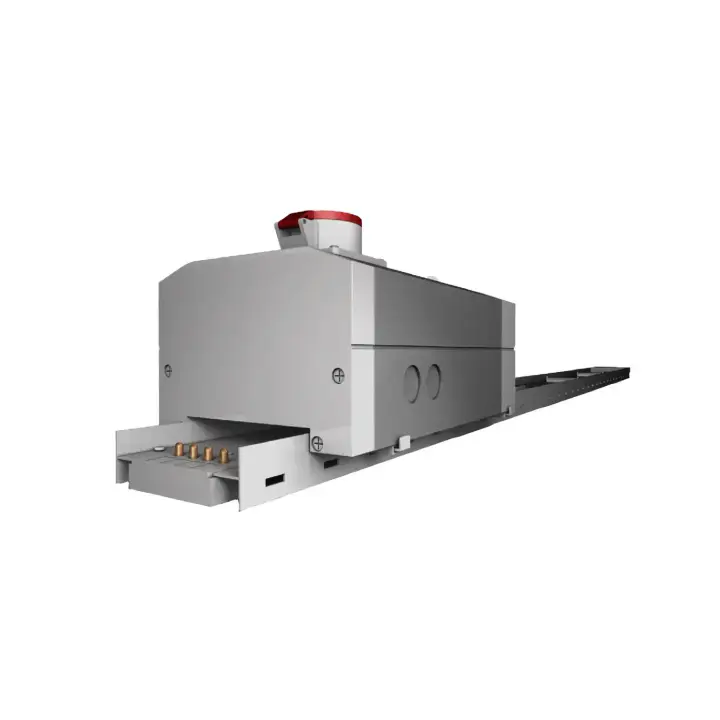
Siemens' international IEC busbar trunking family - no UL 857 listing, not sold new in North America
This model is part of SecondWatt’s busway research catalogue. Specifications and price observations are included where supported by sources. Equipment availability and commercial terms require confirmation.
Siemens SIVACON 8PS busbar trunking specs and IEC ratings, plus why US buyers should source Siemens XJ-L HD instead, since 8PS carries no UL 857 listing.
Siemens' SIVACON 8PS documentation states no UL 857 listing for any data-hall system: not in the US-market brochure, the LV70 catalogs, the planning manual, or the individual LI, LD and LR product pages. The one North American conformity claim in the US brochure, "conforming to UL6141," attaches to the LDM system, a wind-turbine and photovoltaic busbar product outside data-center scope. Siemens names no US distributor or purchase path for the line. A North American buyer researching "Siemens busway" is very likely reaching for the wrong product.
The current Siemens North American busway line is a separate, UL 857-listed family sold by Siemens Industry, Inc: Sentron, XL-U, XL-X, BD, and XJ-L HD. XJ-L HD is marketed by name as "High Density Power Distribution for Data Centers" and remains actively specified in a CSI specification section dated February 11, 2026.
SIVACON 8PS itself is seven systems on an IEC 61439-1/-6 basis, not one product: BD01 (40-160A, lighting and small power), BD2 (160-1,250A, general purpose), LD (1,100-5,000A, main and feeder distribution), LI (800-6,300A, riser), LR (400-6,300A, outdoor IP68), LX (vertical risers to 6,300A), and LData (1,000-2,500A), the only member Siemens brands explicitly for data-hall rack power.
SIVACON 8PS and the used-market XJ-L and ITE nameplates are not sequential generations of one product line - they are separate architectures that happen to share a parent company. ITE passed to Gould in 1976 and to Siemens in 1983; Siemens' current catalog still credits I-T-E, formerly Bulldog Electric, as the line's 1932 origin, but that lineage runs through XJ-L and XJ-L HD, not through SIVACON 8PS, whose own catalogs make no mention of ITE.
Why it matters
Treating SIVACON 8PS as a domestic listing misprices and misspecifies a project before pricing even enters the conversation, since the line carries no UL 857 rating and Siemens names no US sales channel for it. The correctly-branded alternative, XJ-L HD, is UL 857-listed and actively specified for data centers today, which makes the wrong-product risk a real sourcing error rather than a technicality.
Who buys it
International integrators and buyers outside North America, where SIVACON 8PS is Siemens' actual IEC busbar trunking line for industrial, infrastructure, and data-hall distribution. US and Canadian buyers who searched "Siemens busway" and need redirecting to the UL 857-listed Sentron, XL-U, XL-X, BD, and XJ-L HD line before sourcing begins. Buyers holding used XJ-L or ITE-nameplate stock who need to determine what Siemens still sells that might fit it.
Role in the data center
LData is the only SIVACON 8PS member Siemens brands explicitly for the data hall, positioned for rack-level overhead power distribution with tap-off spacing matched to server-rack widths. LD, LI, and LX are the family's higher-current members and would carry main or riser distribution duty in a data center built on the 8PS platform. None of this is procurable new in North America under the SIVACON 8PS name, however, so a US or Canadian data center buyer needs Siemens' XJ-L HD line for the equivalent current-production role instead.
Key specifications
| Current rating, BD01 system | 40-160 A |
|---|---|
| Current rating, BD2 system | 160-1250 A |
| Current rating, LD system | 1100-5000 A |
| Current rating, LI system | 800-6300 A |
| Current rating, LR system | 400-6300 A |
| Current rating, LX system | up to 6300 A |
| Current rating, LData system (data-hall) | 1000-2500 A |
| Rated voltage, LD/LI/LR/LX systems | 1000 V |
| Rated voltage, BD01 system | 400 V |
| Rated voltage, LData system | 600 V |
| Short-time withstand current (Icw, 1s), LI system | up to 150 kA |
| Rated peak withstand current (Ipk), LR system | up to 275 kA |
| IP rating, LR system (outdoor) | IP68 - |
| IP rating, LData system | IP21 - |
| Ambient temperature basis (IEC 61439-1/-6) | 40 max / 35 avg over 24h C |
| Joint tightening torque, LI system | 50 N - m |
Technical summary
Current rating, BD01 range: 40-160 A. Current rating, BD2 range: 160-1,250 A. Current rating, LD range: 1,100-5,000 A. Current rating, LI range: 800-6,300 A. Current rating, LR range: 400-6,300 A. Current rating, LX range: up to 6,300 A. Current rating, LData range (data-hall specific): 1,000-2,500 A. Rated voltage: 400 V (BD01) up to 1,000 V (LD/LI/LR/LX); LData rated 600 V. Short-time withstand current (Icw, 1s): 2.5 kA (BD01) up to 150 kA (LI). IP rating: IP21 (LData) up to IP68 (LR). Standards: IEC 61439-1 and IEC 61439-6 design-verified; no UL 857 rating found for any 8PS system. Joint torque spec, LI system: 50 N - m via 17 mm wrench on double-head shear nuts.
Major variations
SIVACON 8PS is seven current systems, not one product, each on a different current band for a different job: BD01 at 40-160 A for lighting and small power, BD2 at 160-1,250 A for compact general-purpose distribution, LD at 1,100-5,000 A for main and feeder distribution between transformer and switchboard, LI at 800-6,300 A for multi-floor riser and infrastructure duty, LR at 400-6,300 A and IP68-rated for outdoor and harsh-environment runs, LX for vertical risers up to 6,300 A, and LData at 1,000-2,500 A, the only member Siemens brands explicitly for data-hall rack power at roughly 60 cm tap-off spacing to match server-rack widths. None of these seven carries a UL 857 listing, and the current Siemens North American busway line - Sentron, XL-U, XL-X, BD, and XJ-L HD - is a separate, UL 857-listed family sold by Siemens Industry, Inc.
Compatibility and dependencies
The ITE lineage behind the used-market XJ-L and ITE nameplate is documented in corporate records: Gould Inc. acquired I-T-E Imperial Corporation in 1976, and Siemens acquired the ITE electrical products business from Gould in 1983, following Siemens' 1978 purchase of 20 percent of Allis-Chalmers' Electrical Products Group and completing with the 1985 buyout of Allis-Chalmers' remaining interest, renamed Siemens Energy and Automation in April 1986. Siemens' current North American busway catalog still credits I-T-E, formerly Bulldog Electric, as the line's 1932 origin.
Pricing and availability
Trend: stable
Lifecycle and maintenance
Siemens' own SIVACON 8PS LI installation manual describes the system as maintenance-free once correctly installed and commissioned, and specifies no routine re-tightening interval for the 50 N - m shear-nut busbar joints. Siemens publishes no design-life figure in years for any 8PS family member, an absence that runs across the busway category. Controls are not a meaningful lifecycle factor for a passive busbar run; the real exposure is joint integrity across decades of thermal cycling, not electronics obsolescence. Siemens publishes no overhaul or service program specific to 8PS busway.
Thermal and emissions profile
SIVACON 8PS is a passive busbar system with no refrigerant, so refrigerant GWP and the EPA phase-down timeline do not apply to this equipment class. The comparable cross-standard question for busway is UL-versus-IEC rating parity, and SIVACON 8PS is a stark negative case: it carries no UL 857 rating anywhere in published sources as of August 2026, publishing only IEC 61439-1/-6 figures such as LI's 330 kA peak and 150 kA one-second withstand current. Vertiv's PowerBar Track shows what a dual rating looks like on one physical product, 2,000 A under UL 857 against 2,500 A under IEC 61439-6, and SIVACON 8PS has no UL-basis number to set beside its IEC figures at all.
Common failure points
- Busbar joint (shear-nut connection) — localized hot spot at the joint on a thermal scan, discoloration around the red signal washer or adjacent housing paint
- Tap-off unit insertion, 800-1,250 A class — difficulty seating the unit, visible arcing marks at the contact fingers
- Enclosure gasket at IP54/IP55 covers — corrosion streaking below cover seams, moisture staining visible inside the enclosure
- Conductor-material and nameplate mismatch — stated current rating appears higher than the visible conductor cross-section would support for its material
- Cross-family or cross-generation tap-off substitution — a tap-off unit that seats mechanically but shows resistance heating or loosens within weeks of energizing
- Mixed date-code lots — sections within a single reused run carry different manufacture years or model suffixes
- Ambient-temperature excursion — discoloration or embrittlement of insulation at housing joints in poorly ventilated mechanical rooms
Inspection checklist
Verify double-head shear-nut torque at every busbar joint: 50 N - m spec, 17 mm wrench: an intact or properly sheared red signal washer is Siemens' own visual confirmation the joint was tightened to spec. Confirm which system in the family: BD01, BD2, LD, LI, LR, LX, or LData: the nameplate actually names before assuming any tap-off unit will interchange, since the seven are not cross-compatible by design. Check the IP rating stamped on the housing against the installed environment: LR's IP68 outdoor rating does not carry over to LD's IP34 or IP54 indoor-rated housings, even within the same family. Thermal-image every accessible joint under load and trend the readings over time rather than judging from one scan: a joint running near 80C already carries roughly 21% more resistance than the same joint at 25C.
Regional notes
SIVACON 8PS is not sold new in North America under that name: Siemens publishes no UL 857 listing, US distributor or purchase path for any of its seven systems. The only priced SIVACON 8PS listings observed were German eBay entries, both small accessories rather than full busway sections. Used and new-old-stock Siemens busway circulating in North America carries the XJ-L or ITE nameplate instead, a separate product lineage with its own current-production successor, XJ-L HD.